Most homeowners assume a foundation diagnosis requires someone crawling around their basement. It does not. With decades of experience across New England, we can diagnose the vast majority of foundation problems from photos and videos you send us — and give you an accurate quote before we ever set foot in your home.
Here is exactly how our diagnostic process works.
Before We Arrive: Photo-Based Assessment
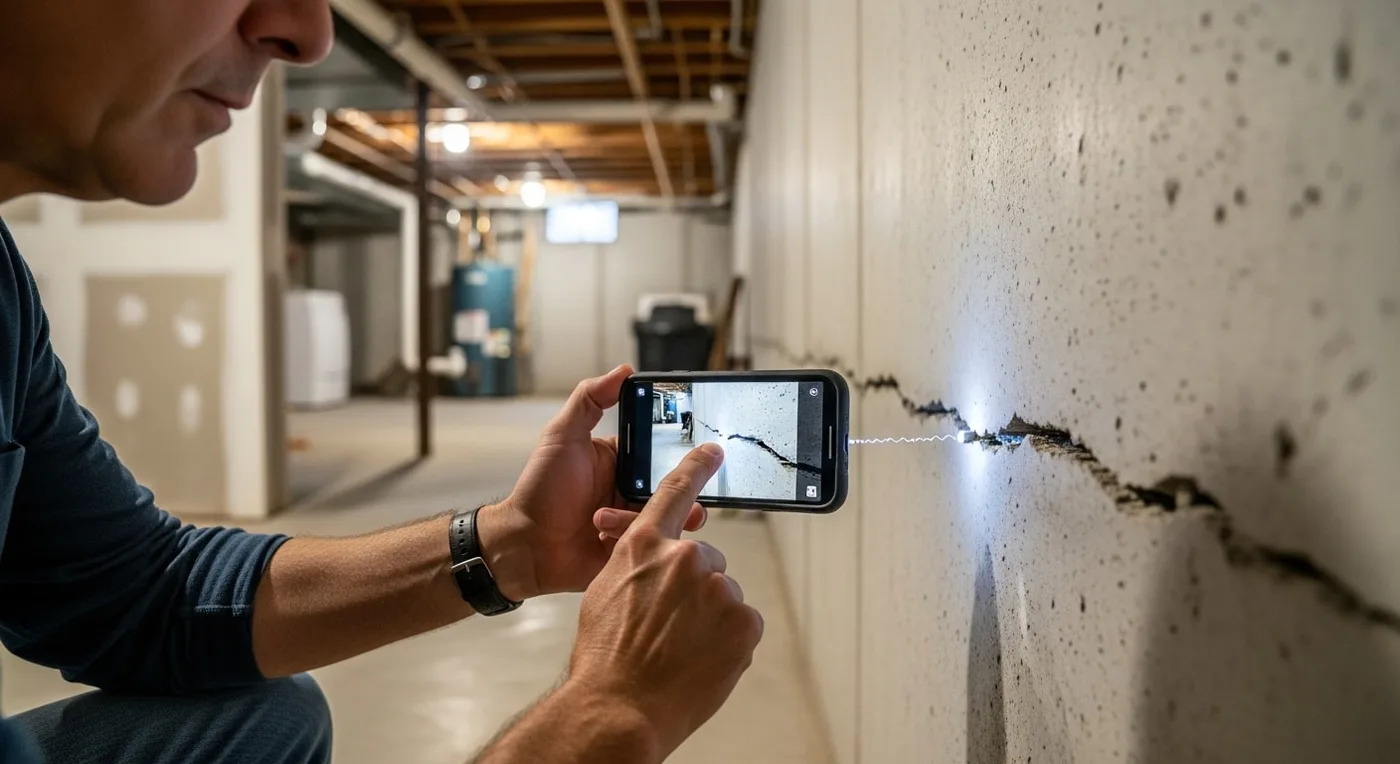
When you reach out about a foundation concern, we do not schedule an inspection visit. Instead, we ask you to text us photos and sometimes short videos of what you are seeing. This is how the majority of our diagnostics happen — and it works because we have seen thousands of similar situations.
What We Ask You to Photograph
We will guide you through taking the right photos. Here is what we typically need:
The crack or problem area:
- A full-length shot showing the entire crack from end to end
- A close-up with something for scale (a coin, ruler, or your finger next to the crack)
- A photo showing whether the crack is wet, stained, or dry
Context shots:
- The full wall so we can see where the crack falls (mid-wall, near a corner, near a window)
- The floor along the base of the wall (looking for water stains, efflorescence)
- Any areas where water appears or has appeared
If we need more: We may ask you to photograph specific things — the exterior grade near that wall, your gutters, your bulkhead, or other cracks you may not have noticed. We guide you through this over text or phone.
What We Can Tell from Photos
You would be surprised how much experienced eyes can diagnose from a good photo:
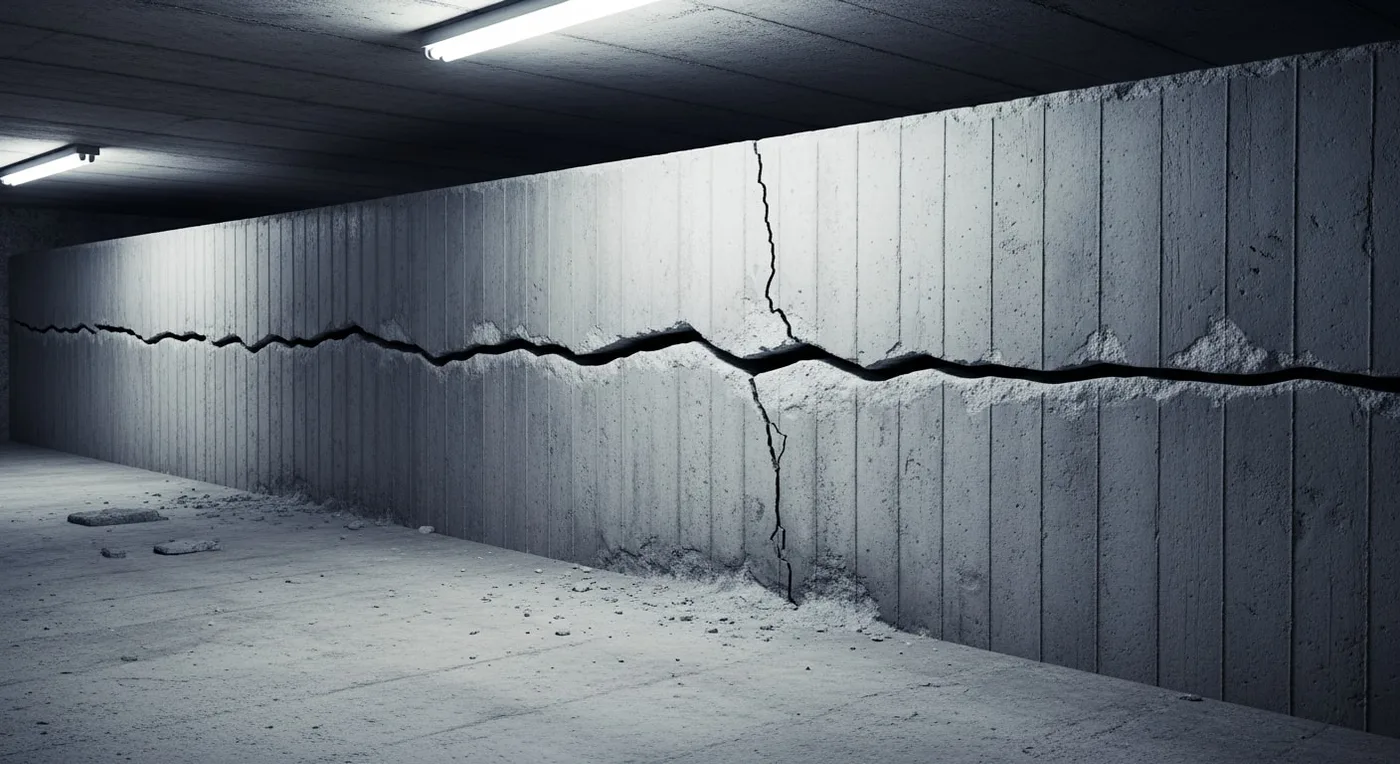
Crack direction and pattern — Vertical cracks suggest shrinkage or settling. Horizontal cracks indicate lateral pressure. Stair-step cracks in block walls signal structural movement. The direction alone tells us a lot about the cause.
Crack width and severity — With a coin or ruler for scale, we can gauge width accurately. Hairline cracks under 1/16 inch are very different from cracks over 1/4 inch.
Displacement — Photos taken at an angle along the wall show whether one side of the crack sits forward of the other. Displacement is the most important structural indicator — a narrow crack with displacement is more concerning than a wide crack without it.
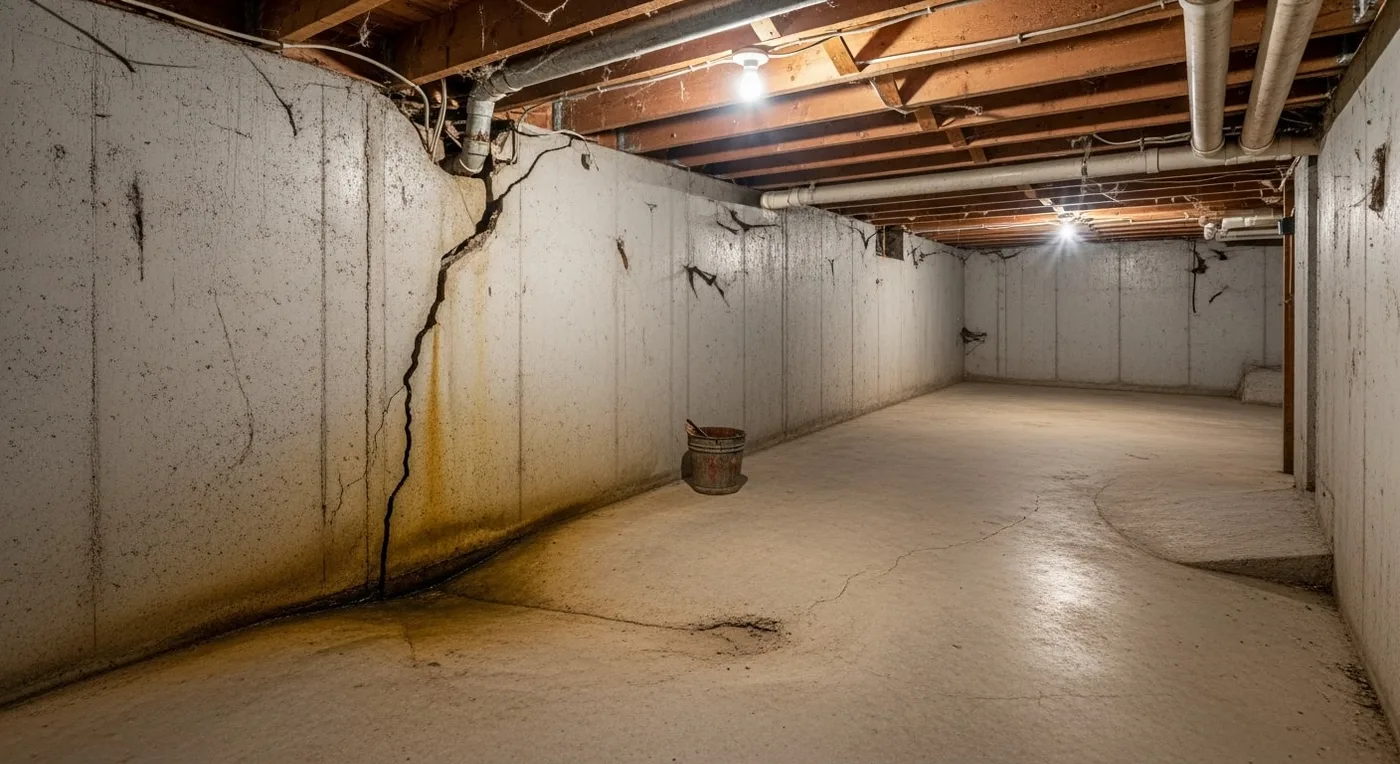
Water activity — Staining patterns, efflorescence (that white powder on basement walls), and visible moisture tell us whether water has been moving through the crack and for how long.
Foundation type and age — We can identify poured concrete, block, brick, and stone foundations from photos, which directly affects the repair approach.
Previous repairs — Patching, old injection ports, or failed sealant tells us someone has tried before and helps us understand what we are dealing with.
From Photos to Quote
In most cases, we can give you a clear diagnosis and an accurate quote directly from your photos. We will tell you:
- What is causing the problem
- Whether it needs repair now, can be monitored, or is not a concern
- What the repair involves and how long it takes
- What it costs
If your situation is straightforward — and the majority are — you will get the answers you need without anyone visiting your home. If photos reveal something complex or unusual, we will let you know and discuss next steps.
On Repair Day: What We Check On-Site
When we arrive to do the repair, that is when we do our hands-on assessment. Our crew does not just fix the specific crack you called about — we take a professional look at the whole picture.
The Exterior Walk-Around
Before we head inside, we walk the perimeter of your home. The outside tells us a lot about what is happening to your foundation:
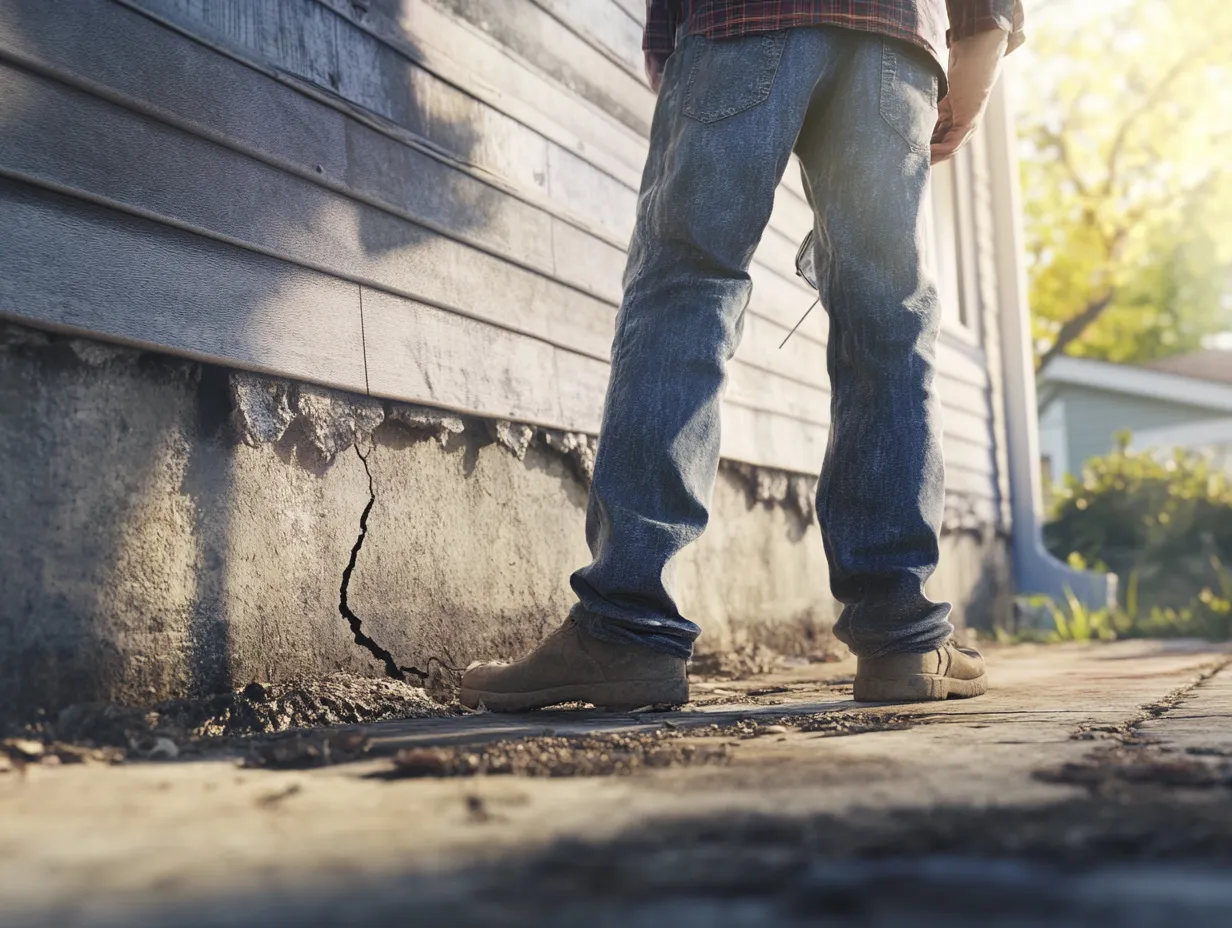
- Grading and drainage: Soil should slope away from the house — about 6 inches of drop over the first 10 feet. Flat or negative grading directs water right at your foundation.
- Gutter condition: Clogged or missing gutters concentrate roof water at the foundation.
- Downspout discharge: Water should exit at least 6 feet from the house.
- Bulkhead condition: The cold joint between the bulkhead and foundation is the most common leak point we see.
- Visible foundation above grade: Surface cracks, efflorescence, spalling, or signs of previous repairs.
Interior Assessment Techniques
Inside, we use techniques honed over thousands of projects:
The Sighting Technique
One of the first things we do is sight down each foundation wall from the corner. Positioning your eye at floor level and looking along the wall reveals bowing or bulging that is invisible when viewed head-on. This catches problems that homeowners walk past every day.
Crack Assessment Criteria
For every crack, we evaluate five characteristics:
- Direction — Vertical (least concerning), horizontal (most serious), diagonal (differential settlement), stair-step (structural movement in block walls)
- Width — Under 1/16 inch is hairline. Over 1/4 inch is a structural concern. We measure with a crack gauge.
- Displacement — We run a hand across both sides. One side sitting forward is more concerning than width alone.
- Activity — Active water, efflorescence, or rust stains from reinforcing steel indicate how long water has been using this crack as a pathway.
- Pattern — A single vertical crack is different from multiple horizontal cracks across the same wall. The overall pattern reveals the forces acting on your foundation.
The Screwdriver Test
For older foundations or suspicious surface deterioration, we gently probe the concrete with a screwdriver. Sound concrete resists. Deteriorating concrete flakes or crumbles. This is particularly important for pre-1940s foundations, areas with crumbling concrete, and block walls where mortar may be failing.
Water Tracking
If there is evidence of water — active leaks, staining, efflorescence, mold — we trace it to its source. Water does not always enter where it shows up. It can travel along the wall-floor joint, follow cracks, or wick through porous concrete before becoming visible.
Above-Grade Indicators
Foundation problems create symptoms upstairs too. On repair day, we may check:
- Doors that stick or will not latch (frame distortion from foundation movement)
- Gaps between window frames and walls
- Diagonal cracks from door or window corners (classic settlement indicator)
- Sloping or uneven floors
These help us correlate what we see in the basement with what is happening to the whole structure.
What We Find — and What We Recommend
After the assessment, we explain everything in plain language. No jargon, no scare tactics.
”This Is Normal — No Action Needed”
Many hairline vertical cracks, especially in poured foundations less than 20 years old, are normal curing shrinkage. If they are not leaking, not displaced, and not growing, we will tell you to monitor them. We are not going to sell you a repair you do not need.
”This Needs Repair but Is Not Urgent”
Cracks leaking intermittently, showing efflorescence, or wider than 1/8 inch need attention — but you have time to schedule it. We will explain the repair method (crack injection at $800-$1,300 per crack for most wall cracks) and give you a clear quote. See our foundation repair cost guide for detailed pricing.
”This Needs Repair Soon”
Active leaks, cracks wider than 1/4 inch, any displacement, horizontal cracking, or bowing walls. These get worse with every freeze-thaw cycle. Delaying increases both damage and cost.
”This Is Structural — Let’s Talk Options”
Significant bowing, multiple horizontal cracks with displacement, or severely deteriorated walls may need carbon fiber staples (stitches) at $200-$300 per stitch or wall stabilization. We walk you through options, timeline, and costs. Our bowing basement walls guide covers this in detail.
If We Spot Other Issues
In the overwhelming majority of cases, we fix what we came for and that is it. But occasionally we notice something else during our walk-around — and we will mention it honestly.
Most of the time, our additional recommendations are for work that someone else does:
- Fix your gutters and lengthen your downspouts
- Improve the grading around your house
- Consider an exterior French drain system
These are referrals, not upsells. We are a niche company focused on crack injection, carbon fiber reinforcement, and bulkhead repair. It is very rare that we discover additional work in our wheelhouse that you did not already know about. And when we do, we explain it — we do not pressure you into it.
What We Don’t Do
Transparency matters:
- We do not scare you into repairs. If a crack does not need fixing, we say so.
- We do not manufacture problems. Our assessment is free — we have no incentive to invent work.
- We do not sell waterproofing systems. We fix the source of water intrusion. If you need interior drainage or a sump pump, we will tell you, but that is not our scope. (Learn the difference.)
- We do not do structural engineering. If your situation requires a PE-stamped structural assessment, we refer you to a licensed structural engineer.
Get Your Foundation Assessed
Text us photos at (860) 573-8760 (CT) or (617) 668-1677 (MA). We will tell you what we see, what it means, and what it costs to fix — most of the time, all from your photos alone. Our free foundation assessments cover all of Connecticut, Massachusetts, Rhode Island, New Hampshire, and Maine.
Frequently Asked Questions
How long does it take to get a diagnosis from photos?
Most homeowners hear back within a few hours during business days. For straightforward cracks, we can often give you a diagnosis and quote the same day you text us photos.
What if my situation is too complex for photo diagnosis?
Some situations — multiple issues, unusual cracking patterns, or suspected structural problems — benefit from hands-on assessment. In those cases, we will let you know and schedule accordingly. But even then, your photos give us a head start so the on-site visit is focused and efficient.
Does a foundation crack always mean structural damage?
No. Most vertical cracks in poured concrete foundations are normal shrinkage cracks that do not affect structural integrity. They may need repair if they are leaking water, but they are not structural emergencies. Horizontal cracks, stair-step cracks in block walls, and any crack with visible displacement are the ones that indicate structural concern and need professional evaluation.