This article addresses the crumbling foundation crisis affecting Massachusetts and Connecticut homeowners, caused by pyrrhotite contamination in concrete foundations. If you have noticed white powder on your basement walls, a musty smell in your basement, or concrete that seems to be flaking apart, understanding this issue is critical.
The Crumbling Foundation Crisis: A Brief History
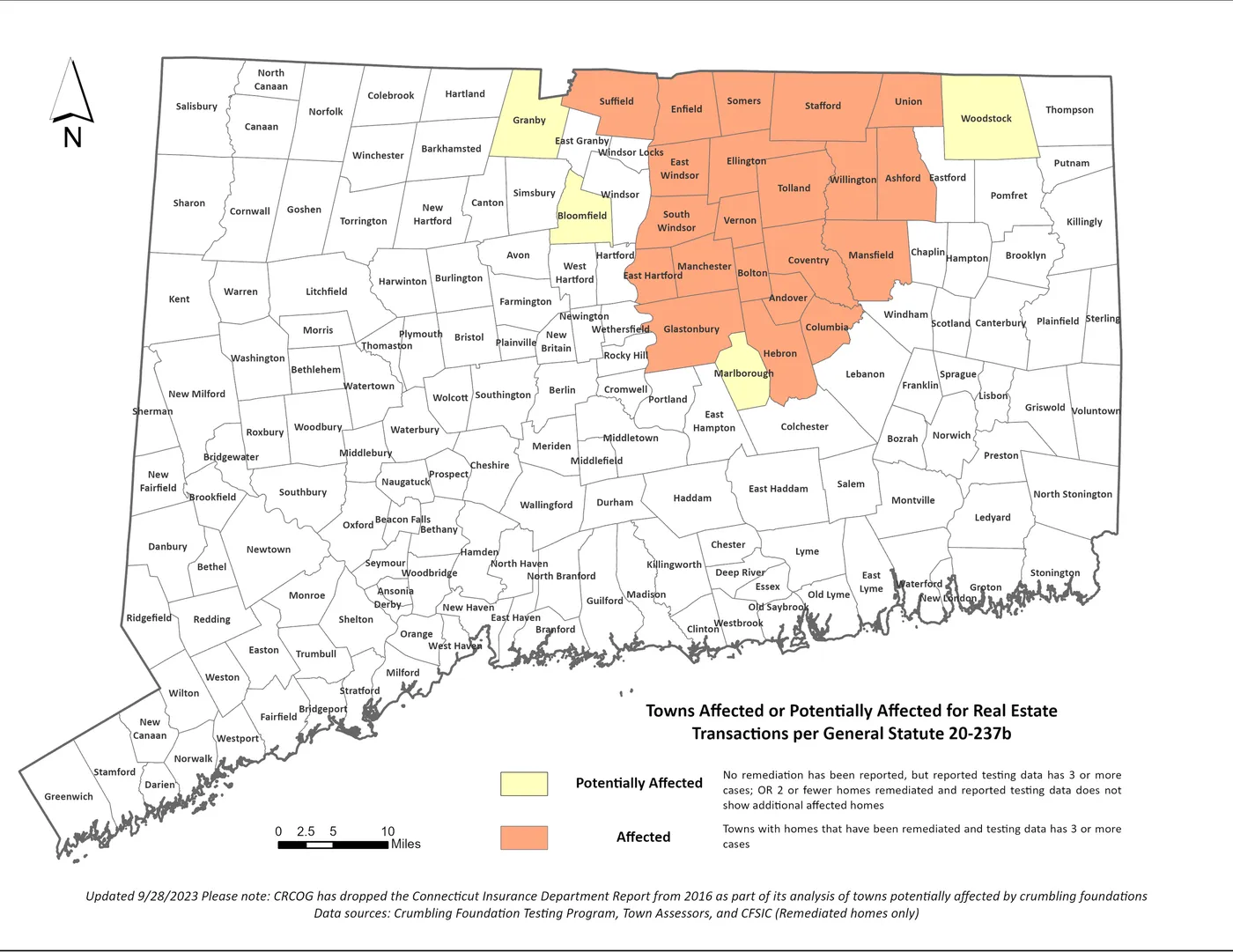
Connecticut experienced a devastating foundation crisis between 2015 and 2018 linked to a quarry in Willington. The culprit was pyrrhotite, an iron sulfide mineral that deteriorates concrete when exposed to oxygen and water, breaking it down into sulfuric acid.
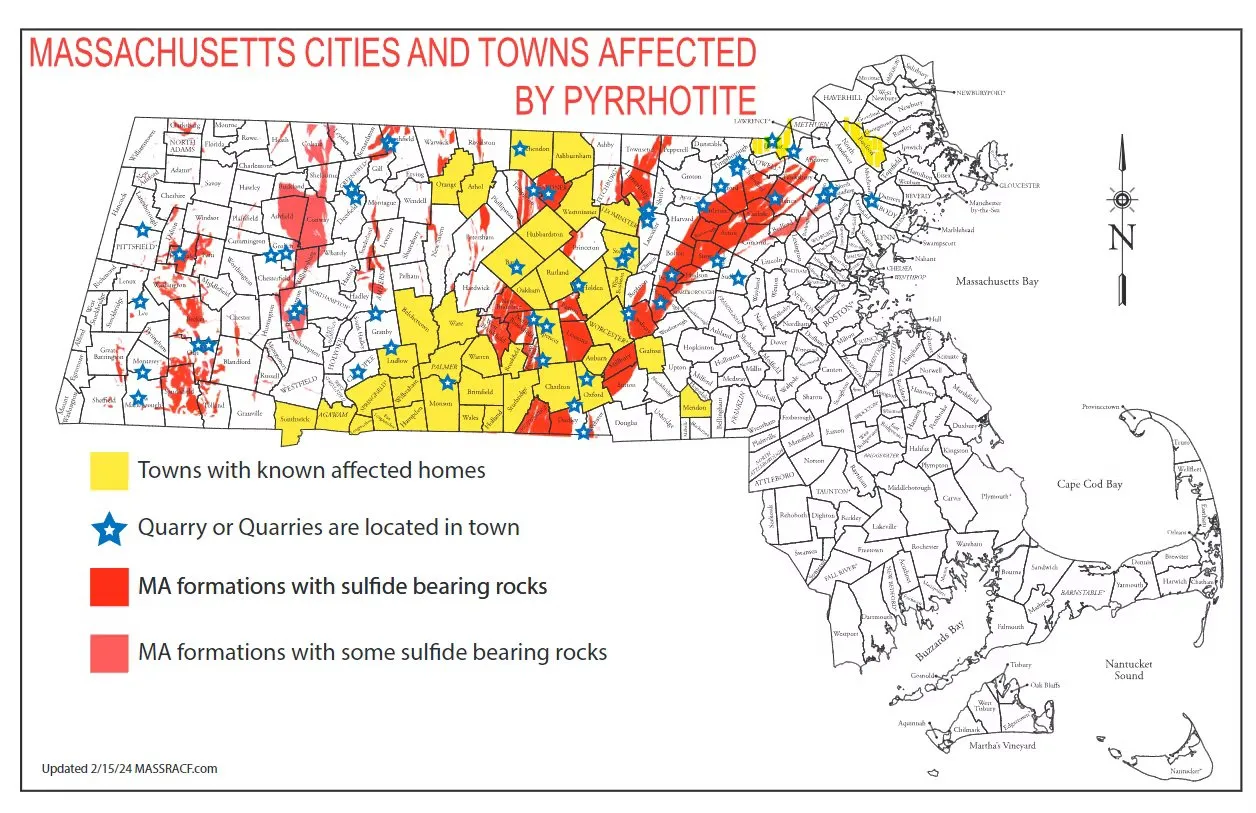
The same issue has now emerged in Massachusetts, beginning in the central region and expanding to over 40 towns, including Boston suburbs.
Why Pyrrhotite Foundation Damage Is So Catastrophic
Pyrrhotite-induced damage cannot be reversed. Unlike normal freeze-thaw cycle cracking that can be repaired with crack injection ($800-$1,300 per crack), pyrrhotite-affected foundations require complete replacement through a process of lifting the home and rebuilding the foundation, costing between $150,000 to $250,000 or more. Understanding the difference between cement and concrete matters here: it is the aggregate (stone) in the concrete, not the cement binder, that contains pyrrhotite. See our foundation repair vs replacement guide for more on when full replacement is truly necessary.
Warning Signs of Crumbling Foundation Concrete
Homeowners should monitor for:
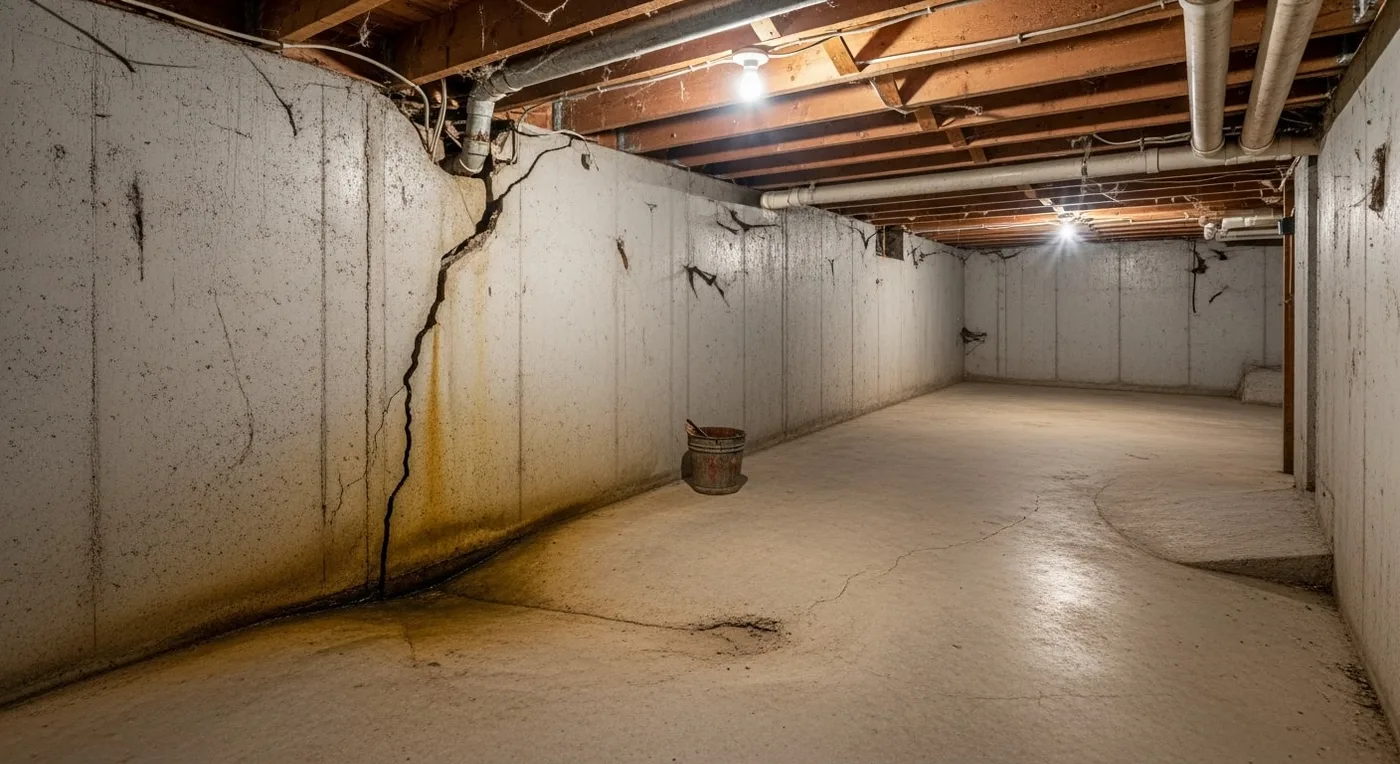
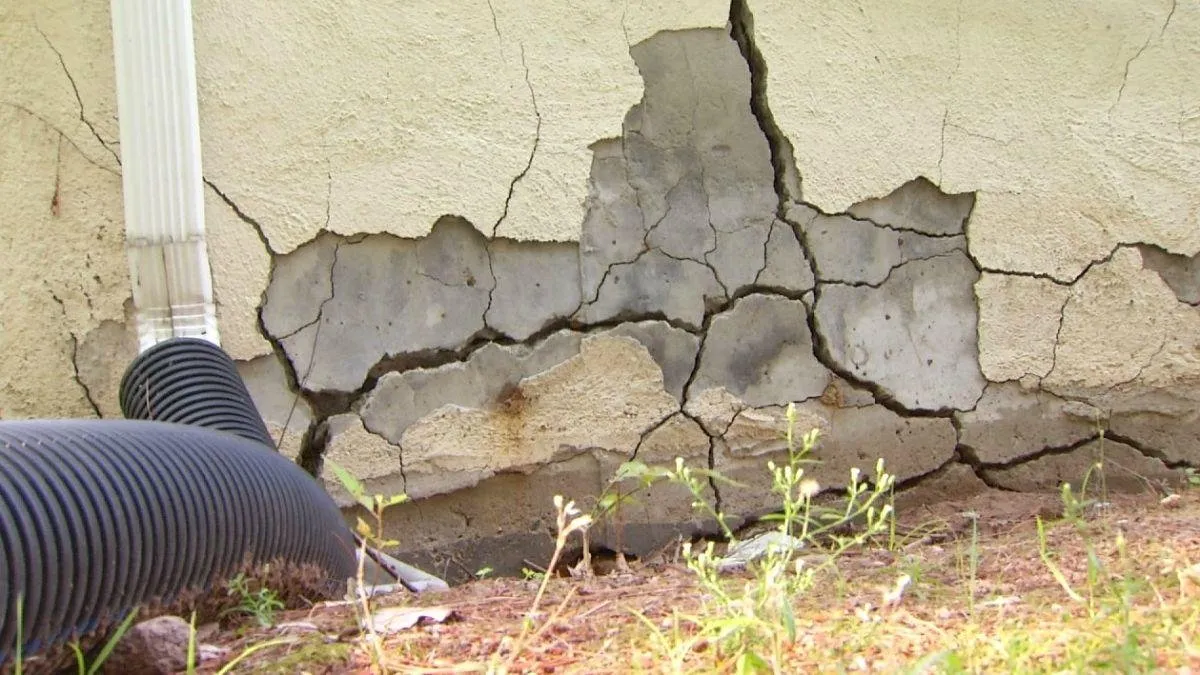
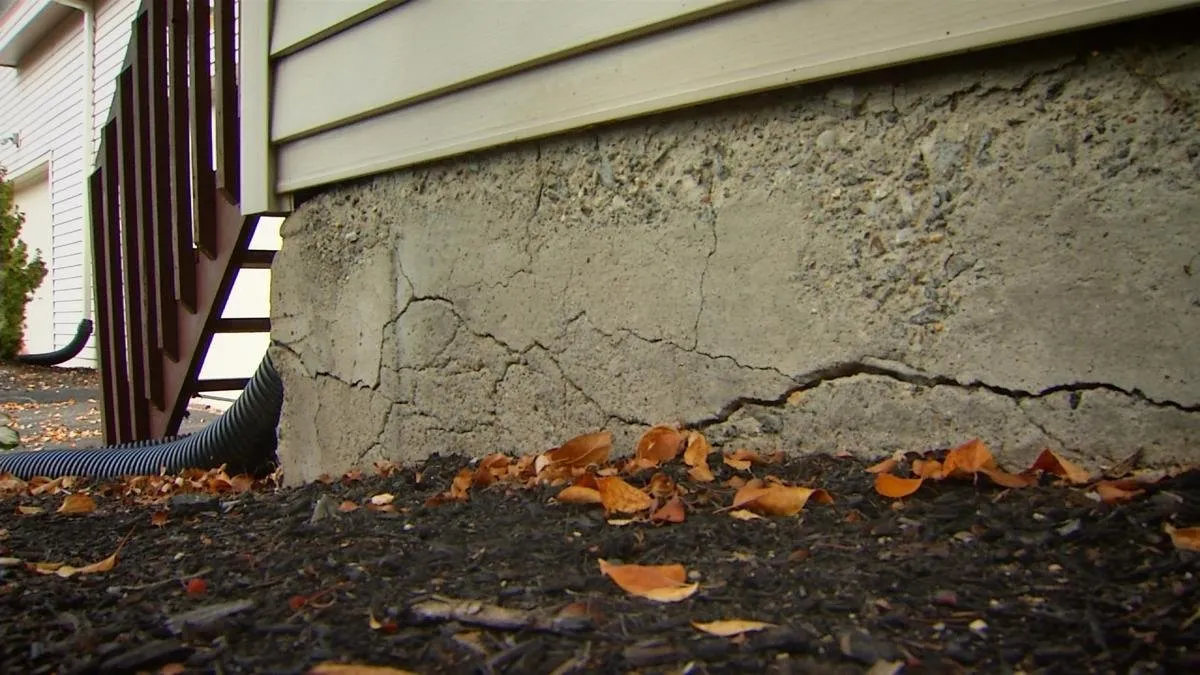
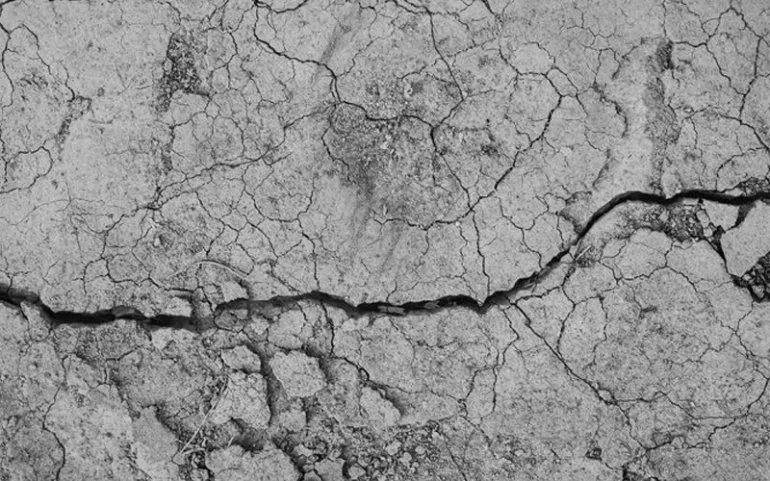
- Horizontal or web-like cracks in concrete — distinct from normal shrinkage cracks
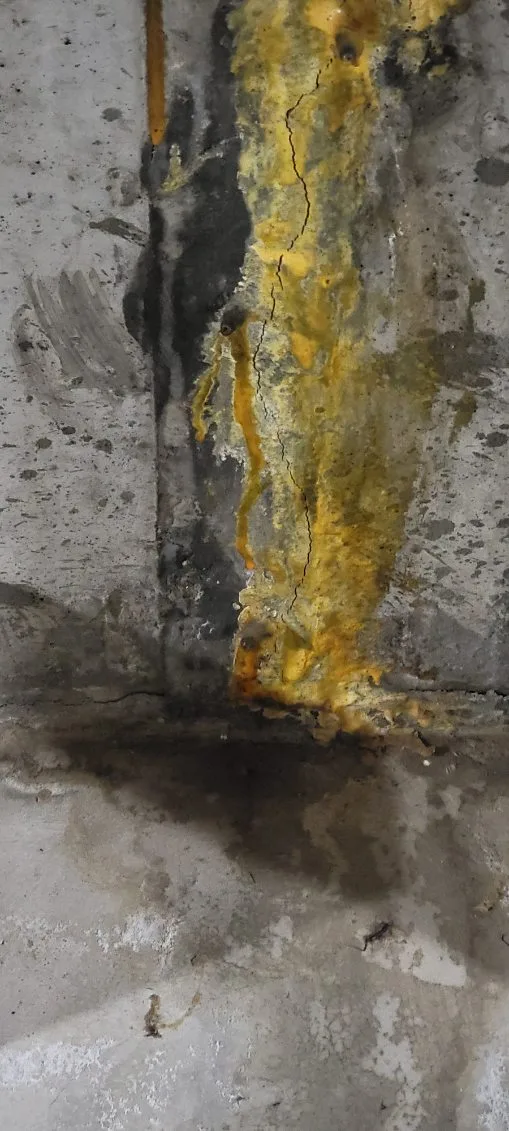
- Rust-colored stains or white powder on basement walls (efflorescence) — the white deposits indicate water passing through deteriorating concrete
- Visible flaking, bowing, or crumbling — probe with a screwdriver; sound concrete resists while pyrrhotite-affected concrete crumbles
- Damage on home exteriors or under basement drywall
- A musty smell in your basement combined with damp walls — may indicate moisture entering through deteriorated concrete
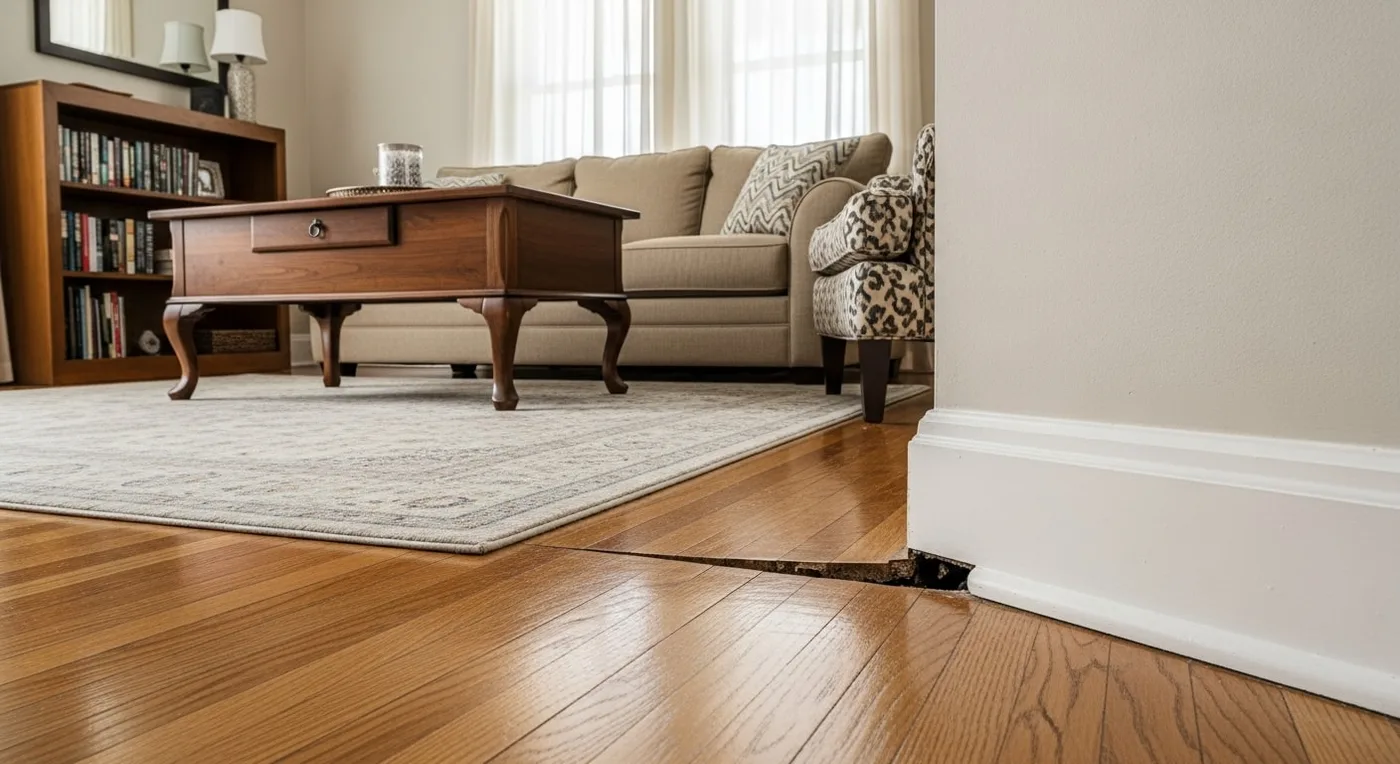
If you notice cracking or bowing before full deterioration sets in, professional wall crack repair can help stabilize the damage and prevent further water infiltration. Carbon fiber staples (stitches) at $200-$300 per stitch can reinforce walls showing early-stage bowing from any cause.
When It Is NOT Pyrrhotite
Not every crumbling foundation is pyrrhotite-related. Normal freeze-thaw damage, poor original concrete mix, and decades of water infiltration can all cause surface deterioration. In New England’s glacial till and clay-heavy soil, foundations face relentless hydrostatic pressure that causes cracking and spalling over time. The key difference: pyrrhotite damage progresses even without water exposure, and the concrete develops a distinctive map-cracking pattern with rust-colored staining. Normal deterioration responds well to repair; pyrrhotite deterioration does not.
How Attack A Crack Can Help
Attack A Crack specializes in diagnosing crumbling foundation issues and offers free assessments. With 50+ years of combined experience and thousands of projects in New England, we can determine whether your foundation’s deterioration is pyrrhotite-related or simply normal freeze-thaw cycle damage in the region’s clay-heavy soil and coastal water table conditions. While we don’t handle full foundation replacements, we connect clients with trusted partners for repair guidance.
If you’re concerned about your foundation, text us a photo for a preliminary assessment or contact us for a free evaluation:
860-573-8760 (CT) | 617-668-1677 (MA)860-573-8760 (CT)617-668-1677 (MA)