Your home’s foundation is the backbone of its structural integrity. If it’s compromised, small issues can quickly turn into costly repairs. Here’s how to check your foundation for problems.
Warning Signs of Foundation Damage
Interior Indicators
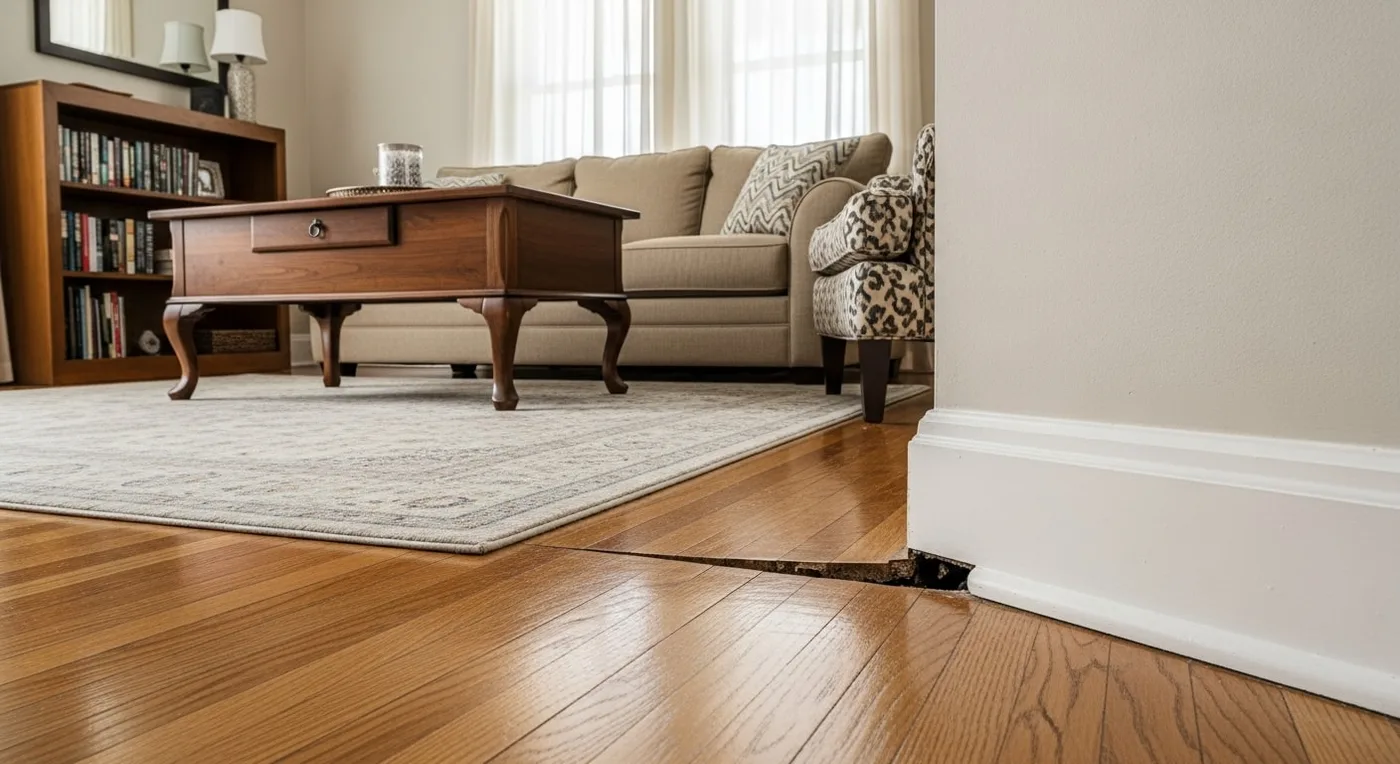
- Doors jamming or failing to latch properly
- Wall cracks, especially above doorways and windows
- Gaps forming in vinyl or ceramic tile over concrete
- Windows sticking or refusing to close completely
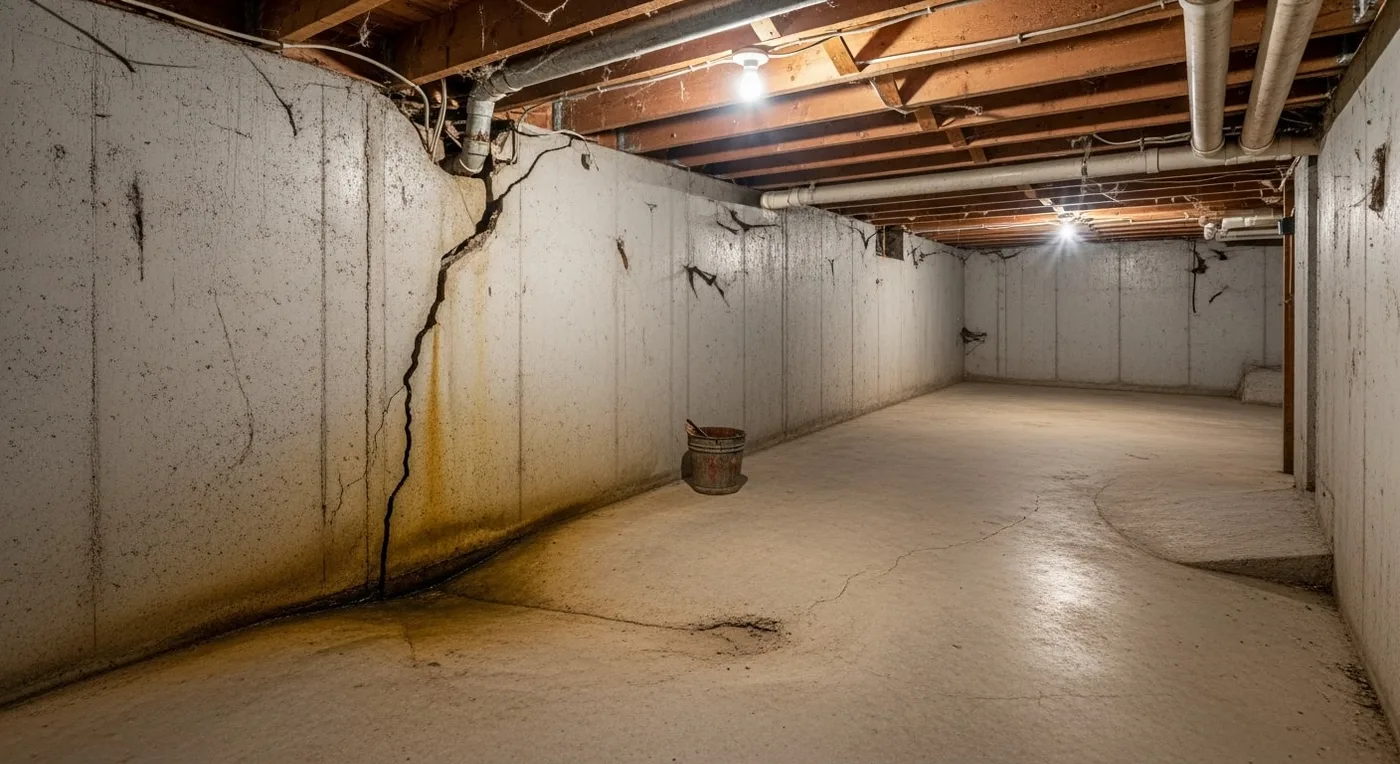
- Water in basement after rain — even small amounts signal foundation cracks
- White powder on basement walls (efflorescence) — mineral deposits from water passing through concrete
- A musty smell in your basement that persists year-round
Exterior Indicators
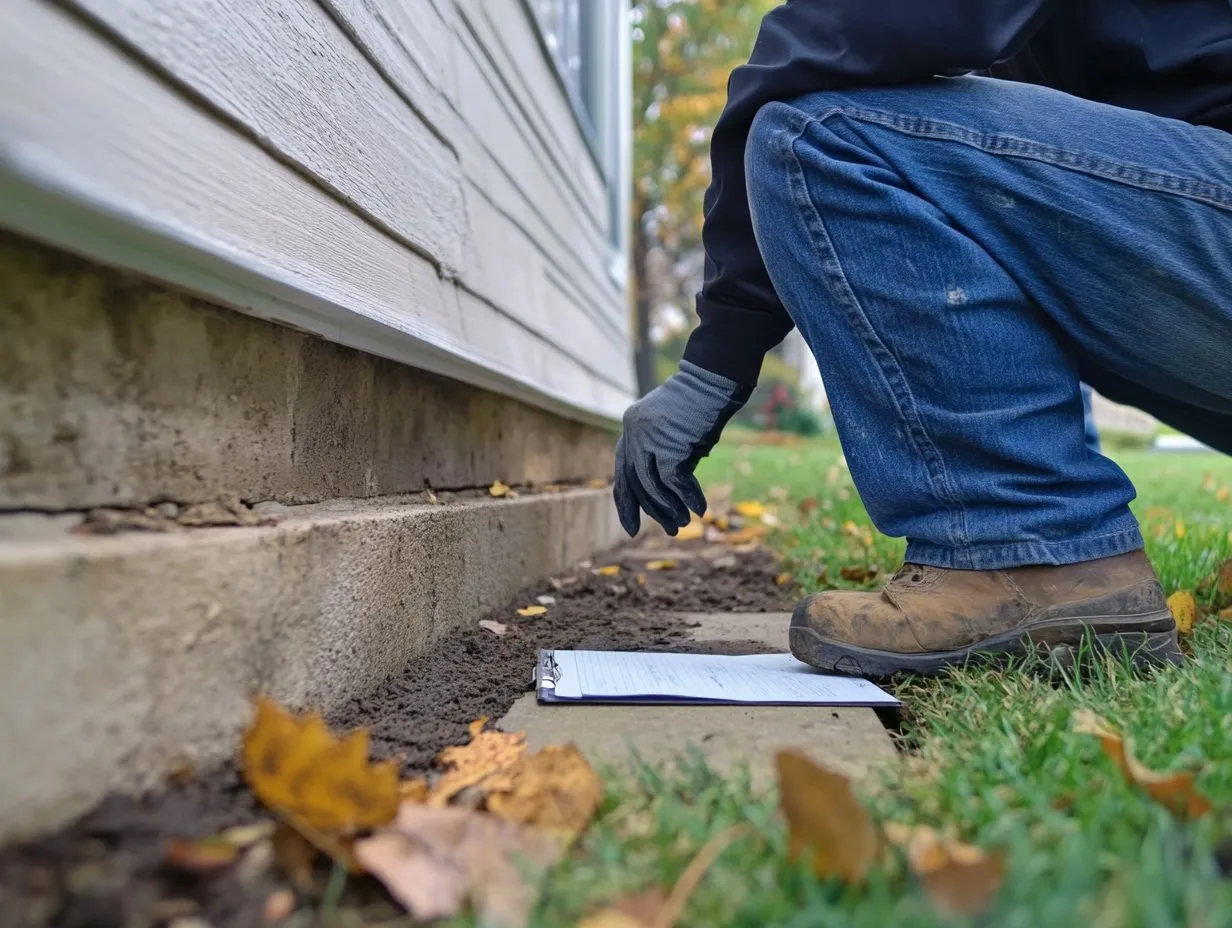
- Walls that appear curved or bulging when sighted from corners
- Concrete showing flaking or crumbling when tested with a screwdriver
- Signs of soil pressure from glacial till or clay-heavy soil, or long-term deterioration from freeze-thaw cycles
Foundation Crack Types: How to Classify What You See
- Hairline cracks: Generally safe but warrant monitoring — seal before winter to prevent freeze-thaw widening
- Stair-step cracks: May signal foundation movement with wall bulging, common in block/CMU foundations
- Horizontal cracks: Most serious; indicate lateral soil pressure from clay-heavy soil or hydrostatic pressure — may require carbon fiber straps to prevent further bowing
- Vertical cracks: Common shrinkage cracks, but professional crack injection ($800-$1,300 per crack) is needed if they leak or widen beyond 1/4 inch
Structural Support and Basement Moisture Checks
- Inspect basement or crawl space posts for moist or rotting wood
- Monitor for standing water indicating drainage complications — basement floor cracks leaking water signal hydrostatic pressure
- Address moisture damage through gutter cleaning and drainage installation
- Check for a persistent musty smell in your basement, which often indicates hidden water intrusion through foundation cracks
10 Preventive Maintenance Tips
- Seal minor cracks (we can talk you through whether DIY or professional is appropriate)
- Maintain consistent soil moisture using rock beds 18”–24” from foundation
- Direct drainage at least 5 feet away (sandy soil) to 10 feet (expansive soil)
- Eliminate standing water through in-ground drains or gravel basins
- Ensure proper grading at 3%–5% slope within 10 feet
- Inspect for puddles after rainfall near the foundation perimeter
- Consider moisture barriers at least 5 feet deep when grading adjustments aren’t feasible
- Install erosion control on steep slopes using ground covers or landscape materials
- Schedule yearly plumbing inspections to catch foundation-threatening leaks
- Check for mold growth in basements and crawl spaces from moisture intrusion — a musty smell in your basement often signals hidden water problems
When NOT to DIY Foundation Repair
While monitoring hairline cracks is appropriate for homeowners, never attempt to seal an actively leaking crack with hydraulic cement or caulk — these surface treatments fail within months and can trap moisture inside the wall, accelerating freeze-thaw damage. Professional crack injection fills the entire void through all 8-10 inches of concrete at 100 PSI. See our DIY vs professional repair guide for more details.
When to Call a Professional
If you notice any of these warning signs, contact Attack A Crack for a free foundation consultation. With thousands of projects across New England, we can assess your situation quickly. Text us a photo for a quick assessment — addressing issues early can prevent costly foundation replacements.
860-573-8760 (CT) | 617-668-1677 (MA)860-573-8760 (CT)617-668-1677 (MA)