Most foundation problems don’t announce themselves with a dramatic crack or a flooded basement. They creep in slowly — a door that sticks a little more each winter, a hairline crack that grows a quarter inch per year, a musty smell that wasn’t there before.
I’m Matt Davis, and I’ve inspected hundreds of foundations across Massachusetts. The homeowners who catch problems early save thousands. Here are the signs to watch for and when each one is normal versus concerning.
1. Foundation Wall Cracks
Cracks are the most obvious sign of foundation problems, but not all cracks are equal.
Vertical Cracks
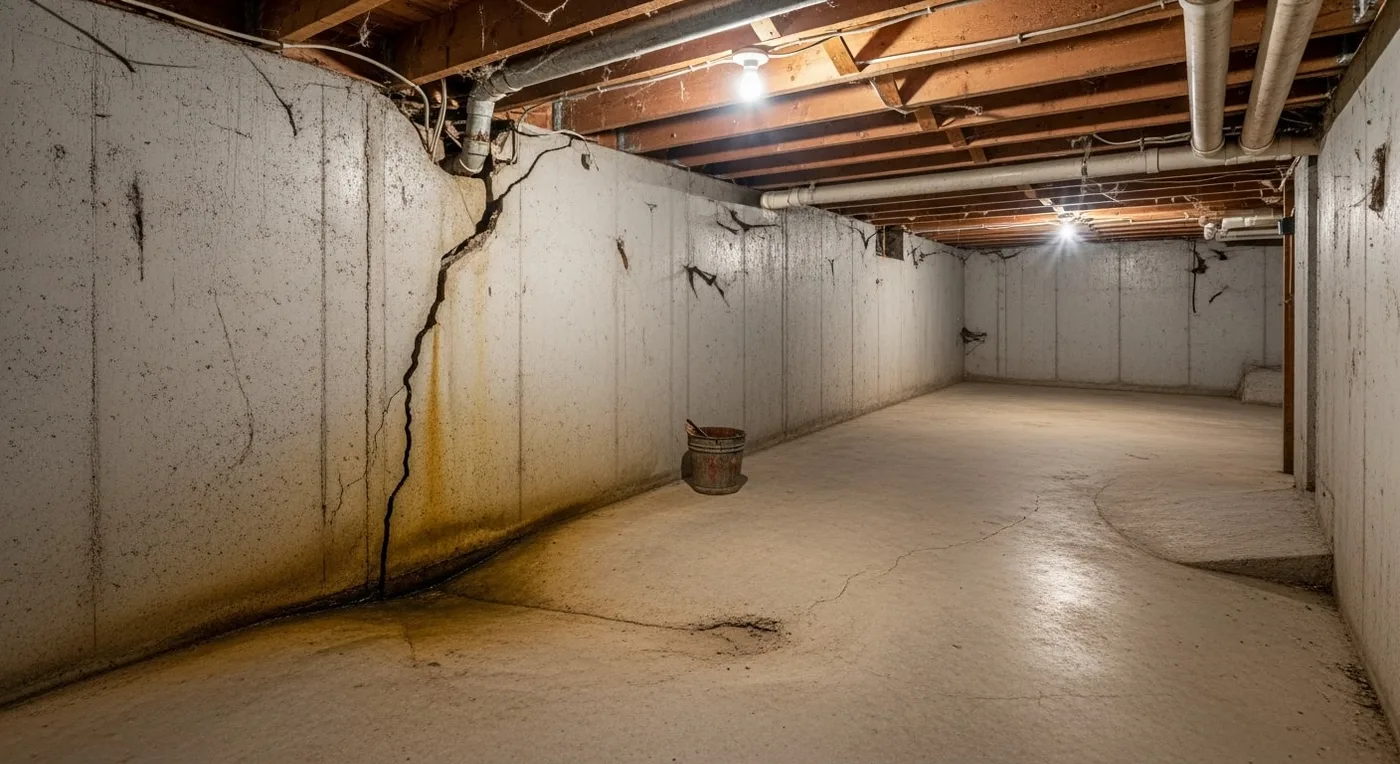
What they look like: Cracks running straight up and down, or within about 30 degrees of vertical.
When it’s normal: Thin vertical cracks (less than 1/16 inch wide) are extremely common. They’re usually caused by concrete shrinkage during curing or minor settling. Almost every poured concrete foundation has at least one.
When to worry: Wider than 1/4 inch, growing over time, or allowing water into your basement. Even hairline cracks that let water in should be addressed — water infiltration leads to mold, efflorescence, and further deterioration.
What to do: For leaking vertical cracks, professional crack injection fills the entire crack through all 8-10 inches of concrete from inside to outside with flexible polyurethane injected at 100 PSI. This is a permanent fix that typically costs $800-$1,300 per crack.
Horizontal Cracks
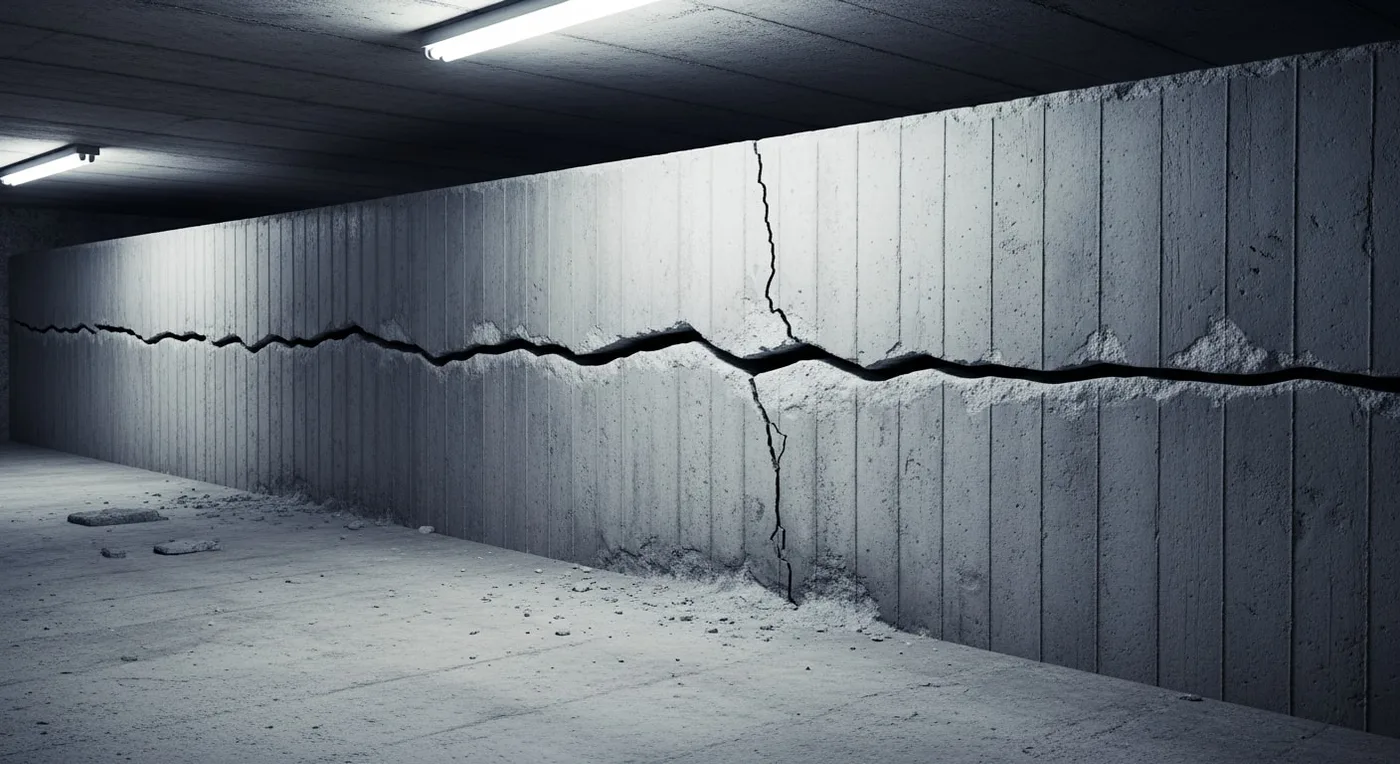
What they look like: Cracks running parallel to the ground, usually at about the mid-height of the wall.
When it’s normal: Never. Horizontal cracks are never “normal settling.”
When to worry: Always. Horizontal cracks indicate lateral pressure from soil, water, or frost pushing against your foundation wall. They often mean the wall is bowing inward — a serious structural issue.
What to do: Get a professional assessment immediately. Horizontal cracks with bowing walls may need carbon fiber reinforcement or steel bracing. Carbon fiber staples (also called stitches) add $200-$300 per location and prevent further movement. Early intervention makes a massive difference in both cost and outcome.
Stair-Step Cracks
What they look like: Cracks following mortar joints in block or brick foundations in a zigzag pattern.
When to worry: When wider than 1/8 inch, in multiple locations, or accompanied by wall displacement. This pattern often indicates differential settlement. Document with photos and measurements, then get a professional evaluation.
2. Sticking Doors and Windows
This is one of the earliest and most overlooked signs of foundation movement.
When it’s normal: Wood doors swell with humidity. If a door sticks only during humid summer months and frees up in winter, moisture is the culprit — not your foundation.
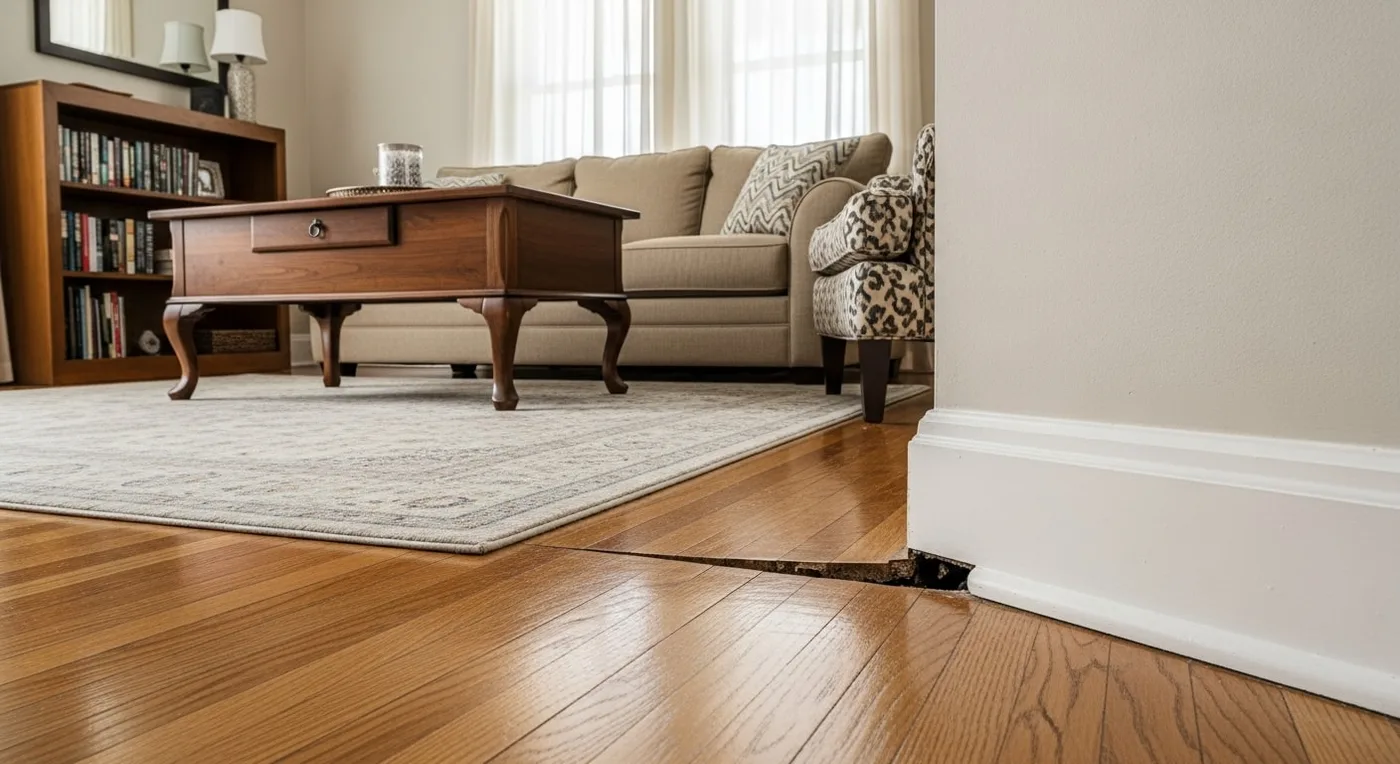
When to worry: Doors or windows that stick year-round and are getting worse. Multiple doors in the same area affected. Gaps at the top of door frames that are wider on one side. These patterns indicate the frame is being distorted by foundation movement.
3. Uneven or Sloping Floors
How to check: Place a marble or ball on the floor and see if it rolls consistently in one direction. You can also use a 4-foot level at various points.
When it’s normal: Older New England homes (and we have a lot of them) often have slightly uneven floors from decades of minor settling. A gentle slope that’s been there for years and isn’t changing is usually not a crisis.
When to worry:
- The slope is noticeable when walking (more than 1/2 inch over 10 feet)
- The floor has become more uneven recently
- You can feel a distinct “dip” or “hump” in specific areas
- The unevenness is accompanied by cracking in walls or ceilings above
What to do: Measure and document the slope. Check the basement directly below the uneven area for foundation cracks, water damage, or deteriorating support structures like rusted lally columns.
4. Wall and Ceiling Cracks Inside the Home
Foundation movement translates upward through the entire structure.
When it’s normal: Small cracks at window and door corners are common from normal building movement.
When to worry: Diagonal cracks at 45-degree angles from window or door corners, horizontal cracks where walls meet ceilings, cracks wide enough to fit a dime, or cracks that keep reopening after patching. Recurring cracks mean something is still moving — investigate the foundation below.
5. Water in Basement After Rain
When it’s somewhat normal: A damp basement during heavy spring rains is common in New England, especially in older homes built before modern waterproofing.
When to worry: Water entering through specific cracks (not general dampness), standing water after moderate rain, water stains growing over time, a musty smell in the basement that won’t go away, or basement floor cracks leaking water. Identify where water is entering — if it’s through a crack, crack injection can stop it permanently. If water appears at the bulkhead connection, bulkhead sealant injection is the permanent fix.
6. Efflorescence (White Mineral Deposits)
What it is: That white powder on basement walls — sometimes called efflorescence — is salt left behind when water passes through concrete and evaporates inside. If you’ve searched “white powder on basement walls,” this is almost certainly what you’re seeing.
When it’s normal: Minor efflorescence in newer basements is common. Light dusting on older walls can be cosmetic.
When to worry: Heavy deposits that keep growing, especially around cracks or joints, or accompanied by damp walls. Efflorescence itself is harmless, but it reliably indicates water is moving through your foundation. Combined with a musty smell in the basement, it points to ongoing moisture intrusion that should be addressed.
7. Gaps and Separations
When it’s normal: Tiny gaps (1/16 inch or less) at material junctions can develop in any house over time.
When to worry: Gaps wider than 1/8 inch, gaps that are growing, separation between the chimney and house structure, or visible daylight through exterior walls. Measure and photograph them — growing gaps indicate active movement.
8. Bowing or Leaning Walls
When it’s normal: Never. Walls should be plumb (perfectly vertical).
When to worry: Always. Any visible lean or bow is a structural concern. Hold a straightedge or level against the wall — any inward curve is significant. Bowing walls can fail suddenly. Contact a foundation specialist immediately.
The New England Context
Living in Connecticut or Massachusetts means your foundation deals with a frost line extending 42-48 inches deep, clay-heavy soil and glacial till that swell and shrink with moisture, relentless freeze-thaw cycles through the winter, about 50 inches of precipitation annually, and an older housing stock built before modern engineering standards. These geological and climate factors make proactive monitoring especially important in our region. With 50+ years of combined experience, we’ve seen how New England’s unique soil conditions accelerate every problem on this list.
When NOT to Ignore Foundation Warning Signs
Some homeowners live with foundation problems for years, telling themselves “it’s just settling.” Here is what waiting costs: a single crack injection at $800-$1,300 today can become a $6,000-$15,000 wall stabilization job if left through multiple freeze-thaw seasons. The crack does not heal itself — every winter in New England’s glacial till and clay-heavy soil makes it worse. If you see any of the signs on this list, at minimum get a free professional assessment to understand what you are dealing with.
How to Monitor Your Foundation
Do a basic foundation check twice a year — spring after the ground thaws, and fall before freeze season. Walk the perimeter looking for new cracks and drainage issues. Inspect basement walls with a flashlight. Check doors and windows for changes. Keep a photo log with timestamps — it’s invaluable if you ever need to show a professional how things have progressed.
When to Call a Professional
Contact a foundation specialist if you notice:
- Any horizontal crack in your foundation
- Vertical cracks wider than 1/4 inch or actively leaking
- Multiple signs from this list appearing together
- Any sign that’s getting worse over time
- Bowing or leaning walls (this is urgent)
At Attack A Crack, our assessments are completely free. Text us photos and we will explain what we see and give you honest recommendations — including telling you when you don’t need repair.
860-573-8760 (CT) | 617-668-1677 (MA)860-573-8760 (CT)617-668-1677 (MA)
Many homeowners get the answer they need from photos alone.