What Are Carbon Fiber Stitches?

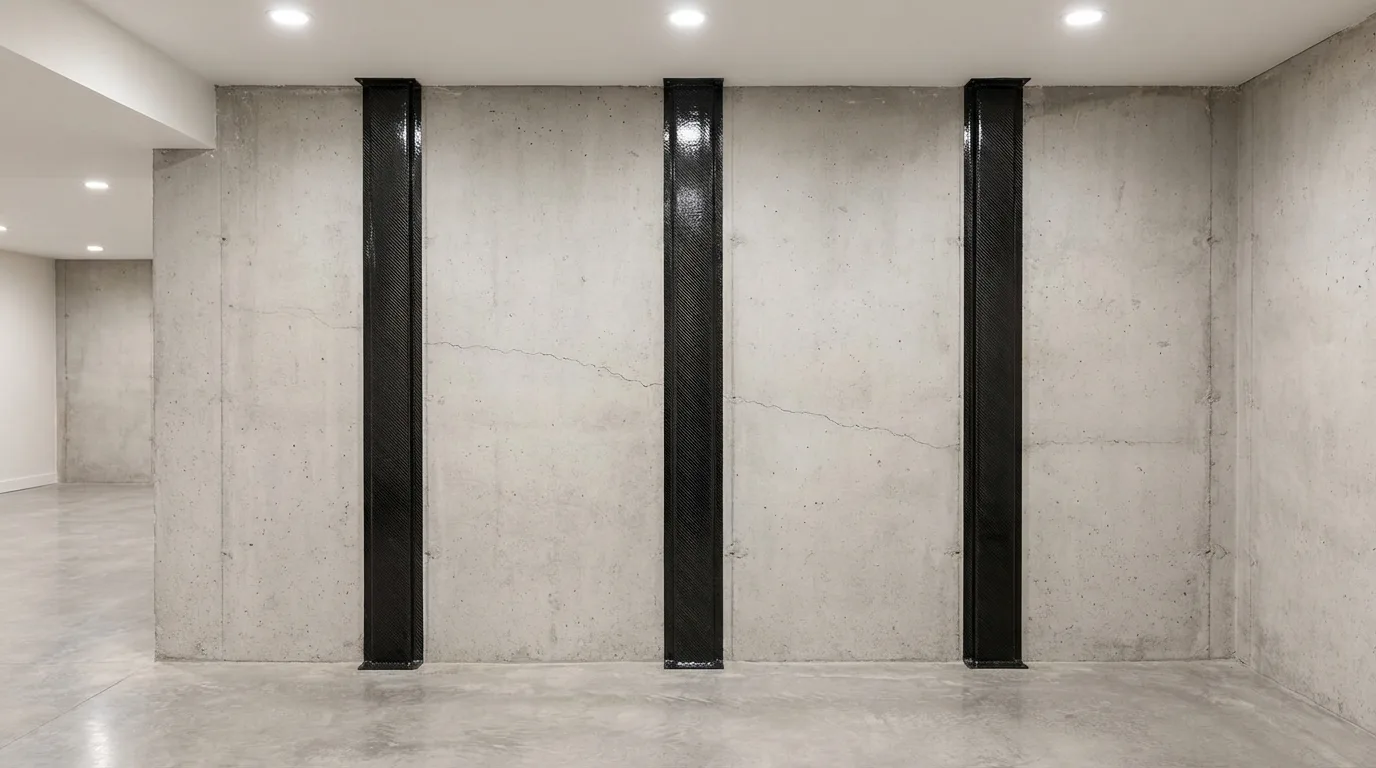
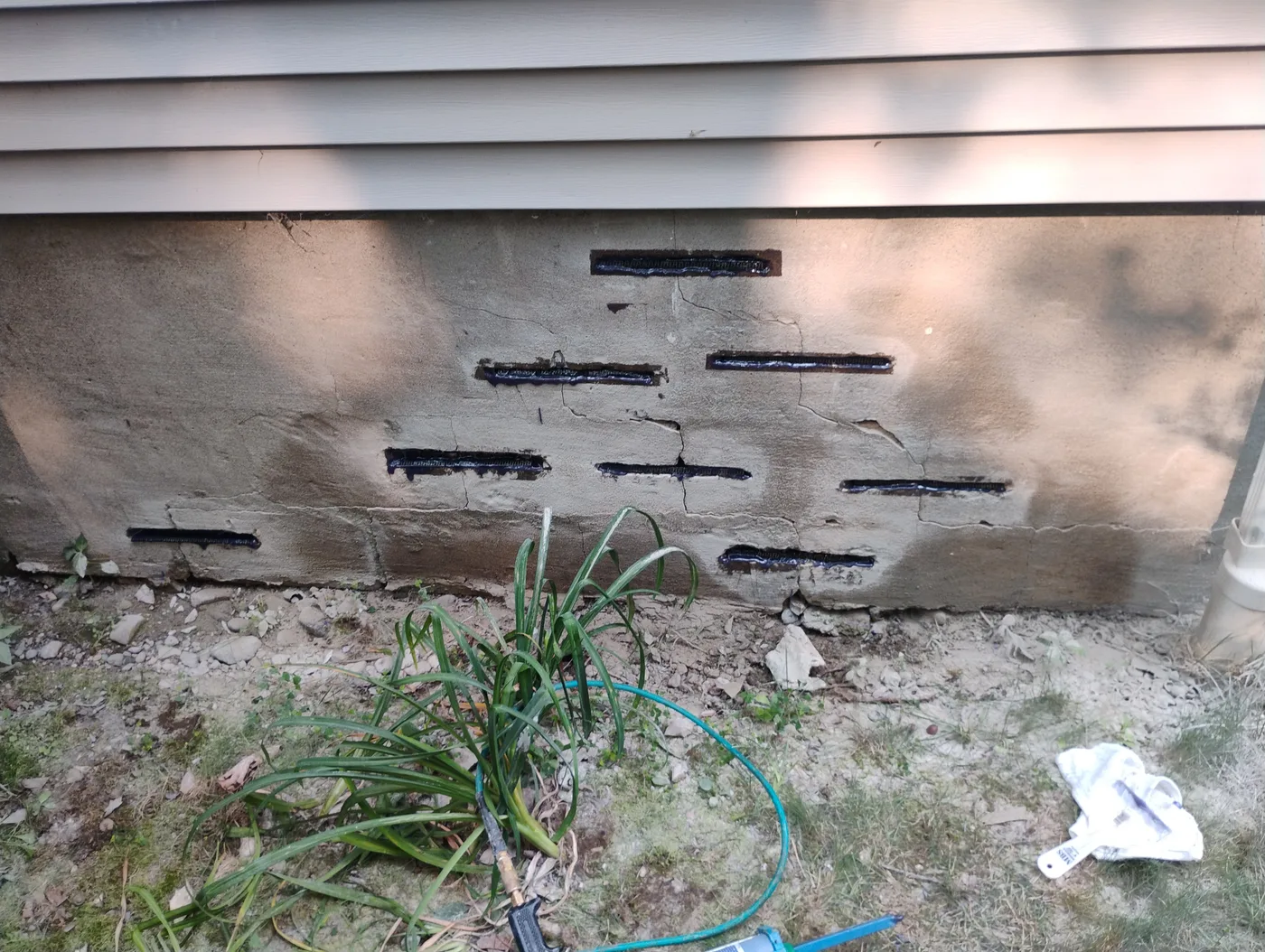
Carbon fiber stitches (also called carbon fiber staples) are high-strength carbon fiber strips embedded in structural epoxy and installed across foundation cracks to prevent further movement. They bridge both sides of the crack, distributing stress across a wider area and permanently stabilizing the wall — without excavation or steel beams.
Carbon fiber stitches cost $200–$300 per stitch and provide permanent structural reinforcement for foundation cracks that show movement or stress. If your wall has cracks wider than 1/4 inch, stair-step patterns, or signs of bowing, stitches lock both sides together and prevent further movement. For walls with significant bowing, full carbon fiber straps may be the better solution. Every carbon fiber repair includes our lifetime guarantee — the material itself will outlast your home.
Call for a free structural assessment. 860-573-8760 (CT) | 617-668-1677 (MA)Call for a free structural assessment. 860-573-8760 (CT)Call for a free structural assessment. 617-668-1677 (MA)
Carbon Fiber Foundation Repair: Maximum Strength, Minimal Intrusion
When foundation cracks indicate structural stress, carbon fiber stitches provide the reinforcement needed to stop movement and stabilize your foundation. This advanced structural repair method adds incredible strength without the cost and disruption of traditional steel I-beam reinforcement or exterior excavation.
What Are Carbon Fiber Stitches (Staples)?
Carbon fiber stitches — also known as carbon fiber staples or carbon fiber reinforcement strips — are high-strength carbon fiber fabric embedded in structural epoxy. Similar to Torque Lock-style staple systems used industry-wide, when installed across foundation cracks they:
- Prevent further crack expansion — locking both sides of the crack together
- Distribute stress across a wider area — reducing point loads on the concrete
- Add tensile strength to the concrete — compensating for concrete’s natural weakness in tension
- Create permanent structural reinforcement — no maintenance, no degradation, no corrosion
The Science Behind Carbon Fiber
We use Kevlar-grid carbon fiber configured specifically for foundation repair. The material properties are remarkable:
- 800,000 PSI tensile strength — 4 to 10 times stronger than high-strength steels
- Completely corrosion-resistant — unlike steel, which rusts and causes additional damage
- Zero elongation under load — no stretching, no fatigue, no degradation over time
- Bonds permanently to concrete via structural epoxy
- Thin profile (less than 1/8” when installed)
- Custom-shaped for each specific repair need
Carbon fiber staples and straps have largely replaced the steel I-beam reinforcement that was the industry standard for decades. The old approach required excavation on both interior and exterior walls to install steel beams — expensive, invasive, and the steel eventually corrodes. Our carbon fiber reinforcement achieves superior structural results from the interior only, with no excavation required. The material is used in aerospace, marine, and high-performance structural applications worldwide.
When Carbon Fiber Is Needed
Structural Crack Patterns
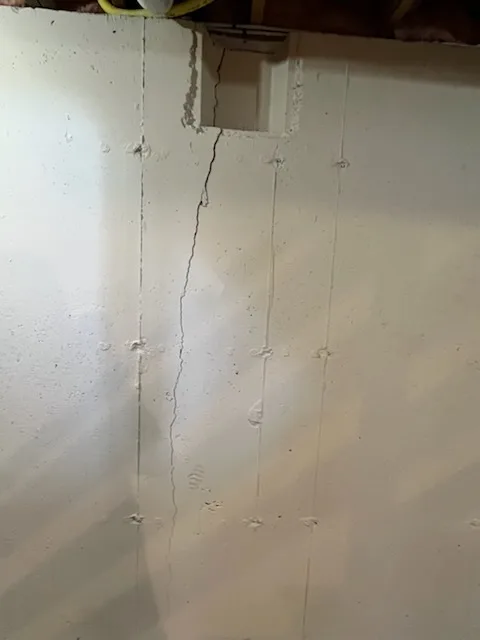
- Stair-step cracks in block foundations
- Horizontal cracks with wall displacement
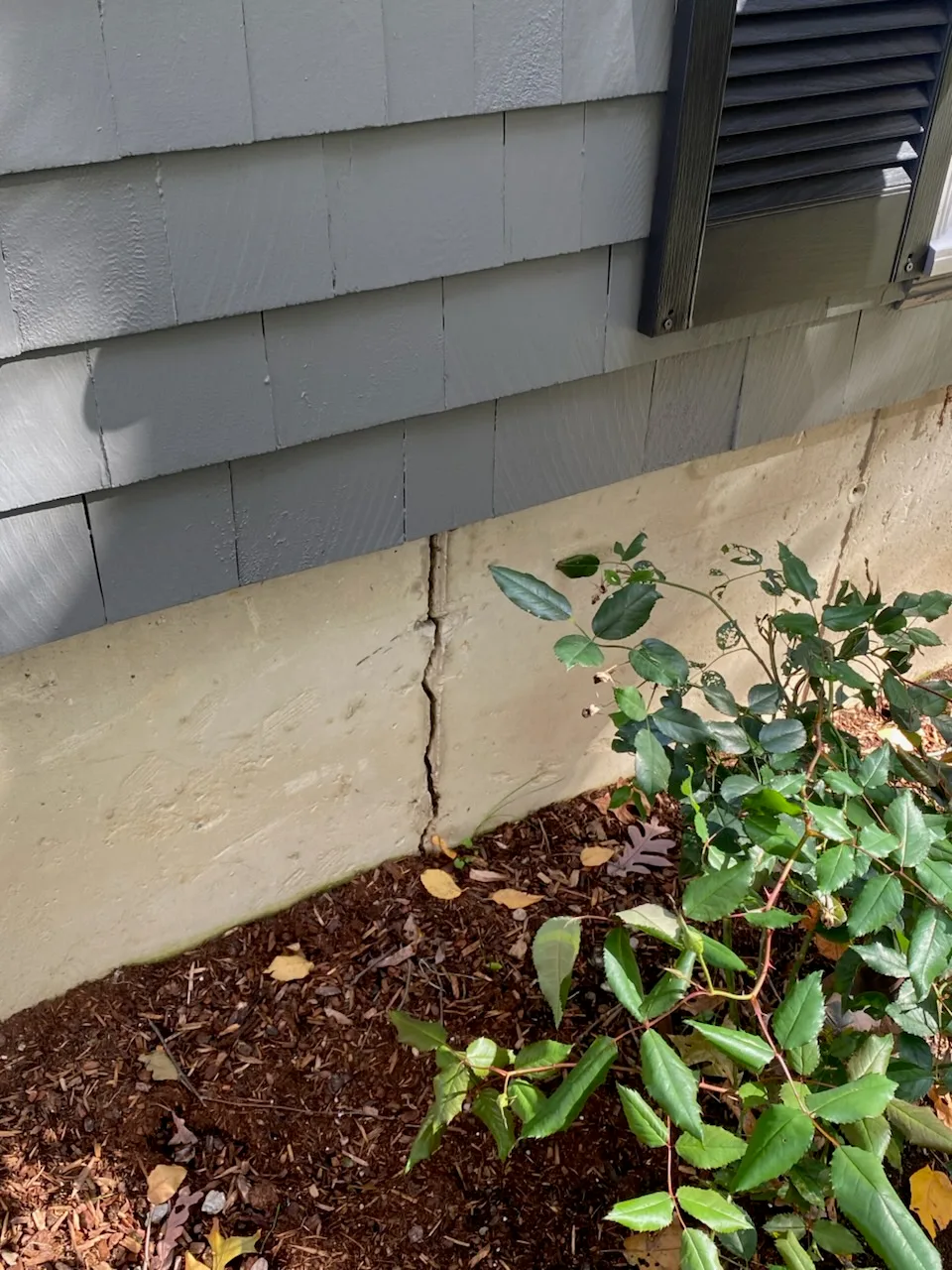
- Cracks wider than 1/4 inch
- Cracks showing differential movement
High-Stress Areas
- Foundation corners
- Areas near large trees
- Walls showing bowing
- Previously repaired cracks that re-opened
Preventive Reinforcement
- Added protection for injection repairs
- Reinforcing older foundations
- Preparation for increased loads (additions, etc.)
Our Carbon Fiber Installation Process
Step 1: Surface Preparation We grind a shallow channel across the crack where the stitch will be installed. The concrete surface is cleaned and profiled for optimal bonding.
Step 2: Crack Injection Before installing stitches, we will often inject the crack to seal and fill it. This addresses water infiltration and provides a stable base.
Step 3: Stitch Installation Carbon fiber fabric is saturated with structural epoxy and embedded into the prepared channel. The material bonds permanently to the concrete.
Step 4: Finishing Once cured, the repair can be smoothed and painted to blend with surrounding walls. The low profile makes it nearly invisible.
Carbon Fiber Staples vs. Traditional Methods
| Feature | Carbon Fiber Staples | Steel I-Beams | Wall Anchors | Concrete Replacement |
|---|---|---|---|---|
| Excavation required | No | Yes (both sides) | Yes (exterior) | Yes |
| Corrosion risk | None | High | Moderate | N/A |
| Installation time | Same day | Multi-day | Multi-day | Weeks |
| Wall profile | < 1/8” | 4-6” | Visible plates | N/A |
| Tensile strength | 800,000 PSI | ~60,000 PSI | Varies | N/A |
| Cost | $200-$300/stitch | $$$$ | $$$ | $$$$$ |
What Carbon Fiber Staples Cost
Carbon fiber stitches typically cost $200-$300 per stitch. Most cracks need 2-5 stitches depending on length and severity. For severe wall stabilization requiring full carbon fiber straps or grids, costs range from $6,000-$15,000 depending on wall size and number of straps needed.
When NOT to Use Carbon Fiber
We believe in honest recommendations — carbon fiber isn’t always the right answer:
- Simple shrinkage cracks — injection alone is sufficient and more cost-effective
- Cosmetic-only cracks — no structural reinforcement needed
- Severely bowing walls (>2 inches) — may require excavation and steel reinforcement
- Crumbling/deteriorated concrete — carbon fiber needs solid concrete to bond to
If your crack doesn’t need carbon fiber, we’ll tell you. Most residential cracks need injection only — we save carbon fiber for when it’s truly warranted.
Applications Beyond Cracks
Carbon fiber reinforcement can also be used for:
- Bowing wall stabilization: Full carbon fiber straps resist lateral soil pressure and provide permanent wall stabilization without excavation
- Beam wrapping: Strengthening wooden beams and lally columns
- Slab reinforcement: Adding strength to concrete floors with carbon fiber grids
- Preventive strengthening: Reinforcing older foundations before problems develop
- Foundation corners: High-stress areas prone to diagonal cracking
Post-Repair Monitoring
After carbon fiber stitches are installed, periodic monitoring helps confirm the repair is holding and no new movement has occurred. Here’s what to watch for:
- Check for new cracking around or beyond the repaired area — new cracks could indicate that the underlying cause (soil pressure, drainage) hasn’t been fully addressed
- Measure any existing bow quarterly — use a long straightedge or string line against the wall and record the measurement. The bow should remain stable; any increase warrants a callback
- Look for fresh efflorescence — new white mineral deposits near the repair may indicate water is finding a new pathway
- Monitor doors and windows — sticking or misalignment in nearby frames can signal ongoing foundation movement
If anything changes, call us — warranty callbacks are always free. 860-573-8760 (CT) | 617-668-1677 (MA)If anything changes, call us — warranty callbacks are always free. 860-573-8760 (CT)If anything changes, call us — warranty callbacks are always free. 617-668-1677 (MA)
The Attack A Crack Carbon Fiber Advantage
- Expert assessment — we’ll tell you honestly if you need carbon fiber or if injection alone will do
- Proper installation — surface prep is critical for permanent bonding; we don’t cut corners
- Combined approach — injection + carbon fiber staples for complete structural and waterproof repair
- Lifetime guarantee — we stand behind every installation
- 20+ years of New England foundation experience
- Text us a photo for a free assessment — most issues can be diagnosed from photos alone