What Is Foundation Crack Injection?
Foundation crack injection is a repair method where epoxy or polyurethane resin is injected under high pressure into a concrete foundation crack, filling it completely from the interior surface through to the exterior soil. It permanently seals the crack against water infiltration and restores structural integrity — no exterior excavation required.
Foundation crack injection costs $800–$1,300 per crack and is the only repair method that fills a crack through the full wall thickness — from interior surface to exterior soil. If you’re seeing water after rain, white mineral deposits, or a musty basement smell, a crack is letting groundwater in. Our high-pressure injection process seals it permanently with flexible urethane or structural epoxy, and every repair is backed by a lifetime guarantee.
Call for a free assessment. 860-573-8760 (CT) | 617-668-1677 (MA)Call for a free assessment. 860-573-8760 (CT)Call for a free assessment. 617-668-1677 (MA)
The Science of Permanent Repair
Foundation crack injection is the gold standard for repairing poured concrete foundation cracks. Whether you call it cement crack repair or concrete crack repair, the science is the same: unlike surface sealers, hydraulic cement patches, or caulk, injection fills the entire crack from interior surface to exterior soil, creating a complete seal that lasts the lifetime of your home.
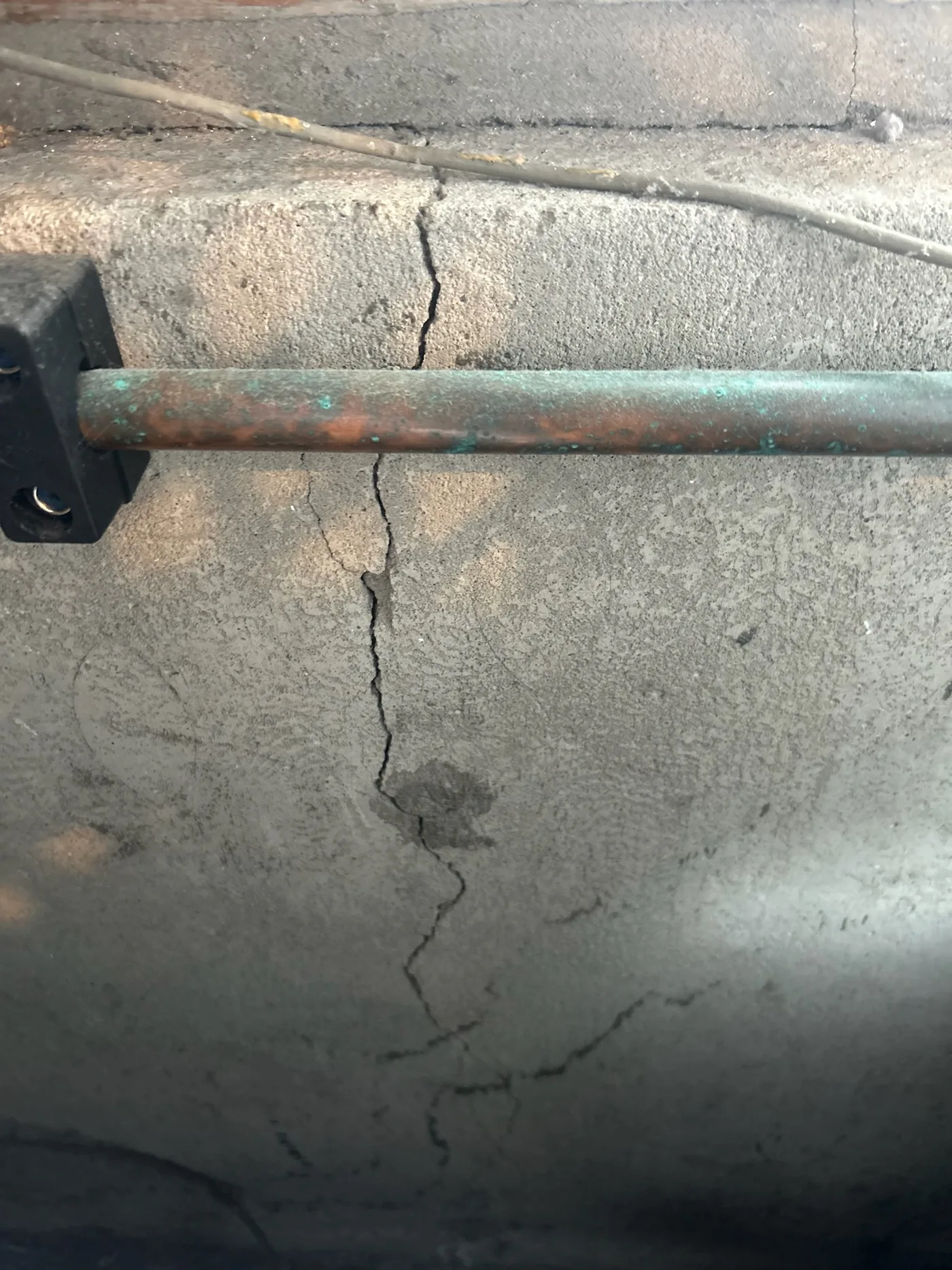
Most homeowners notice water in the basement after rain, white powder on basement walls (efflorescence), or a musty smell in the basement — all signs that a foundation crack is allowing water infiltration. Crack injection addresses the root cause, not just the symptom.
Hydrostatic Pressure: The Force Behind Foundation Leaks
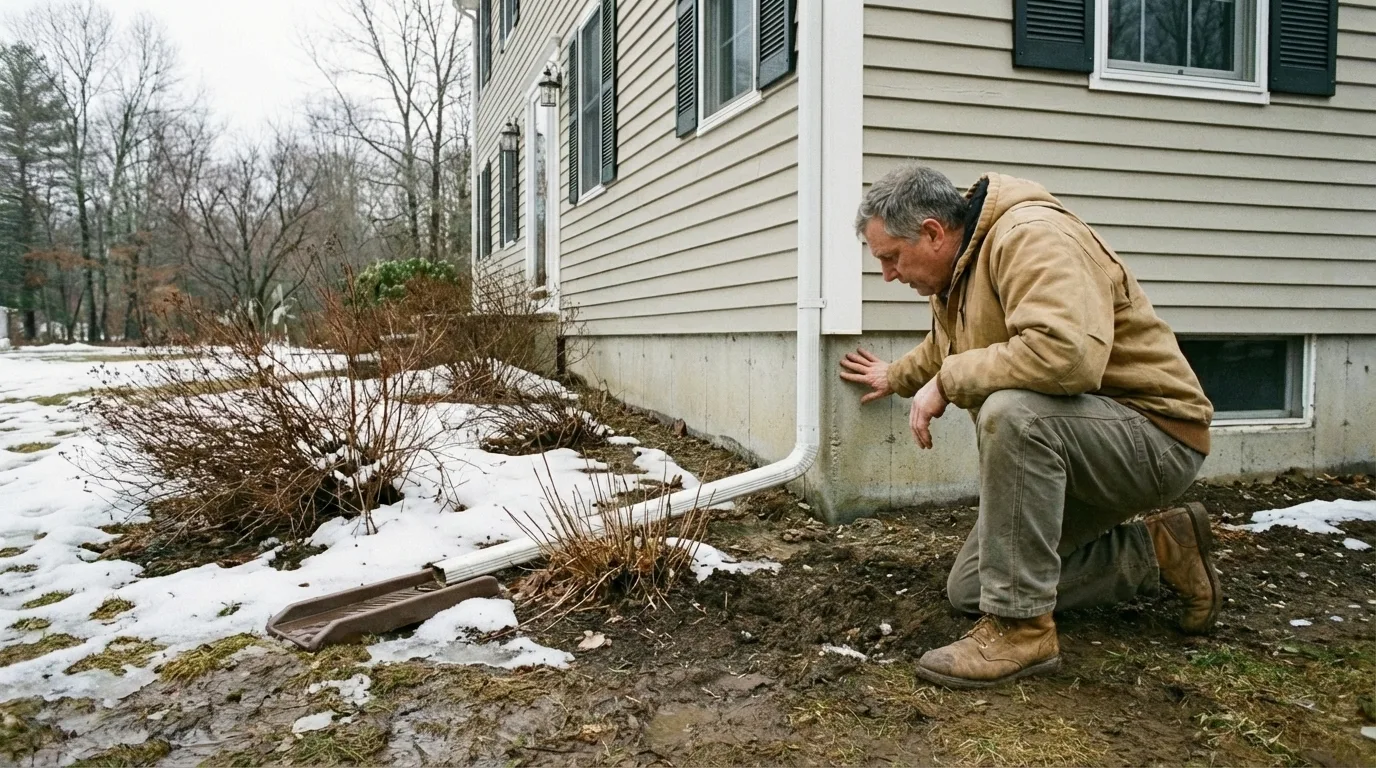
Hydrostatic pressure is the force exerted by groundwater against your foundation walls and floor slab. After rain or snowmelt, soil surrounding your foundation becomes saturated. That water has weight — roughly 62 pounds per cubic foot — and it presses against every square inch of your concrete. Cracks, no matter how small, become the path of least resistance. Hydrostatic pressure doesn’t just push water through existing cracks; over time, it can widen them, turning a hairline crack into an active leak. This is why cracks that were “dry for years” suddenly start leaking — the soil drainage around your home changed, or the water table rose, and the pressure finally exceeded what the crack could resist.
Freeze-Thaw Cycles and New England Foundations
New England’s climate is uniquely hard on concrete foundations. Water enters microscopic pores in the concrete, and when temperatures drop below freezing — which happens dozens of times each winter in Connecticut and Massachusetts — that water expands by roughly 9%. This freeze-thaw cycle widens existing micro-cracks each year, gradually turning invisible stress fractures into visible, leaking cracks. A foundation that was crack-free at 10 years old may develop shrinkage cracks by 15, and active leaks by 20 — not because of poor construction, but because of the relentless freeze-thaw cycle working on the concrete over decades.
How Crack Injection Works
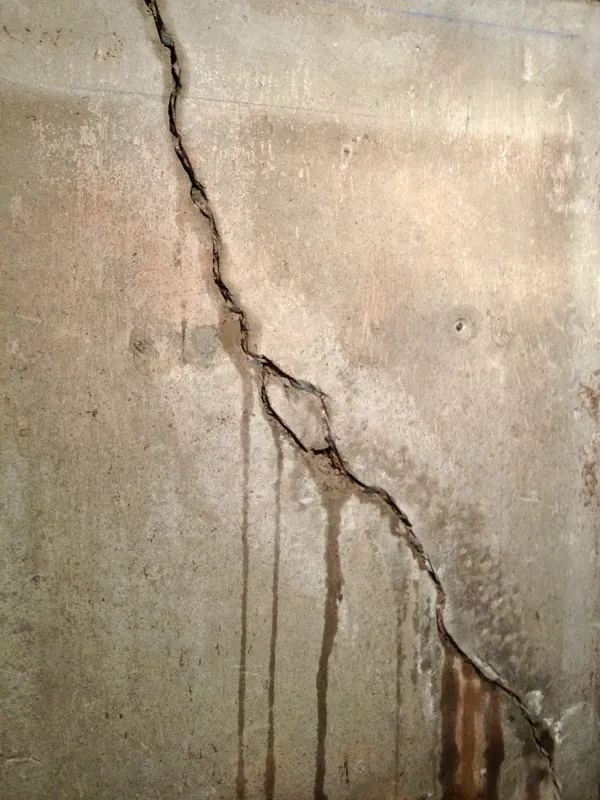
The Problem Foundation cracks aren’t surface issues — they extend through the entire wall thickness (typically 8-10 inches of concrete). Surface repairs only address what you can see, leaving the rest of the crack open to water seeping through from saturated soil. Basement floor cracks leaking water are often caused by the same hydrostatic pressure that drives water through wall cracks.
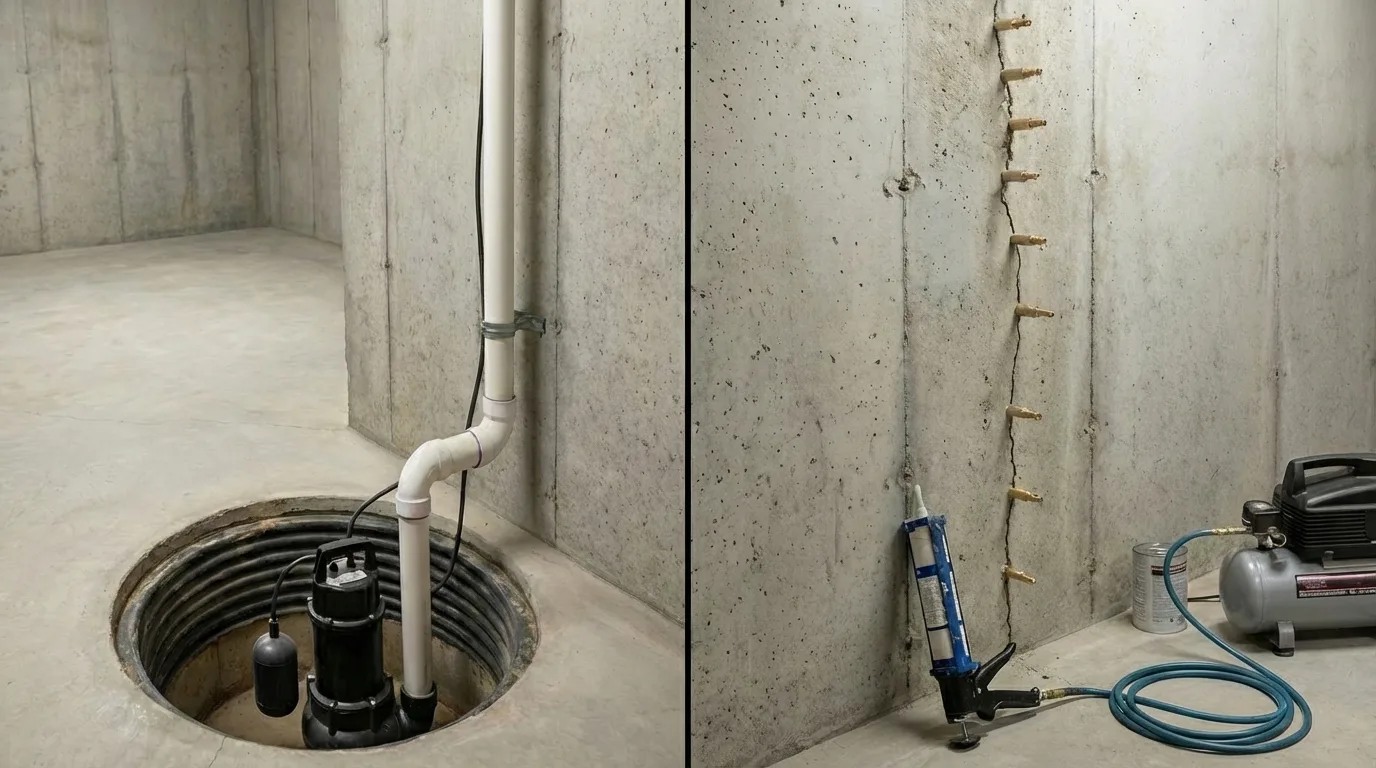
The Solution Crack injection fills the complete crack void using either polyurethane foam or epoxy resin. Under controlled pressure, specialized resin is forced through injection ports spaced every 8-10 inches, filling the crack completely from interior surface through to the exterior soil. The result is a solid, permanent repair that’s stronger than the original concrete.
Our Injection Process
Step 1: Crack Assessment We evaluate each crack to determine:
- Cause of cracking
- Whether it’s active (still moving) or dormant
- Structural vs. non-structural nature
- Appropriate injection material
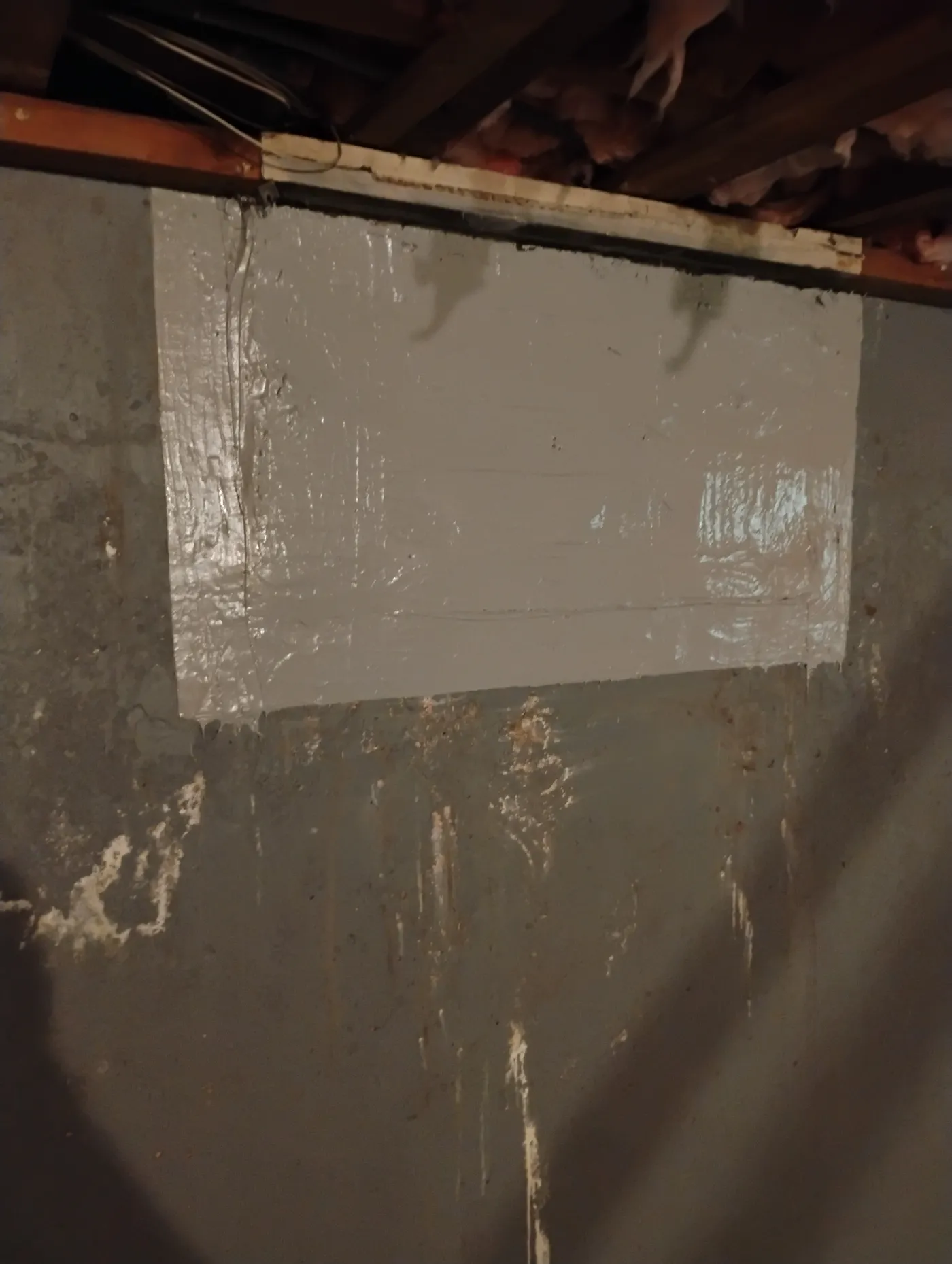
Step 2: Diamond Saw Preparation We use a diamond saw blade to grind a precise groove along the crack—1/2 inch wide and 1/4 inch deep. All debris is cleared. This creates a clean channel for port placement and ensures the finished repair sits flush with the wall.
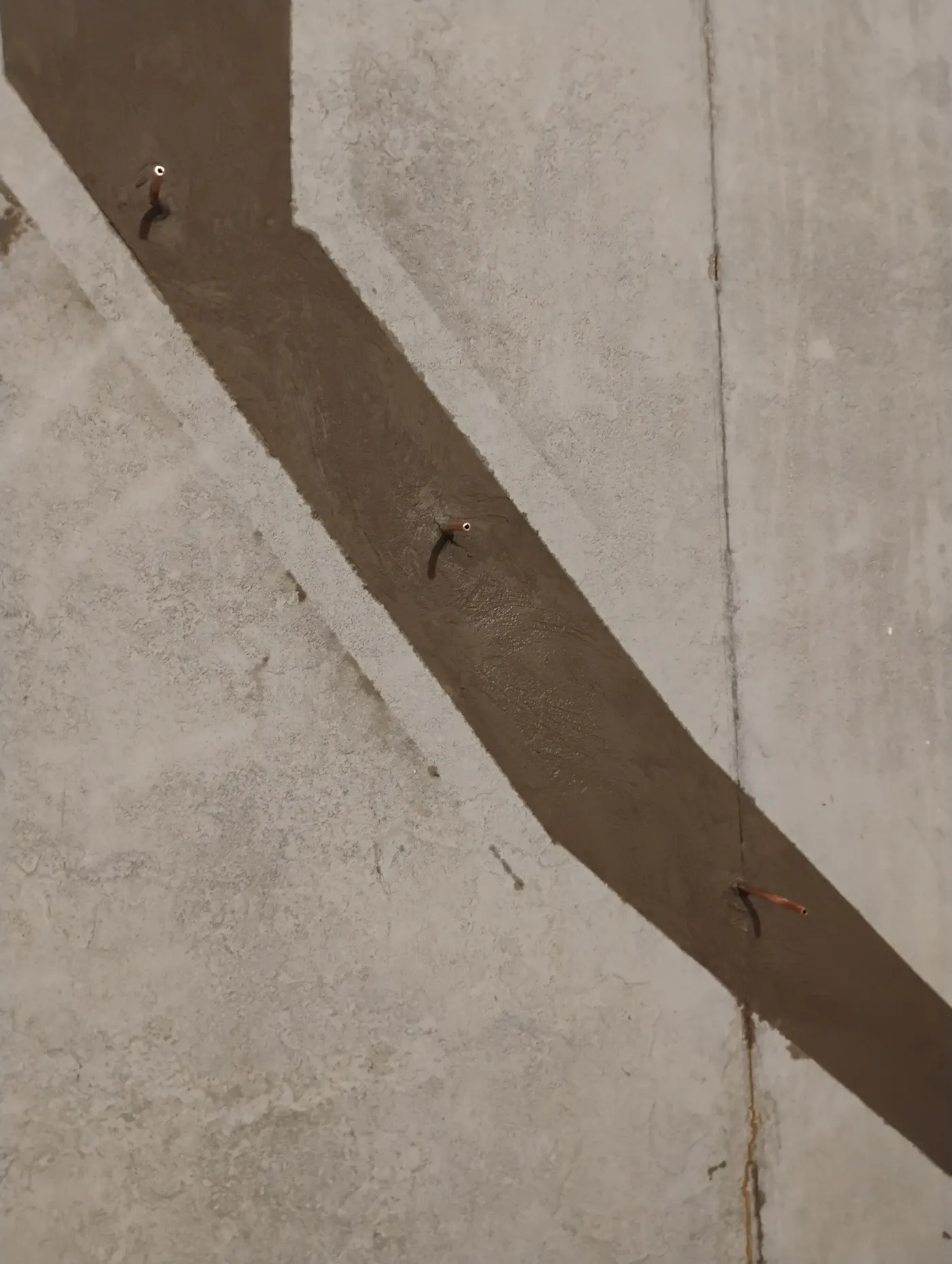
Step 3: Copper Port Installation We install copper injection ports spaced 8-10 inches apart along the entire crack length. Each port is sealed in place with hydraulic cement. Unlike the plastic ports many contractors use, copper ports are stronger, seal better, and don’t leave unsightly bumps on your wall.
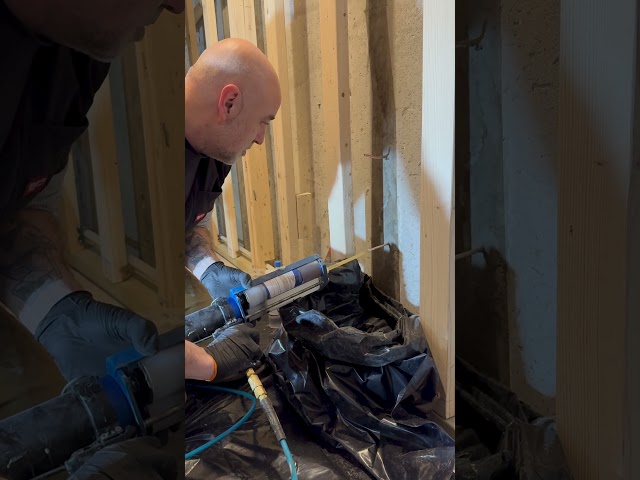
Step 4: 100 PSI Injection Starting from the lowest port, we inject resin at 100 PSI—far more than the industry standard. This isn’t low-pressure surface filling. Our pressure forces material through the complete wall thickness—8 to 10 inches—from the interior surface through to the exterior soil and down to the footer level. As each port fills, we move to the next, ensuring complete saturation.
Step 5: Finishing Each port is crimped off after injection. A specialized surface patch is applied over the groove, leaving a clean, polished finish. No ports sticking out, no rough patches—just a clean repair backed by our lifetime guarantee.
Injection Material Options
Flexible Polyurethane Foam
- Expands up to 20x original volume to fill voids completely
- Remains flexible after curing — accommodates seasonal movement
- Reacts with water to accelerate cure (ideal for active leaks)
- Meets ASTM C-920 performance standards for joint sealants
- Best for: Waterproofing, active cracks, moving cracks
Structural Epoxy Resin
- Creates bond stronger than the original concrete — true structural epoxy restores the wall to its original load-bearing capacity
- Rigid when cured — restores full structural integrity
- Best for: Structural cracks, load-bearing walls, cracks requiring maximum strength
Hybrid Approach Some cracks benefit from both materials — structural epoxy resin for strength at critical points, flexible polyurethane foam for expansion and waterproofing throughout. We select the right material (or combination) based on 20+ years of diagnosing New England foundations.
Why Injection Beats Other Methods
| Method | Fills Complete Crack | Flexible | Structural | Permanent |
|---|---|---|---|---|
| Injection | Yes | Available | Available | Yes |
| Surface Seal | No | Varies | No | No |
| Hydraulic Cement | No | No | No | No |
| Caulk | No | Yes | No | No |
Types of Cracks We Inject
- Vertical shrinkage cracks — the most common type in poured concrete foundations
- Diagonal settlement cracks — often caused by soil settlement or frost heave
- Stair-step cracks — follow mortar joints in block foundations, indicating settlement or lateral pressure (these are a diagnostic sign that structural evaluation may be needed alongside injection)
- Cracks around windows and doors — stress concentration points
- Floor-to-wall joint cracks (cove joints) — where the slab meets the footing
- Cracks at cold joints — where concrete pours met during original construction
What Crack Injection Costs
Most foundation crack injection repairs cost $800-$1,300 per crack, depending on length, accessibility, and material required. This is a fraction of the cost of exterior excavation ($3,000-$8,000+) and provides a superior seal. Every repair includes our lifetime guarantee.
When Injection Isn’t the Answer
We believe in honest assessment — we’ll tell you when injection isn’t the right fix. Some situations require different approaches:
- Severely deteriorated concrete: Crumbling or spalling concrete may need section replacement
- Bowing walls: Require stabilization (often with carbon fiber staples or steel reinforcement) before crack repair
- Active structural movement: Must address the cause first — soil pressure, drainage, or footing issues
- Block wall cores: May need interior drainage instead of injection
- Cracks wider than 1/2 inch with displacement: May indicate a structural issue requiring engineering assessment
We’ll always recommend the right solution — even if it means referring you to a structural engineer or another specialist. That honesty is how we’ve built our reputation over 20+ years. Text us a photo for a free assessment.
Radon Prevention: An Overlooked Benefit
Every sealed crack is one less pathway for radon gas — important in New England where radon levels are among the highest in the country. The EPA estimates that 1 in 5 homes in Connecticut and Massachusetts exceed the action level of 4 pCi/L. Foundation cracks are a primary entry point for radon, which rises through the soil and enters your basement through any gap in the concrete. While crack injection alone isn’t a complete radon mitigation system, sealing all foundation cracks is a critical first step — and many homeowners find that sealing cracks reduces their radon readings significantly even without a dedicated mitigation fan.
The Attack A Crack Injection Guarantee
- Lifetime warranty on all injection repairs
- 100 PSI injection pressure — far above industry standard
- Complete crack filling — we don’t stop until it’s done
- Clean, professional work — your basement stays clean
- 20+ years of New England foundation experience