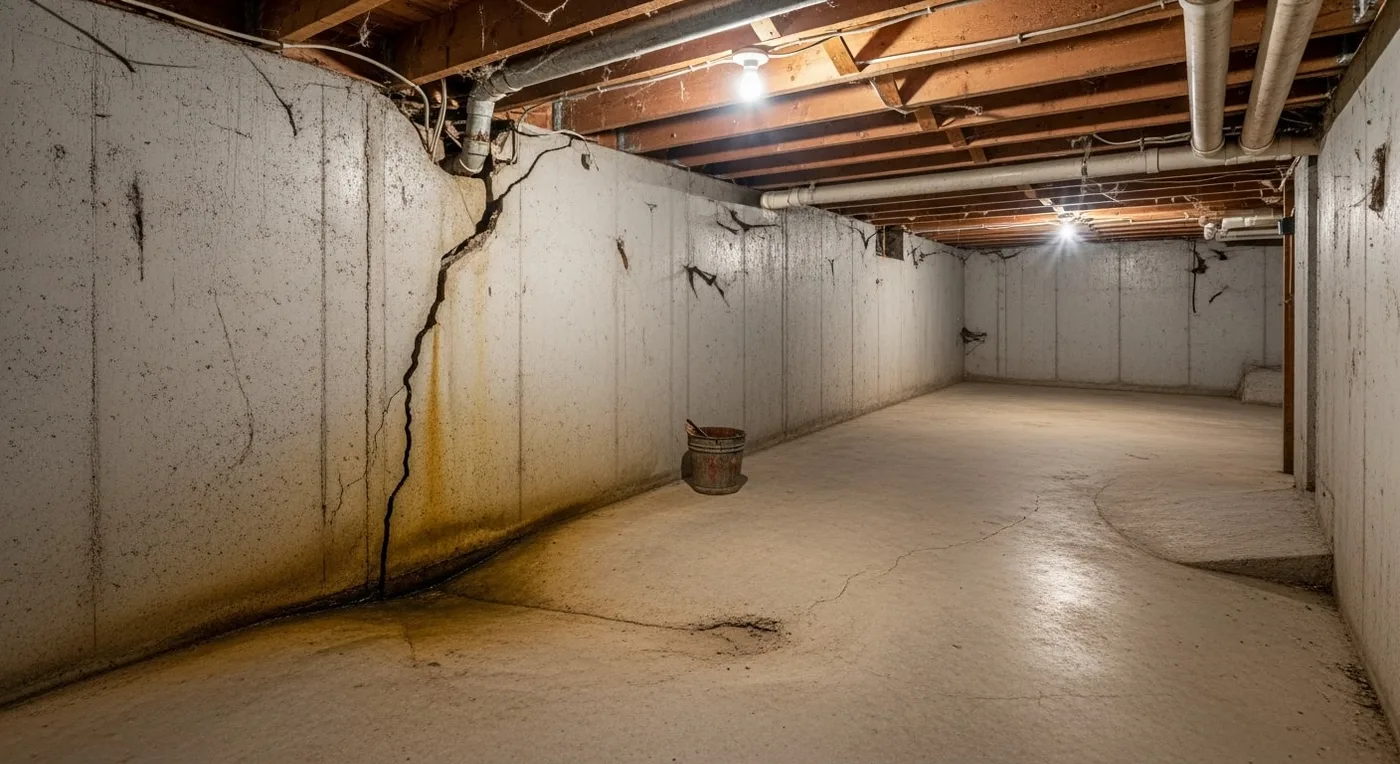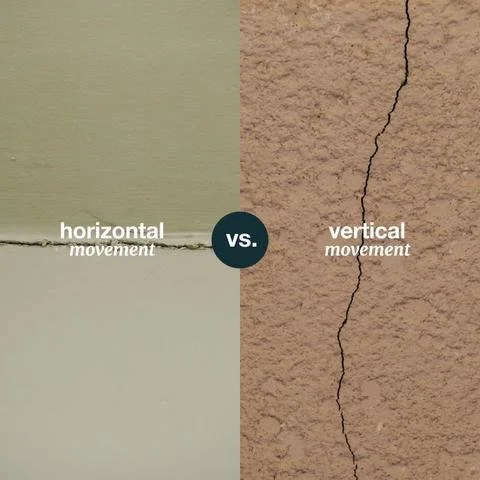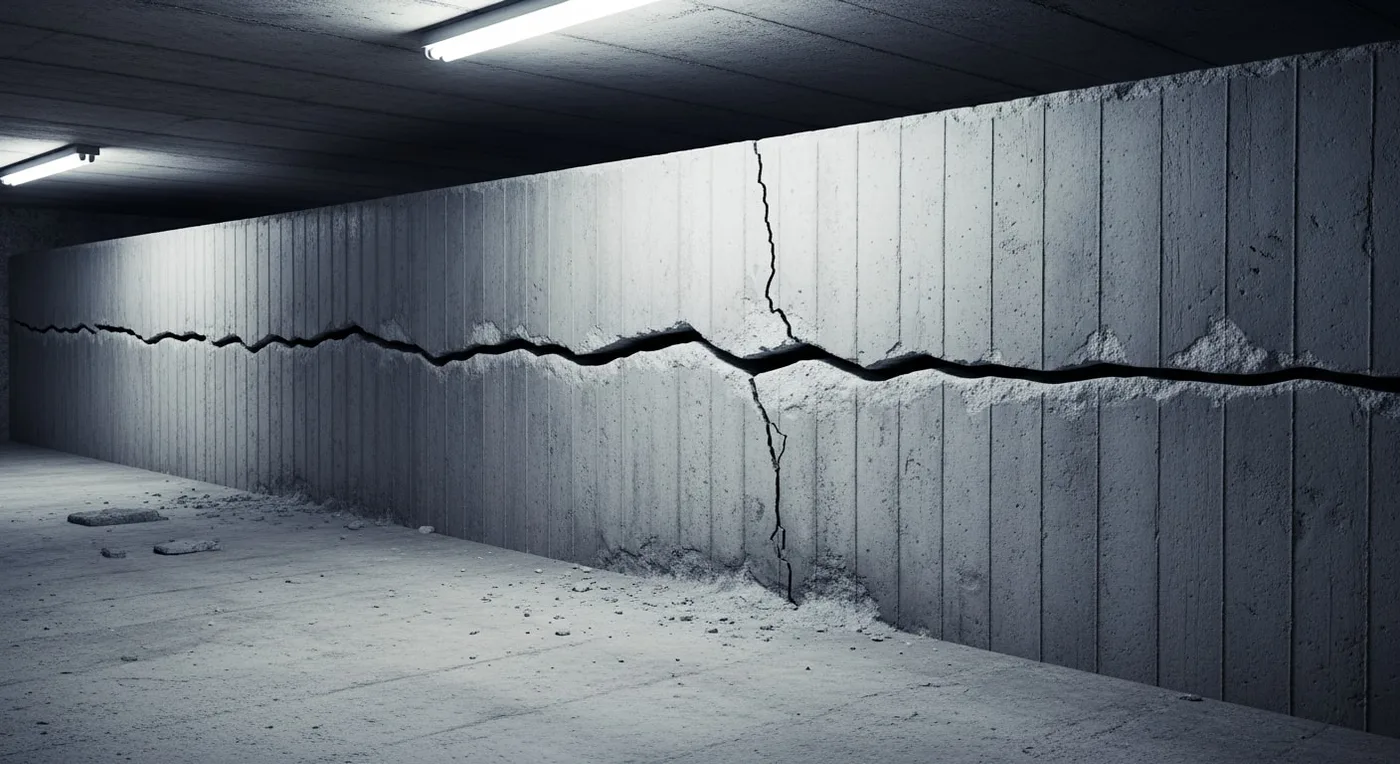
If you’ve spotted a horizontal crack running along your foundation wall, I’m not going to sugarcoat it: this is the one type of crack you should never ignore. Horizontal cracks indicate your wall is under lateral pressure and may be bowing inward — a structural issue that only gets worse with time.
I’m Luc Richard, and I’ve been repairing foundations across Connecticut for decades. Here’s everything you need to know.
What Causes Horizontal Foundation Cracks?
Horizontal cracks form when the outside pressure against your foundation wall exceeds what the wall can handle. In New England, there are several forces working against your foundation.
Hydrostatic Pressure
When soil around your foundation becomes saturated with water, it expands and pushes inward against the wall. This is hydrostatic pressure, and it’s the number one cause of horizontal cracking in our region. Connecticut and Massachusetts get about 50 inches of rain per year, and that water has to go somewhere.
Freeze-Thaw Cycles
This is the big one for New England homeowners. When water-saturated soil freezes, it can expand by up to 9%. That frozen soil pushes against your foundation with enormous force. When it thaws, the soil settles. Then it freezes again and pushes harder. After 20, 30, 50 years of freeze-thaw cycles, even well-built walls can develop horizontal cracks.
Clay Soils
Much of Connecticut and western Massachusetts sits on clay-heavy soil left by glacial till deposits. Clay absorbs water and swells significantly — sometimes expanding 10% or more in volume. When it dries, it shrinks. This constant swell-shrink cycle creates relentless pressure on your foundation walls.
Backfill Settlement
When your home was built, the excavation around the foundation was backfilled with loose soil. That backfill is more porous than undisturbed soil, so it channels water directly against your foundation. Over decades, this repeated saturation creates the conditions for horizontal cracking.
What Horizontal Cracks Look Like
Horizontal cracks typically appear:
- At the mid-height of the wall: Usually about 3-4 feet from the floor, where the soil pressure is greatest
- Running parallel to the ground: Unlike vertical shrinkage cracks, these follow the mortar joints in block walls or run straight across poured concrete
- Across large sections of the wall: They often span most of the wall’s length, not just a small section
- With visible inward displacement: The wall above the crack may be pushed inward relative to the wall below
How to Assess Severity
Not every horizontal crack requires emergency intervention, but all of them need professional evaluation. Here’s how I assess severity when I’m on site:
Mild (Monitor Closely)
- Hairline horizontal crack with no visible wall displacement
- No active water infiltration
- Wall still appears plumb (straight up and down)
- Crack is not growing
Moderate (Repair Needed)
- Crack is visible from across the room
- Wall has shifted inward slightly (less than 1 inch)
- Some water seepage through the crack
- Minor stair-step cracking at the corners
Severe (Immediate Action Required)
- Visible bowing — you can see the wall curving inward
- Wall displacement greater than 1 inch
- Multiple horizontal cracks at different heights
- Active water flooding through the crack
- Cracks in the floor slab near the wall
If your wall is visibly bowing, do not wait. A bowing wall can fail suddenly, and repair costs increase dramatically with every fraction of an inch of additional movement.
Repair Methods for Horizontal Cracks
The right repair depends on severity. Here’s what we use at Attack A Crack, starting with the most common solutions.
Carbon Fiber Straps for Wall Stabilization
For walls with mild to moderate displacement, carbon fiber straps are the gold standard. Here’s why:
- Stronger than steel: Carbon fiber has a tensile strength 10 times greater than steel
- Low profile: Straps bond directly to the wall surface, so they don’t take up basement space
- Permanent: Carbon fiber doesn’t rust, corrode, or degrade over time
- Stops further movement: Once installed, the wall cannot bow further inward
We apply carbon fiber straps vertically across the horizontal crack at regular intervals. Each strap is bonded to the wall with structural epoxy, creating a reinforcement system that permanently stabilizes the wall.
Carbon fiber straps typically run $700-$1,000 each, making this a cost-effective alternative to wall anchors or steel beams.
Epoxy Crack Injection at 100 PSI
Once the wall is stabilized, we seal the crack itself using professional crack injection. For structural horizontal cracks, we typically use epoxy rather than polyurethane because epoxy creates a bond stronger than the original concrete. We inject at 100 PSI — far above industry standard — to ensure complete penetration.
The injection fills the entire crack path — from the interior surface through the full 8-10 inches of concrete wall thickness to the exterior. This does two things:
- Seals out water completely
- Restores structural continuity to the wall
A single crack injection typically costs $800-$1,300, depending on length and severity.
Wall Anchors or Beams (Severe Cases)
For walls with significant bowing (more than 2 inches of displacement), carbon fiber alone may not be sufficient. In these cases, we may recommend:
- Wall anchors: Steel plates connected to anchors buried in stable soil beyond the foundation
- Steel I-beams: Vertical beams braced against the floor and ceiling to hold the wall in place
These are more invasive and expensive repairs ($5,000-$15,000+), which is exactly why addressing horizontal cracks early saves serious money.
Note: Wall anchors and steel I-beams are repairs we may recommend but do not perform ourselves. We will refer you to a trusted contractor for these installations.
The New England Factor
Living in New England means your foundation faces 100+ freeze-thaw cycles per year, heavy spring rainfall saturating soil as it thaws, clay-heavy soils and glacial till in the Connecticut River Valley, rising water table levels in spring, and an older housing stock with many foundations built before modern standards. These factors don’t mean your foundation is doomed — they mean being proactive about monitoring and early repair is essential.
Prevention: Reducing Pressure on Your Foundation
While you can’t eliminate all lateral pressure, you can reduce it:
- Clean gutters regularly and extend downspouts at least 6 feet from the foundation
- Grade soil away from the house — at least 6 inches of drop over the first 10 feet
- Don’t over-water landscaping near the foundation
- Remove or relocate large shrubs planted directly against the wall
- Don’t park heavy vehicles near the foundation
When to Call a Professional
If you see a horizontal crack in your foundation, get a professional evaluation. Period. This isn’t a DIY situation and it isn’t something to “keep an eye on” for a year.
A proper assessment includes visual inspection of all walls, measurement of displacement, crack documentation, moisture assessment, and an honest recommendation. At Attack A Crack, our consultations are free. We’d rather tell you it’s fine than have you wait until a $1,000 repair becomes a $10,000 problem.
The Bottom Line
Horizontal foundation cracks are serious, but they’re also repairable — especially when caught early. With thousands of projects across New England (see our before/after project photos), we have repaired horizontal cracks in every severity. If you’re seeing horizontal cracking in your New England home, don’t wait for the next freeze-thaw season to make it worse.
860-573-8760 (CT) | 617-668-1677 (MA)860-573-8760 (CT)617-668-1677 (MA)
Text us a photo of your crack and we’ll give you an honest preliminary assessment before we ever set foot in your basement.