Ask any foundation repair contractor in New England what their busiest season is, and they will all say the same thing: spring. Not because spring is when foundations break — foundations take damage all winter long. Spring is when homeowners finally see the evidence.
After 50+ combined years of repairing foundations across Connecticut, Massachusetts, Rhode Island, New Hampshire, and Maine, we can tell you this with absolute certainty: what you do in the weeks before and during spring thaw directly affects whether you spend the season with a dry basement or a wet one.
Here is how to be ready.
Why Spring Thaw Is the Most Dangerous Season
To understand why spring wrecks foundations, you need to understand what is happening underground.
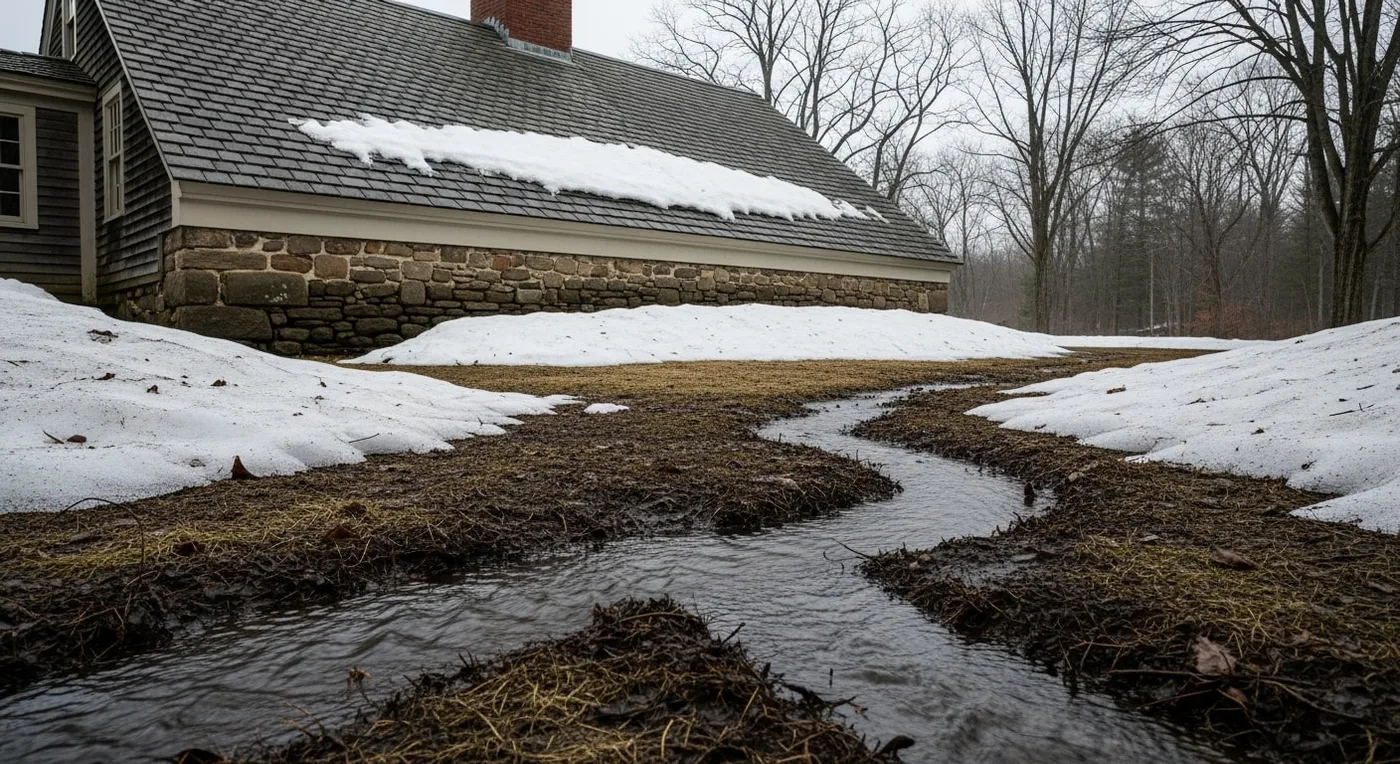
All winter, the ground freezes from the surface down — 36 to 48 inches deep in most of New England. The region’s glacial till and clay-heavy soil retains moisture, and this frozen layer acts like a cap, preventing drainage. When spring arrives, snow melts on top while the ground thaws from the top down. For several weeks, enormous amounts of water sit on still-frozen subsoil with nowhere to go except sideways — right toward your foundation.
The result: massive water volume, no drainage, and a foundation that may already have hairline cracks from winter. Hydrostatic pressure spikes. Cracks that were dry all winter suddenly have water pushing through them. That is why our phone starts ringing in March and does not stop until June.
Your Pre-Thaw Foundation Checklist
You do not need to be a contractor to prepare your home. Here are ten things you can do before the big melt, roughly in order of impact:
Exterior Checks
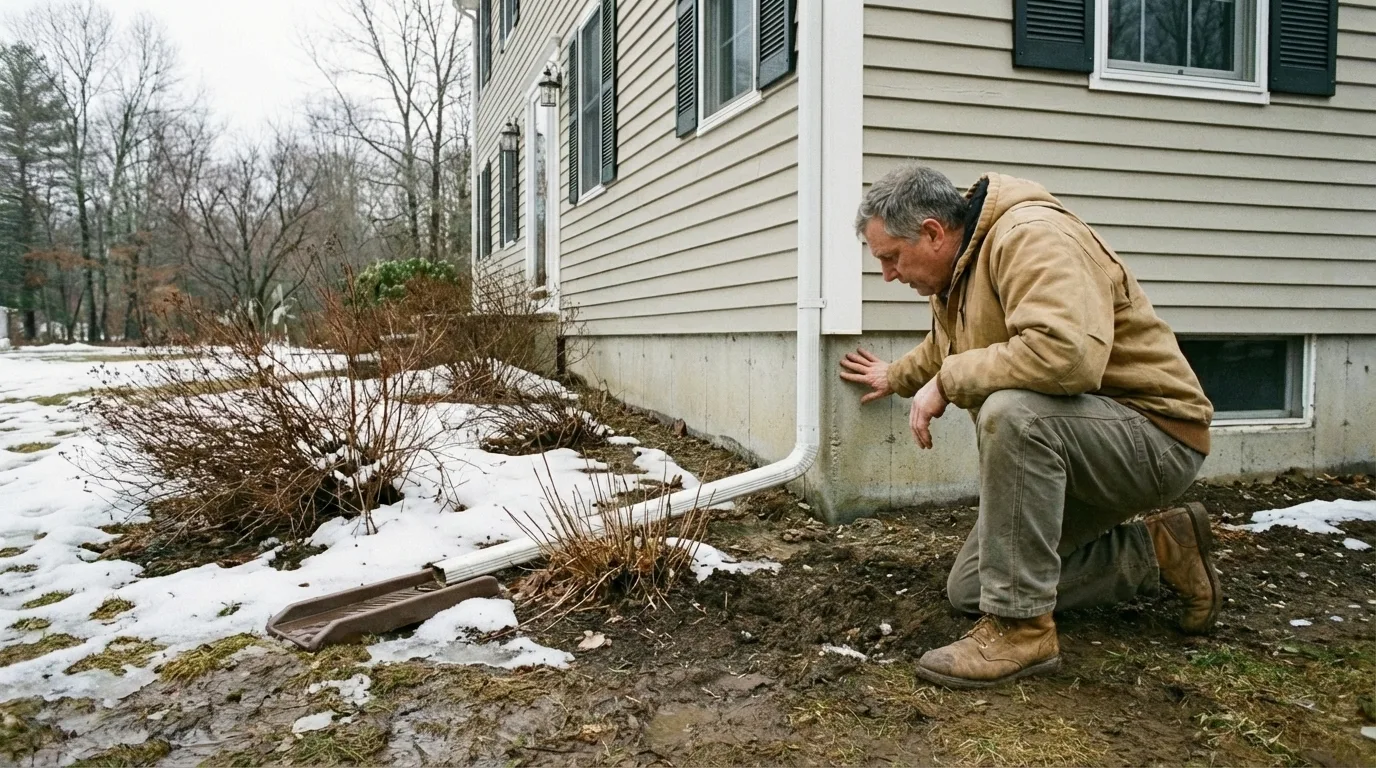
1. Inspect your grading. Soil should slope away from your foundation at about 6 inches of drop over 10 feet. Winter settling creates low spots that pool water against the wall. If you see flat or negative grading, plan to add soil before the thaw.
2. Clear snow away from the foundation. Snowbanks against your house will melt and deposit water right at the wall. Shovel snow at least 3-4 feet away on all sides. Annoying, yes. Also the single most effective thing you can do right now.
3. Check gutters and downspouts. Make sure gutters are clear and downspouts discharge at least 4-6 feet from the house. Reattach any extensions knocked off by snow or the plow.
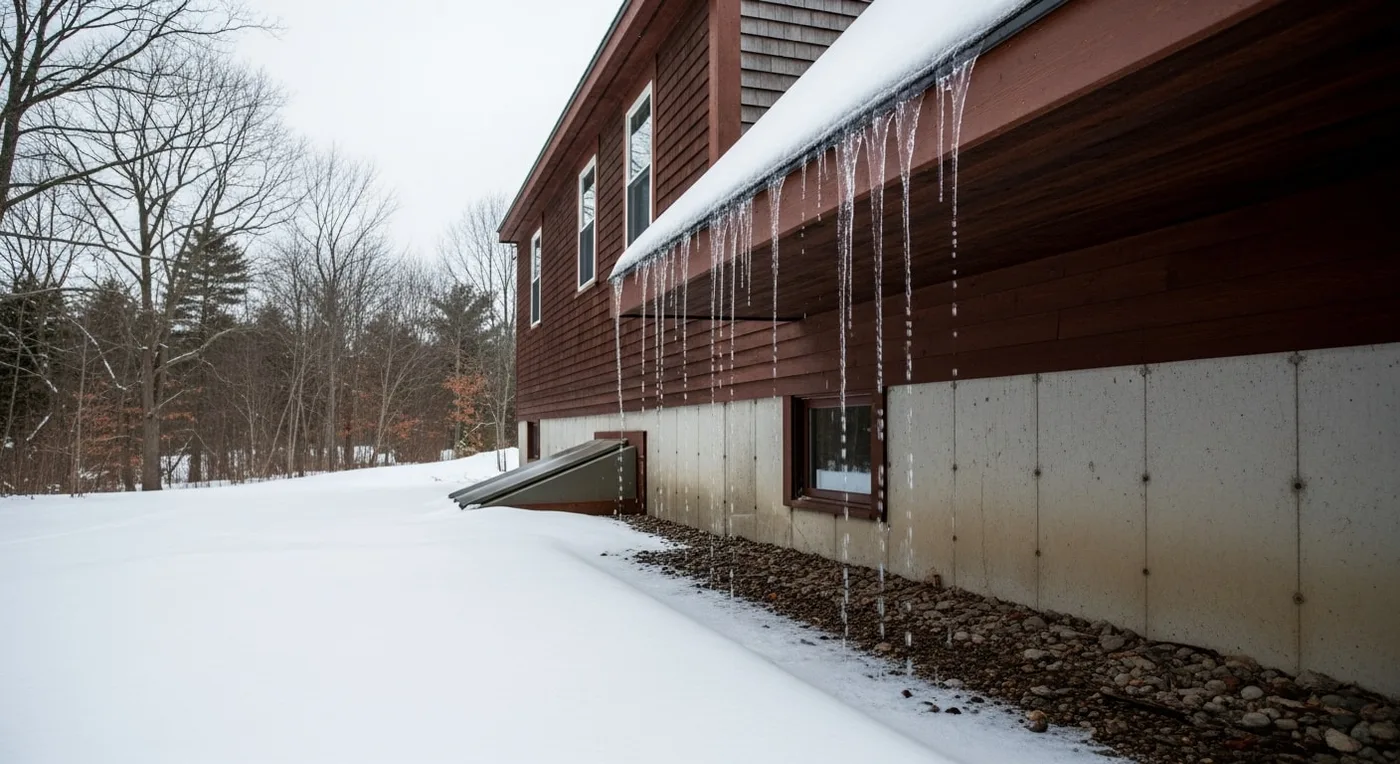
4. Examine your bulkhead. Check the frame for gaps, rust, or deterioration. Make sure doors close tightly and the drain at the bottom of the stairs is clear. If the bulkhead sealant at the cold joint has failed, professional bulkhead injection repair ($1,800-$2,500) permanently seals the joint.
5. Look at window wells. Check that they have gravel at the bottom (not packed soil) and that covers are in place and not cracked.
Interior Checks
6. Test your sump pump. Pour a bucket of water into the pit. It should kick on, run, and shut off. If it does not, check power, the float switch, and the discharge line (which may be frozen). Replace pumps older than 7-10 years.
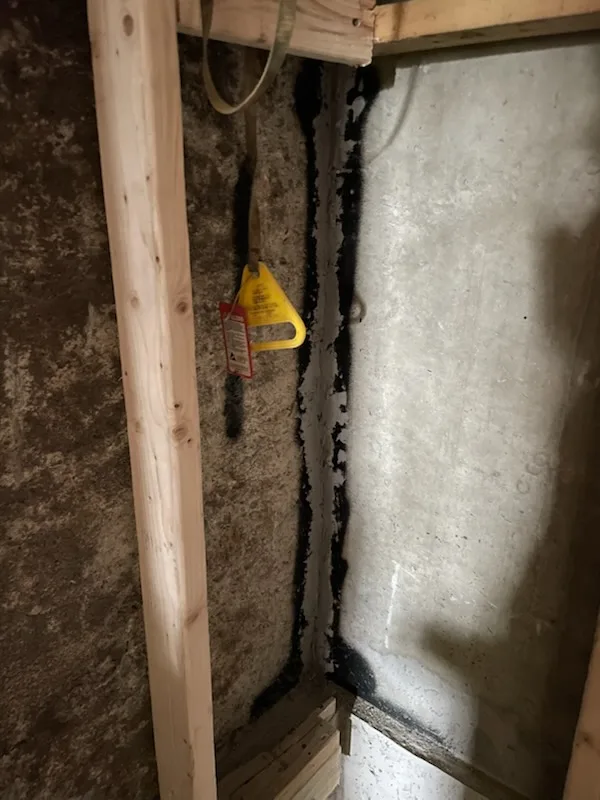
7. Survey your basement walls. Look for new cracks, growth in existing cracks, fresh water stains, or efflorescence. If you marked cracks last year, check whether the marks have shifted. Photograph everything.
8. Check the floor-wall joint. The cove joint where floor meets wall is a common entry point. Look for staining, dampness, or mineral deposits along this line.
9. Sniff test. A musty smell in your basement that was not present in the fall means moisture is getting in somewhere. Combined with white powder on basement walls (efflorescence), this is a reliable indicator of active water intrusion through foundation cracks.
10. Check doors and windows above. Sticking doors or new gaps in frames can indicate foundation movement.
Red Flags That Need Professional Attention
Not everything on that checklist requires a phone call. But some findings do:
Call now (before the thaw):
- Any crack wider than 1/8 inch
- Cracks that have visibly grown since your last check
- Horizontal cracks in basement walls (these indicate lateral pressure)
- Walls that appear to be bowing inward even slightly
- Active water seepage through any crack
- Stains that may be evidence of past water seepage
Monitor closely during thaw:
- Hairline cracks with no current moisture (but photograph and measure them)
- Minor efflorescence that has not changed since fall
- Slight dampness at the cove joint during rain events
The reason to call before the thaw is simple: scheduling. Spring is our busiest season. Homeowners who call in February or early March get on the calendar weeks before the homeowners who call in April after their basement is already wet. A crack that could have been a routine injection repair in March becomes an urgent call in April.
Snow Management Near Your Foundation
How you handle snow in the last weeks of winter directly affects your foundation during thaw.
Do not pile snow against the foundation. Direct snow away from the house when shoveling. Every cubic foot of snow against your wall is 3-5 gallons of water that will release right there.
Pay attention to the north side. Snow lingers longest on north-facing walls, and frozen ground prevents drainage for weeks after the south side has dried out. This side often sees the worst spring water intrusion.
Roof rake if you can. Removing snow from the lower 3-4 feet of your roof reduces ice dam formation and the gutter overflow that dumps water at your foundation.
Timing Repairs Before Wet Season
If your inspection reveals cracks that need attention, the ideal repair window is late winter to early spring — before heavy rains arrive.
Foundation crack injection ($800-$1,300 per crack) can be done year-round, including during cold weather. Wall crack repair and carbon fiber staples (stitches) are similarly season-independent. The advantage of repairing before thaw is simple: you seal the crack before the water arrives.
Waiting until after the damage is not the end of the world — we repair mid-leak all the time. But the water that came through before the repair may have already caused mold or damaged belongings.
Signs That Thaw Has Already Caused Damage
If you are reading this in March or April and the thaw is already underway, here is what to watch for:
- New water stains on basement walls that were not there in January
- Puddles on the basement floor with no obvious source
- A sump pump that is running more frequently than usual
- Cracks that are now damp or weeping when they were dry all winter
- A musty smell in your basement that was not present before
- Doors or windows sticking that previously worked fine
Any of these warrants a closer look. Most warrant a professional opinion.
Get Ahead of It
We offer free foundation assessments across Connecticut, Massachusetts, Rhode Island, New Hampshire, and Maine.
Text us a photo for a quick preliminary assessment — we would much rather help you prepare for spring than bail you out during it. 860-573-8760 (CT) | 617-668-1677 (MA)Text us a photo for a quick preliminary assessment — we would much rather help you prepare for spring than bail you out during it. 860-573-8760 (CT)Text us a photo for a quick preliminary assessment — we would much rather help you prepare for spring than bail you out during it. 617-668-1677 (MA)
Your foundation survived another New England winter. Let us make sure it is ready for what comes next.