You do not need to be a foundation expert to spot foundation problems. You need a flashlight, a phone camera, 15 minutes, and the willingness to actually go look. That last part is where most homeowners fall short — basements are not exactly inviting, and “I should check the foundation” gets pushed to next weekend indefinitely.
Here is a structured walkthrough you can do right now, in about the time it takes to watch a sitcom without commercials. After 50+ combined years of inspecting foundations across New England, this is roughly what we check (minus the specialized equipment), and you will be surprised how much you can catch on your own.
Before You Start: Gather Your Gear
You need four things:
- A flashlight. Your phone flashlight works, but a real flashlight is better for seeing into corners and along wall surfaces where shadows hide cracks.
- Your phone camera. You are going to document what you find. Photos are free — take lots.
- A tape measure or ruler. For measuring crack widths. A credit card is about 1/32 inch thick, which gives you a handy reference.
- A piece of chalk or a pencil. For marking cracks so you can check if they grow over time.
That is the whole kit. No special tools, no technical knowledge required.
Exterior Walkthrough (5 Minutes)
Start outside. Walk the full perimeter of your house, slowly, and check these five things:
Grading
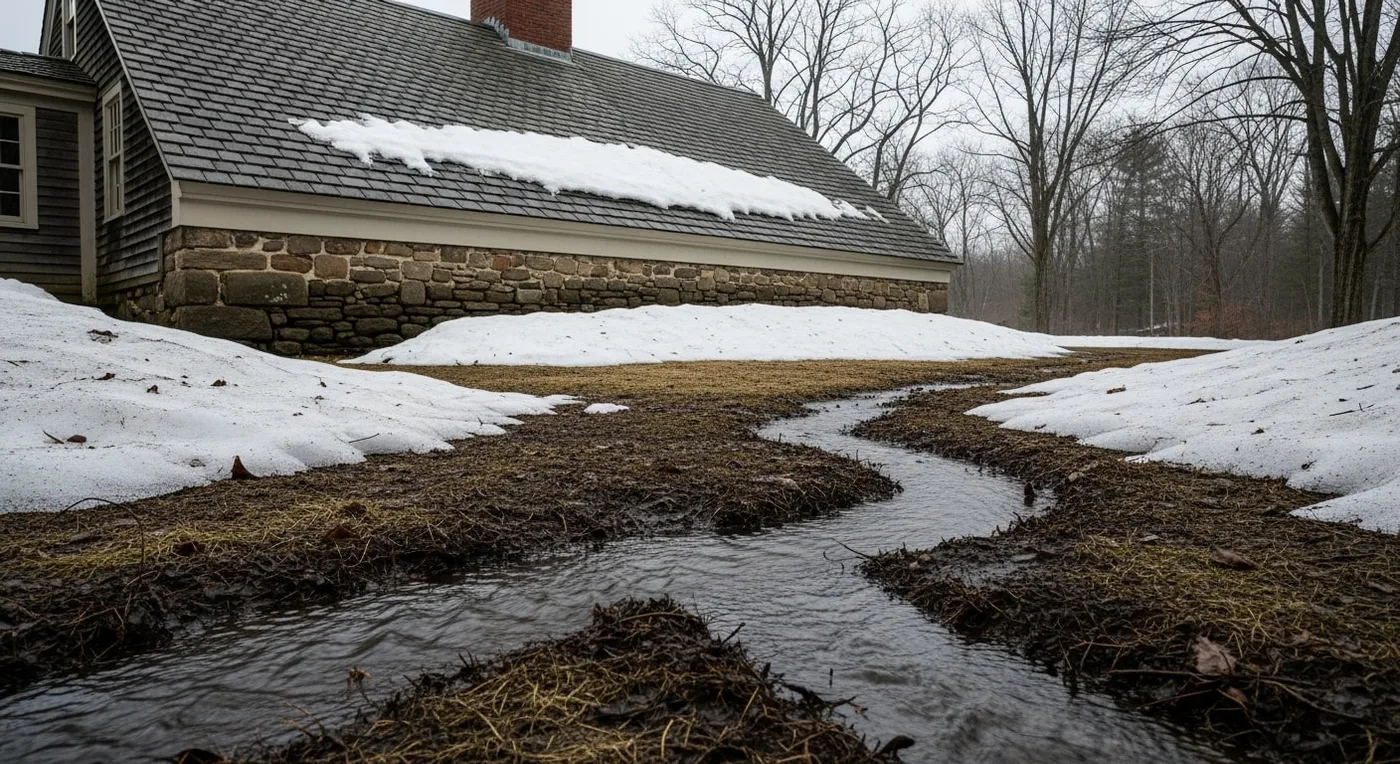
Look at the ground where it meets your foundation. Soil should slope away — about 6 inches of drop over the first 10 feet. Look for the opposite: settled spots that slope toward the foundation and funnel water to the wall.
What it means: Poor grading is the number one cause of foundation water intrusion. It is also the cheapest to fix — a few wheelbarrows of topsoil and an afternoon of raking.
Gutters and Downspouts
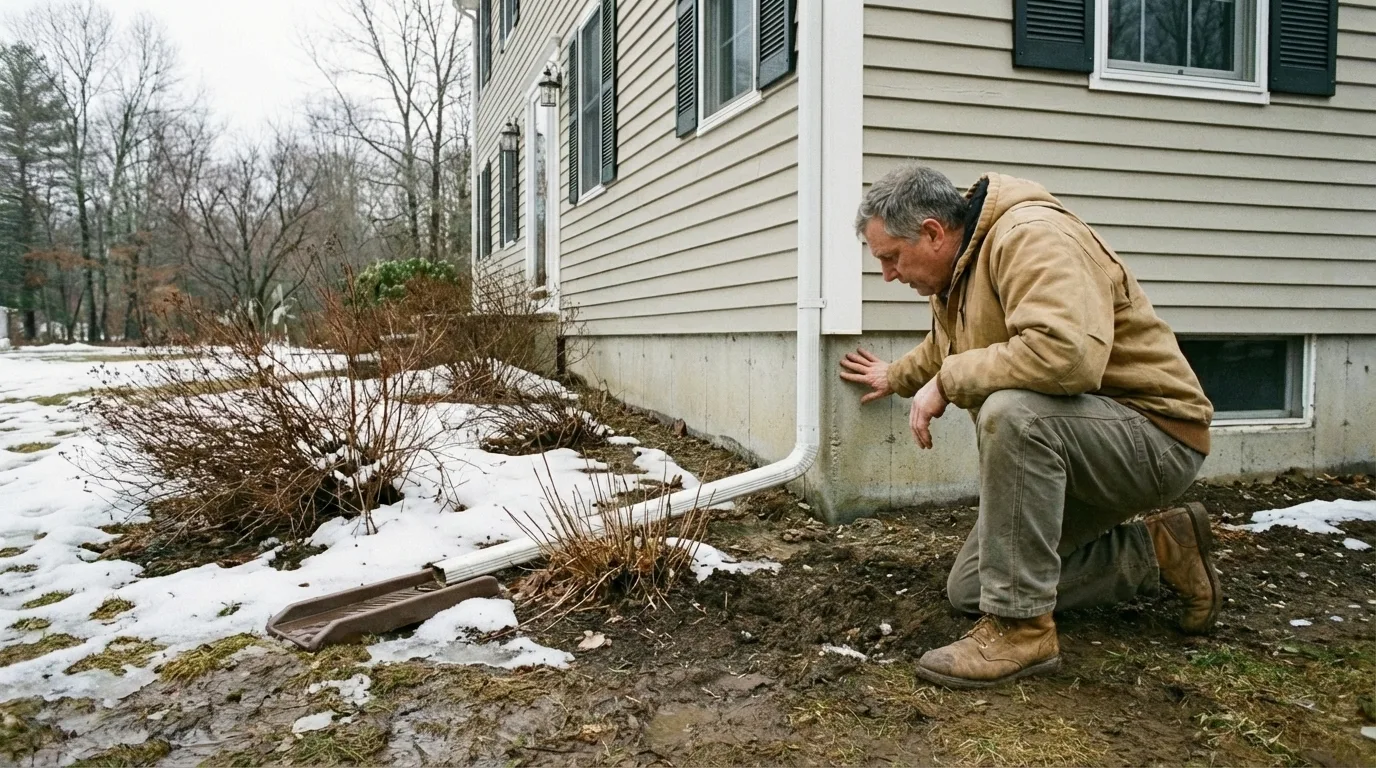
Are gutters sagging, pulling from the fascia, or clogged? Follow each downspout to the ground. Does it carry water at least 4-6 feet from the house, or dump it right at the foundation?
What it means: Every gallon that lands at your foundation instead of 6 feet away is hydrostatic pressure against your wall. Gutter maintenance is foundation maintenance.
Visible Foundation Cracks
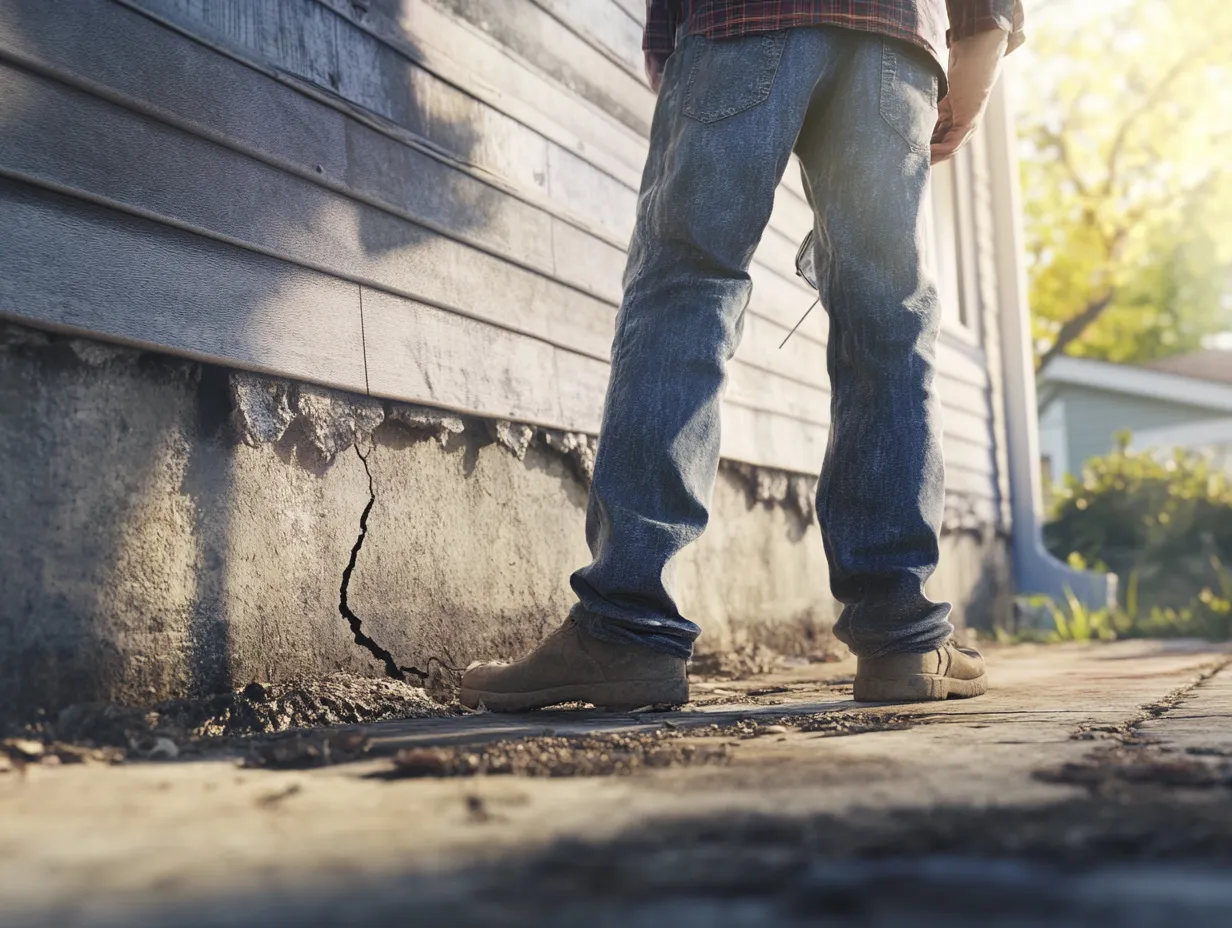
If any foundation is exposed above grade, look for cracks. Vertical cracks in poured concrete are common and usually shrinkage-related. Horizontal or stair-step cracks are more concerning — they indicate lateral soil pressure.
What it means: Hairline vertical cracks are extremely common. A horizontal crack at a consistent height means soil pressure is pushing the wall inward and needs professional assessment.
Bulkhead Condition
Check the frame and doors for gaps, rust, or deterioration. Make sure doors close tightly and the drain at the bottom is clear. Look for failed bulkhead sealant or deteriorated rubber gaskets at the cold joint where the bulkhead meets your foundation.
What it means: Bulkheads are the second most common water entry point in New England basements. A bulkhead that does not seal properly will let water in during every rain. Professional bulkhead sealant injection ($1,800-$2,500) permanently fixes the cold joint — far cheaper than full replacement ($5,000-$10,000+).
Window Wells
Check for 4-6 inches of clean gravel at the bottom (not packed soil or standing water) and intact covers.
What it means: Window wells that fill with water create concentrated pressure at one of the weakest points in your wall.
Interior Walkthrough (10 Minutes)
Now head inside. The interior inspection is where you will find the most informative clues about your foundation’s condition.
The Wall Scan
Start at one corner and work your way around every wall. Move slowly. You are looking for:
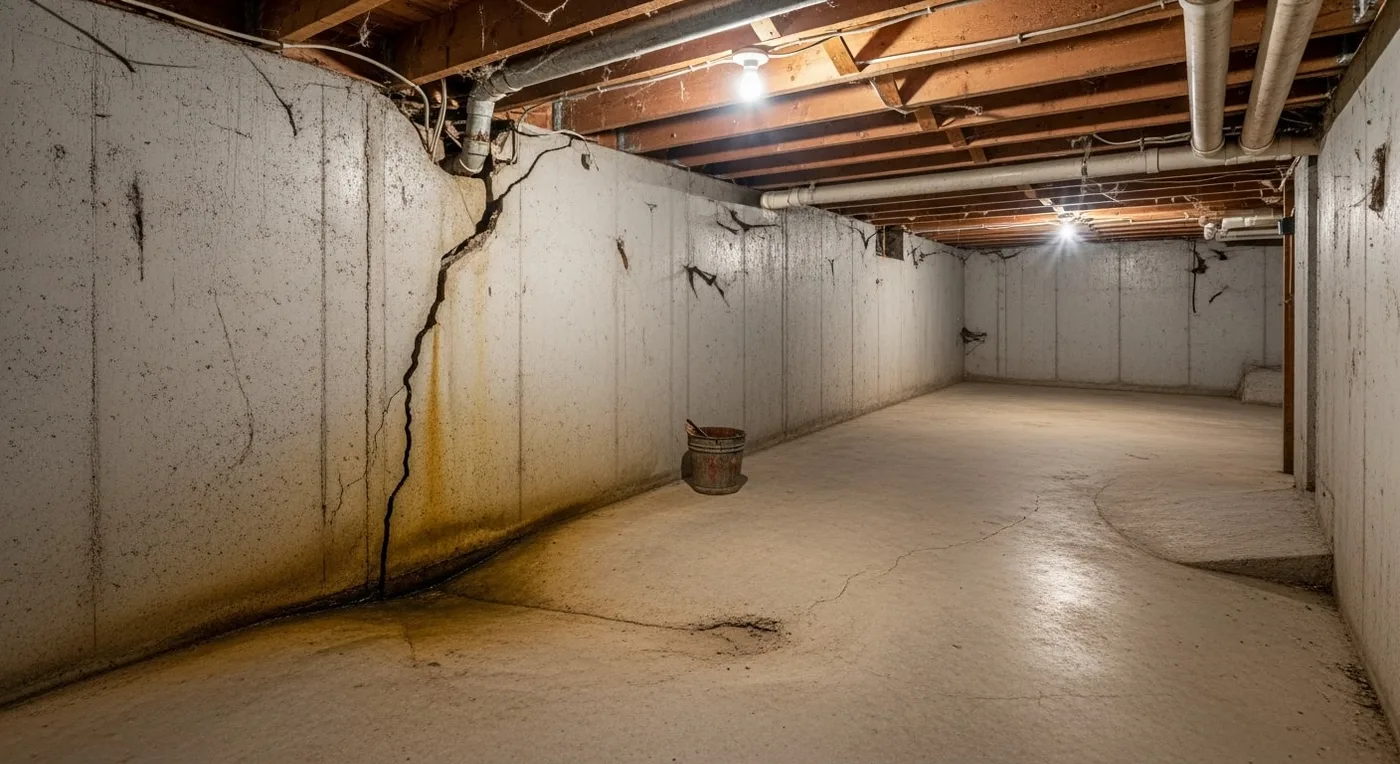
- Cracks. Run your flashlight at a low angle to make cracks cast shadows. Check vertical, diagonal, and especially horizontal cracks.
- Water stains. Discoloration or streaks running down the wall, indicating past water movement.
- Efflorescence. White powder on basement walls — minerals left when water passes through concrete and evaporates. Fresh efflorescence is bright white; old is dull.
- Flaking or spalling. Concrete surface breaking away, caused by moisture freezing inside the wall.
When you find a crack, mark it with pencil lines across both ends and write the date. When you check again in a few months, you will see if it has grown.
The Floor Check
- Cracks in the slab. Most are harmless shrinkage cracks, but displacement (one side higher) or damp cracks indicate something more.
- The cove joint. Where the floor meets the wall. Staining or dampness here means hydrostatic pressure pushing water up through the joint.
- Damp spots with no obvious source. Consistently darker areas of floor mean water is coming from somewhere.
The Smell Test
A musty smell in your basement indicates moisture even when you cannot see it. Your nose detects mold long before your eyes can spot growth. If you notice a persistent musty smell, water may be entering through hidden cracks in the foundation. Combined with white powder on basement walls (efflorescence), a musty smell almost always means ongoing water intrusion that needs professional attention.
Upstairs Indicators
Quick first-floor check: try all exterior doors (sticking?), look for new drywall cracks at door/window frames, and set a ball on the floor to check for slope. These can indicate foundation settlement not yet visible in the basement.
Your Findings: A Simple Rating System
Now that you have done the walkthrough, categorize what you found:
Green: Normal, No Action Needed
- Hairline cracks (thinner than a credit card) in poured concrete walls with no moisture
- Minor efflorescence that looks old and faded
- Grading that mostly slopes away from the house
- Slab cracks with no displacement and no moisture
Yellow: Monitor Every 3-6 Months
- Cracks between 1/32 and 1/8 inch that are currently dry
- Fresh efflorescence (bright white) on walls
- Grading that is flat or slightly negative in a few spots
- Mild musty smell that comes and goes
- Minor sticking on one door
Mark these with chalk or pencil, take dated photos, and check them at least twice a year. If anything changes, move it to the red category.
Red: Schedule a Professional Inspection
- Any crack wider than 1/8 inch
- Horizontal cracks in basement walls
- Stair-step cracks in block walls
- Active water seepage through any crack or joint
- Walls that appear to bow or lean inward
- Floor cracks with vertical displacement (one side higher)
- Multiple doors sticking, new drywall cracks, or sloping floors
- Persistent musty smell with visible moisture
Red items do not necessarily mean expensive repairs. Many turn out to be straightforward crack injection fixes at $800-$1,300 per crack. Some are cosmetic. A few need wall repair or carbon fiber staples (stitches). The only way to know is to have it looked at.
When to Call Us
If your walkthrough turned up any red items — or yellow items that have worsened — it is time for a professional opinion.
Attack A Crack offers free foundation consultations across Connecticut, Massachusetts, Rhode Island, New Hampshire, and Maine. We will do a thorough version of what you just did, plus we bring the experience of thousands of inspections to put your findings in context. No charge, no obligation, no pressure.
Call us today. 860-573-8760 (CT) | 617-668-1677 (MA)Call us today. 860-573-8760 (CT)Call us today. 617-668-1677 (MA)
That 15 minutes you just spent in your basement? It might be the most valuable quarter hour you invest in your home all year. Set a reminder to do it again in six months.