“Your house is just settling.” It’s the most common reassurance homeowners hear. And sometimes it’s accurate — every house settles, especially in the first few years.
But here’s what I’ve learned in decades of foundation repair across Connecticut and Massachusetts: “settling” is also the excuse that lets small problems become expensive ones. The trick is knowing the difference.

What Is Normal Foundation Settling?
When a home is built, it sits on soil that was either undisturbed or compacted during construction. Over time, the weight of the structure compresses the soil beneath it. This is settling — and it’s completely expected.
How Much Settling Is Normal?
- New construction: Most homes settle 1-2 inches in the first 2-3 years. The majority of this happens in the first year.
- After the initial period: Settling should slow dramatically and eventually stop. Think fractions of a millimeter per year — imperceptible without precise instruments.
- Uniform settling: When the entire foundation settles evenly, there’s minimal stress on the structure. This is the “good” kind of settling.
Signs of Normal Settling
- Hairline vertical cracks in the foundation (less than 1/16 inch wide)
- Minor cosmetic cracks in drywall at corners of doors and windows
- Very slight unevenness in floors (less than 1/4 inch over 20 feet)
- All changes occurred within the first few years and have been stable since
If your home is 10+ years old and these minor signs haven’t changed, you’re looking at normal settling that ran its course long ago.
When Foundation Settling Is a Problem
You should worry about foundation settling when you see any of these signs:
- Cracks that keep growing — normal settling cracks form and stop. If yours are widening over months, that’s active movement.
- Doors or windows that progressively stick — getting worse season over season, not just seasonally swelling.
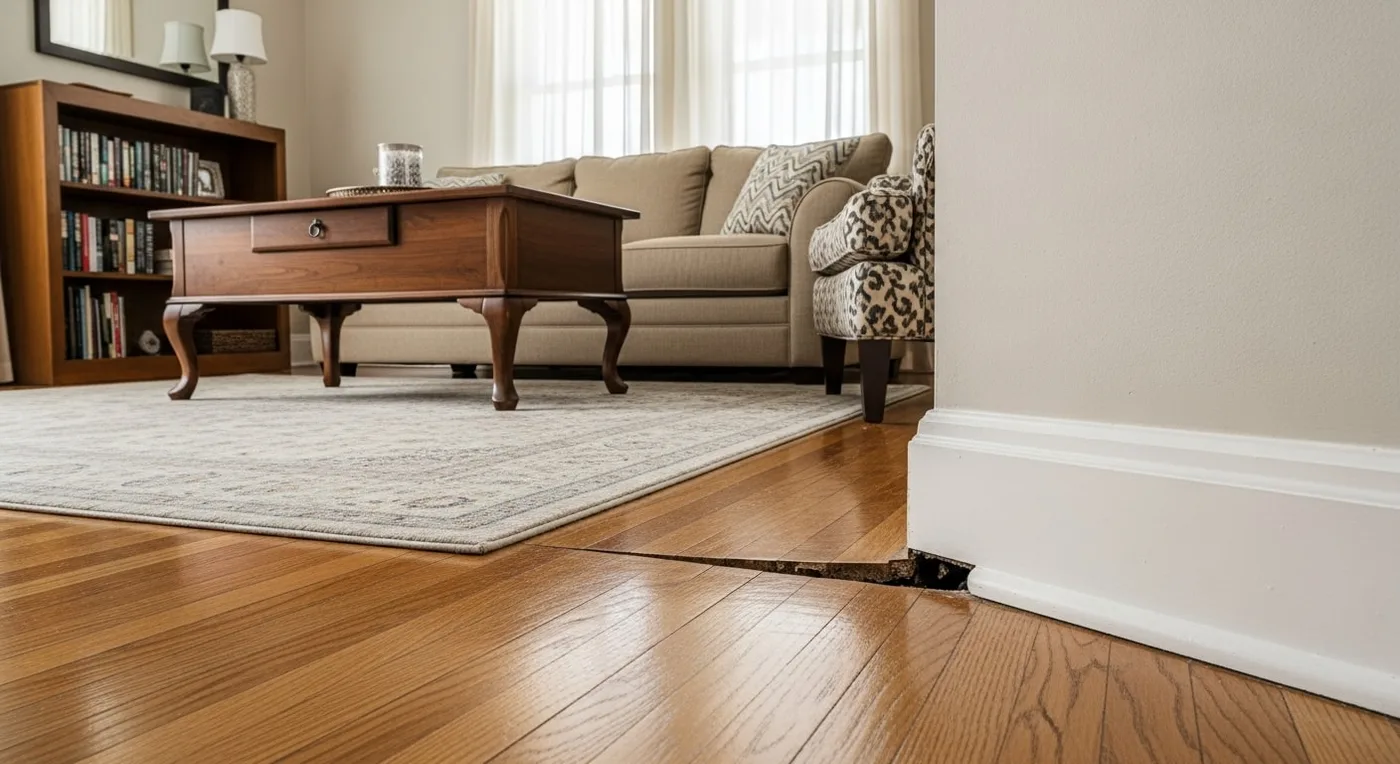
- Floors sloping more than 1/4 inch over 10 feet — noticeable unevenness you can feel when walking.
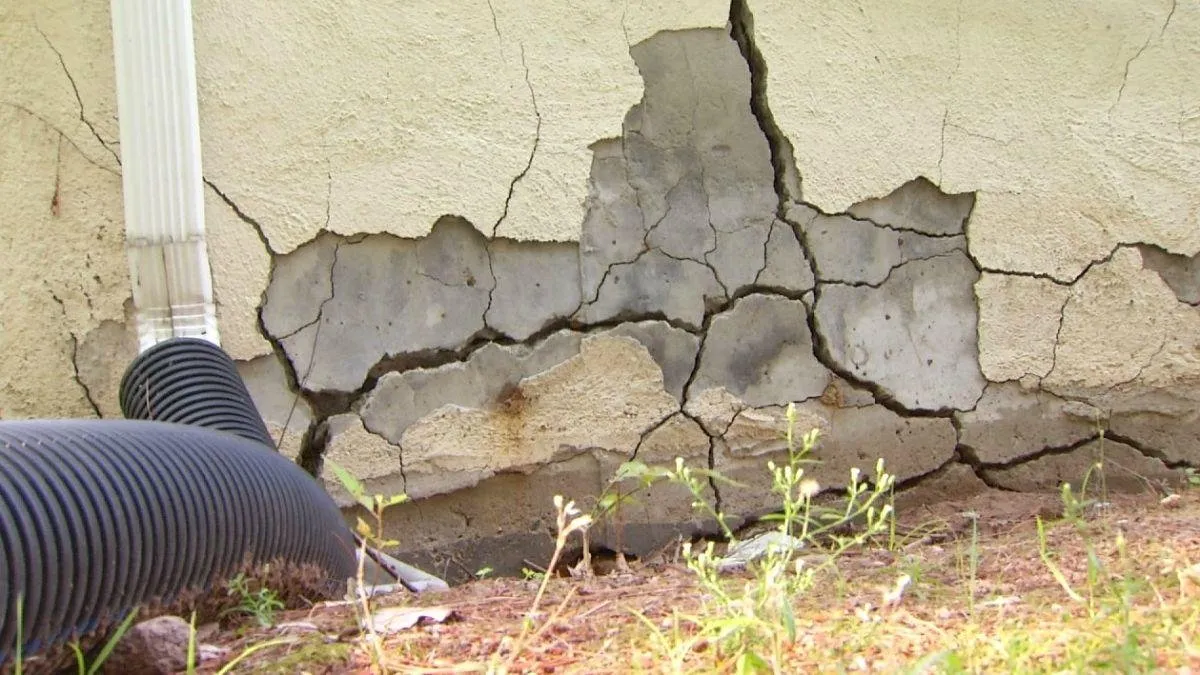
- Stair-step cracks in block or brick foundations — these follow mortar joints and indicate differential movement.
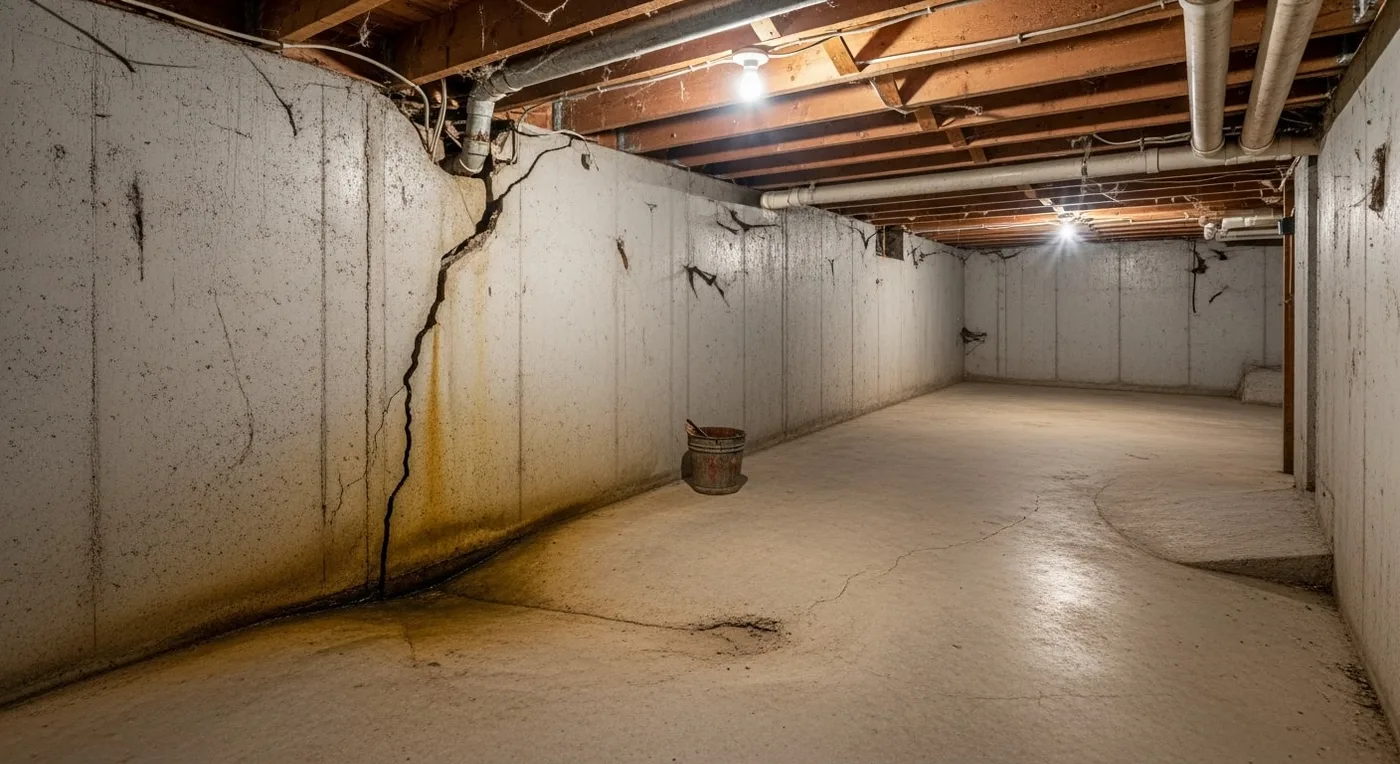
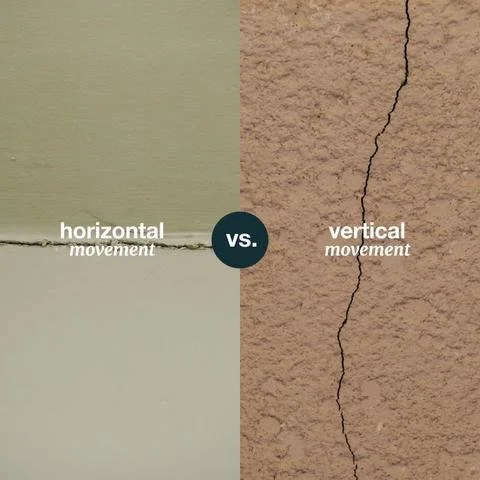
- Cracks wider than 1/4 inch — especially horizontal cracks, which signal lateral soil pressure, not just settling.
- Water intrusion through new cracks — settling that opens pathways for water is compounding the problem.
If your home is older than 10 years and you’re seeing new or worsening signs, that’s not “just settling” anymore — it’s a structural issue that gets more expensive to fix the longer you wait.
What Is Abnormal Settling?
Abnormal settling — also called differential settlement — happens when different parts of your foundation settle at different rates. This creates uneven forces that crack foundations, distort frames, and cause progressive structural damage.
Common Causes in New England
Frost Heave
When soil freezes, water expands and lifts the ground — sometimes by several inches. When it thaws, the soil compacts differently. After decades of freeze-thaw cycles, voids develop beneath the foundation that allow sections to drop unevenly. Our frost line extends 42-48 inches deep, and many older New England homes weren’t built to modern frost depth standards.
Clay Soil Expansion and Contraction
The Connecticut River Valley and much of central Massachusetts sit on clay-heavy soil deposited as glacial till. Clay expands significantly when wet (up to 10% in volume) and shrinks when dry. This constant cycle of uplift and settlement is relentless — and the soil can pull away from the foundation during dry periods, creating gaps that fill with water during rain.
Poor Drainage
Water is the number one enemy of foundations. When one side of your home stays saturated while the other is dry, the uneven pressure and support causes differential settlement.
Tree Root Systems
Large trees near your foundation draw massive amounts of moisture from the soil — a mature oak can absorb 50+ gallons per day. This creates localized dry zones that cause one-sided settling.
Deteriorating Foundation Materials
Many older homes in our region have fieldstone, early concrete block, or low-strength poured concrete foundations that don’t handle differential loads as well as modern construction.
The Warning Signs That Settling Has Become a Problem
Here’s what to watch for — these signs tell you that “normal settling” has crossed the line.
Cracks That Keep Growing
Normal settling cracks are stable. They form, and they stop. If you’re marking crack endpoints and measuring width over time and seeing growth — that’s active movement.
What to do: Mark the ends of the crack with a pencil and write the date. Measure the width at several points. Check monthly. Any measurable growth over 2-3 months warrants professional evaluation.
Doors and Windows That Progressively Stick
A door that suddenly won’t close right didn’t decide to swell on a dry November day. Progressive sticking — especially when multiple doors or windows in the same area are affected — indicates the frame is being distorted by foundation movement.
Floors Sloping in One Direction
Use a marble test: place a marble on the floor in several rooms. If it consistently rolls toward the same side of the house, that side may be settling more than the rest. A slope greater than 1/2 inch over 10 feet is worth investigating.
Gaps and Diagonal Cracks
Watch for separations between the chimney and house, where walls meet ceilings, around door frames, or between the foundation and sill plate. These gaps indicate parts of the structure are moving independently — a hallmark of differential settlement.
Diagonal cracks at 45 degrees radiating from window and door corners indicate shear stress from uneven settlement. These are distinctly different from vertical shrinkage cracks and always warrant investigation.
Foundation Wall Cracks Wider Than 1/4 Inch
Any crack in your foundation wider than a quarter inch indicates significant movement. At this width, the crack is also likely allowing water infiltration, which accelerates further damage.
What to do: Professional crack injection at 100 PSI fills and seals the crack permanently through the full 8-10 inches of concrete wall. For wider cracks with structural implications, carbon fiber staples (stitches) at $200-$300 per stitch may be needed. A typical crack repair runs $800-$1,300. See our foundation repair cost guide for complete pricing.
Why Waiting Makes It Worse
Foundation settling problems are progressive. A minor crack in Year 1 becomes a widening, leaking crack by Year 3, then multiple cracks with mold and uneven floors by Year 5. What would have been a $1,000 repair becomes a $10,000+ structural project. I see this timeline play out regularly.
What You Can Do Right Now
Monitor and document: Take photos of any cracks twice a year (spring and fall) with a ruler for scale. Inexpensive crack gauges from hardware stores give you precise measurements over time. Note which doors and windows stick and whether it changes seasonally.
Manage drainage: Clean gutters regularly and extend downspouts at least 6 feet from the foundation. Soil should slope away from the house — at least 6 inches of drop over the first 10 feet.
Control moisture: Consider trimming large trees within 15-20 feet of the foundation. Avoid garden beds directly against the foundation that require regular watering. Keep basement humidity below 60%.
When to Call a Professional
Get a professional foundation evaluation if:
- Cracks are growing (any measurable increase over months)
- Multiple warning signs from this article appear together
- You see horizontal cracks (these indicate lateral pressure, not settling — and they’re always serious)
- Walls are bowing or leaning (this is urgent)
- Your home is older than 50 years and you’ve never had the foundation assessed
- You’re buying or selling a home and want an honest evaluation
At Attack A Crack, we provide free, no-pressure consultations. With 50+ years of combined experience and thousands of projects across New England, we’ll tell you honestly whether your foundation needs repair or whether what you’re seeing is normal settling.
Our Warranty Covers More Than Just the Repair
Here is something most homeowners do not know: our lifetime warranty does not just cover the repair itself. If a warrantied repair ever fails and causes damage to your finished basement — walls, flooring, appliances, anything — we cover that damage too.
If you have a finished basement, this matters enormously. A crack injection that fails and floods your finished space could mean thousands in damage to drywall, carpet, and personal property. With our warranty, you are covered for all of it. Hardly anyone else in this industry offers that level of protection. It is one of the reasons homeowners with finished basements specifically seek us out.
The Bottom Line
Some settling is normal. Some is the beginning of an expensive problem. The difference isn’t always obvious — which is why professional evaluation matters. Caught early, most settling-related problems are quick and affordable to fix. Ignored for years, they become major projects.
860-573-8760 (CT) | 617-668-1677 (MA)860-573-8760 (CT)617-668-1677 (MA)
Text us a photo for assessment and we’ll give you an honest preliminary read. If it looks like normal settling, we’ll tell you that — and save you the worry.