The Foundation Nobody Looks At
If you have a crawl space under your home, here is a statistic that should get your attention: most homeowners go years, sometimes decades, without ever looking inside it. We get it. Crawling into a dark, low space full of cobwebs and mystery moisture is nobody’s idea of a good time. But that neglect is exactly why crawl space problems tend to be worse by the time we see them.
Crawl spaces are common across New England, especially in homes built before the mid-20th century, in additions, and on sloped lots where a full basement was not practical. They serve a simple purpose: elevate the home off the ground while providing access to plumbing, electrical, and HVAC systems. But that space between the earth and your floor is also a perfect environment for moisture, pests, and structural trouble.
Why New England Crawl Spaces Have It Rough
Every region has its challenges, but New England’s combination of factors makes crawl spaces particularly vulnerable.
Seasonal Moisture Extremes
Our annual cycle is punishing. Heavy winter snowpack melts rapidly in spring, saturating the soil around and beneath your home. Summer brings high humidity that condenses on cooler crawl space surfaces. Fall rain adds more groundwater. And winter’s freeze-thaw cycle can crack the short foundation walls that form the crawl space perimeter.
Glacial Till, Clay-Heavy Soil, and Water Table
Much of Connecticut, Massachusetts, and Rhode Island sits on glacial till — a mix of clay, silt, sand, and gravel deposited by retreating glaciers. This clay-heavy soil holds water rather than draining it. In coastal areas and river valleys, the water table is naturally high. Both conditions push moisture up through the soil and into your crawl space. In some neighborhoods, particularly along the South Shore or Connecticut River Valley, the soil stays damp for months at a time.
Old Construction Methods
Many New England crawl space foundations were built with materials and methods that prioritized cost over moisture management. Fieldstone foundations, thin poured concrete, and cinder block walls without waterproofing were standard practice for decades. These foundations do what they were designed to do structurally, but they were never designed to keep moisture out.
The Problems We See Most Often
Standing Water and Persistent Dampness
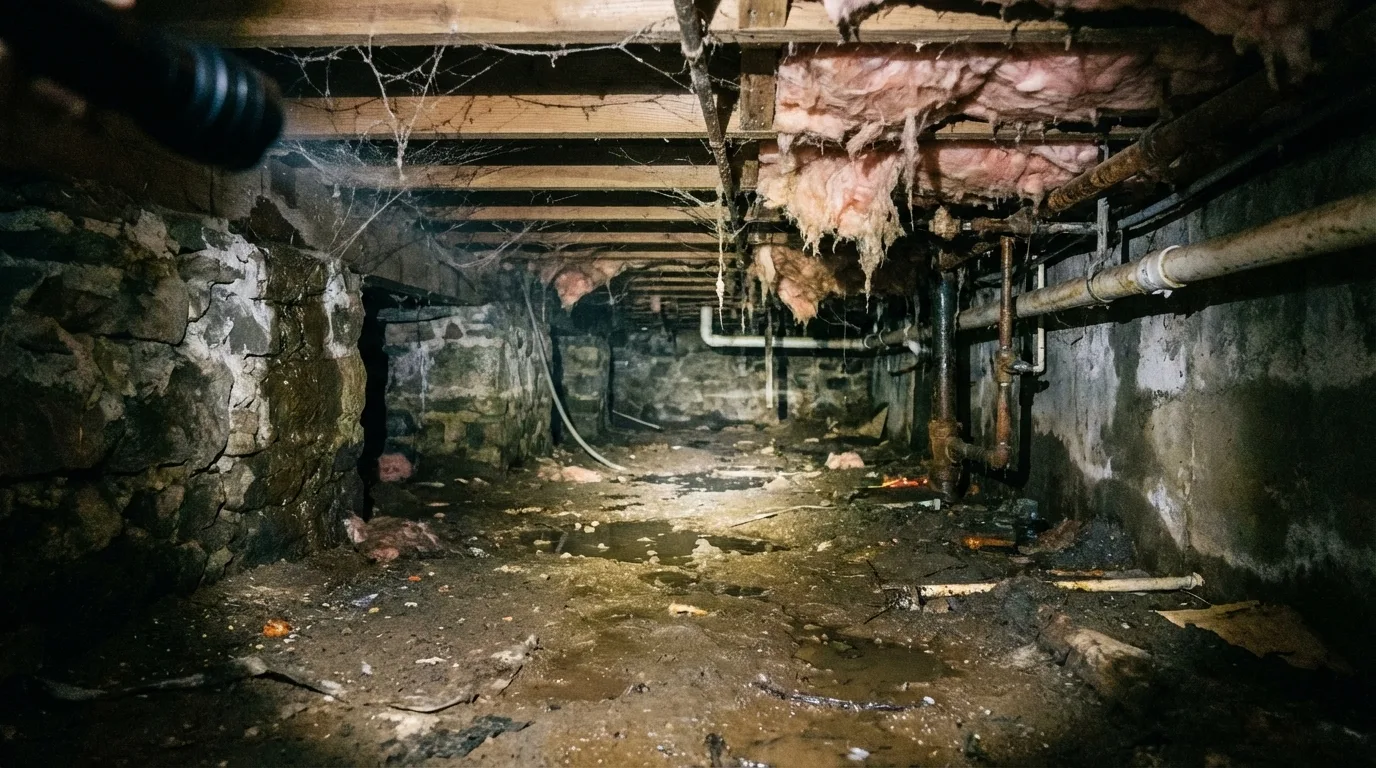
The most common crawl space complaint is moisture, ranging from damp soil and condensation to actual standing water. Water can enter through wall cracks, seep up through bare soil floors, or flow in from improper exterior grading. Once water is in a crawl space, it has nowhere to go. The space is enclosed, poorly ventilated, and stays cool, which means water evaporates slowly and humidity stays high.
Mold and Biological Growth
A crawl space with persistent moisture above 60% relative humidity becomes a mold incubator. Mold grows on wood framing, insulation, and even on soil and concrete surfaces. Some of this mold is the familiar black mold that gets headlines, but even common mold species produce spores and musty odors that affect your indoor air quality. The stack effect means that air from your crawl space rises into your living space. If the crawl space air is moldy, so is your home’s air.
Pest and Rodent Entry
Cracks in crawl space walls, gaps around utility penetrations, and deteriorated vents provide entry points for everything from mice to carpenter ants to termites. Moist wood in a dark crawl space is especially attractive to wood-destroying insects. New England’s older homes with original crawl space foundations often have multiple potential entry points that accumulate over decades.
Foundation Wall Cracks
The short walls that form a crawl space perimeter are subject to the same forces as full basement walls: soil pressure, freeze-thaw cycling, settling, and hydrostatic pressure. Because crawl space walls are shorter, they are sometimes thinner and less heavily reinforced, making them more susceptible to cracking. Foundation wall cracks in crawl spaces are repairable, but they need attention before they allow significant water entry.
Sagging and Damaged Floor Joists
When crawl space moisture goes unchecked for years, the wooden floor joists and subfloor above absorb that moisture. Wood that stays damp develops rot. Rotted joists lose structural capacity, and the floor above begins to sag, feel bouncy, or develop uneven spots. This is one of the more expensive crawl space problems to fix because it involves structural wood replacement, but catching it early makes a major difference.
Warning Signs You Notice From Upstairs
You do not have to crawl into the crawl space to spot problems. Many crawl space issues announce themselves in the living space above.
Cold Floors in Winter
If the floor over your crawl space is noticeably colder than other areas of your home, the crawl space may lack insulation, have excessive air infiltration, or have insulation that has fallen or been damaged by moisture.
Musty Smell in Your Basement or First Floor
That damp, earthy musty smell in the basement or first floor that never quite goes away, especially in certain rooms, often originates in the crawl space. Air moves upward through gaps in the subfloor, around plumbing penetrations, and through the natural porosity of wood. If the crawl space is moldy, you smell it.
Uneven or Bouncy Floors
Floors that slope, dip, or feel springy underfoot may indicate compromised floor joists. This is especially common in older homes where the crawl space has been damp for decades. Walk slowly through the rooms above the crawl space and pay attention to how the floor feels.
Higher Heating and Cooling Bills
A damp, uninsulated, or poorly sealed crawl space acts as a massive energy leak. Cold air infiltration in winter and moisture-laden air in summer force your HVAC system to work harder. If your energy bills seem higher than your neighbors’ in a similar-sized home, the crawl space is worth investigating.
Allergies and Respiratory Issues
Mold spores, dust mite populations (which thrive in humid environments), and other allergens from a damp crawl space can contribute to respiratory symptoms. If family members have unexplained allergy symptoms that improve when they leave the house, indoor air quality from the crawl space could be a factor.
What Crawl Space Repairs Cost in New England
Before we get into the details, here is what you can expect to pay for crawl space repairs in our region. New England prices run slightly above national averages due to higher labor costs and the shorter construction season.
| Repair Type | Typical Cost | When It’s Needed |
|---|---|---|
| Foundation crack injection | $800–$1,300 per crack | Water entering through wall cracks |
| Carbon fiber stitches | $200–$300 per stitch | Cracks with structural movement |
| Vapor barrier (standalone) | $1,200–$4,000 | Moisture rising from bare soil floor |
| Drainage / sump pump | $1,500–$5,000 | Standing water or active water entry |
| Crawl space dehumidifier | $1,500–$3,000 | Persistent high humidity (above 60%) |
| Full encapsulation | $5,000–$15,000 | Severe or multi-source moisture problems |
| Joist sistering or repair | $2,400–$10,000+ | Rotted or sagging floor joists |
Most crawl space projects involve a combination of these approaches. A cracked wall with a damp dirt floor, for example, might need crack injection plus a vapor barrier — not a $15,000 encapsulation.
Repair and Mitigation Options
The right approach depends on what you are dealing with. Here are the main strategies, from targeted repairs to comprehensive solutions.
Foundation Wall Crack Repair
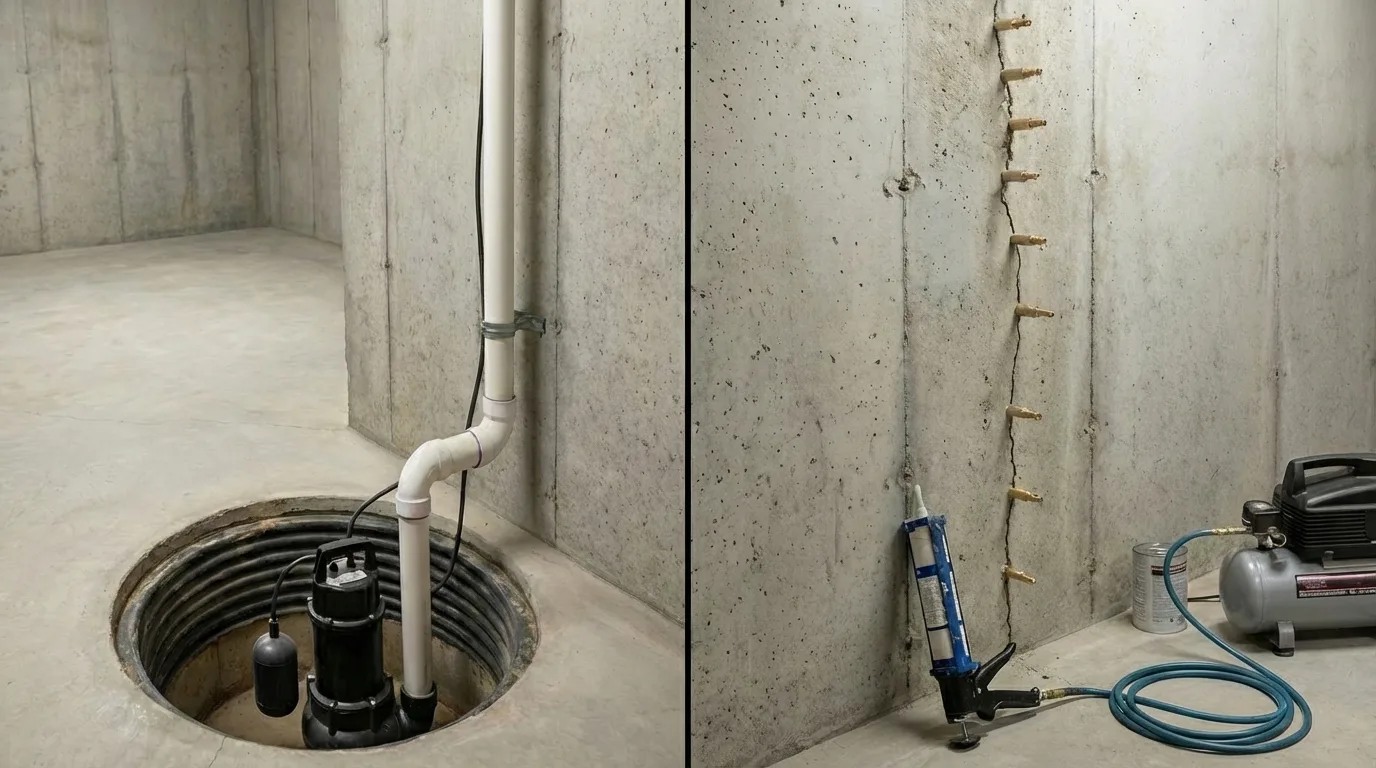
Cracks in crawl space foundation walls can be repaired with injection techniques similar to those used in full basements — approximately 100 PSI injection through the full wall thickness. The access is tighter, but the repair is equally effective and equally permanent at $800–$1,300 per crack. Sealing cracks stops water entry at the source.
For cracks showing structural movement, carbon fiber stitches (also called carbon fiber staples) at $200–$300 per stitch can reinforce the wall and prevent further displacement.
Vapor Barriers
Installing a heavy-duty polyethylene vapor barrier over the bare soil floor is one of the most cost-effective crawl space improvements. It prevents soil moisture from evaporating into the crawl space air, reducing humidity dramatically.
Not all vapor barriers are equal. The thin 6-mil plastic sheeting sold at hardware stores is better than nothing, but it tears easily and degrades over time. A proper crawl space vapor barrier should be 12-mil to 20-mil reinforced polyethylene, extending up the walls at least 6 inches and sealed at the seams and edges with seam tape. The thicker material costs more upfront ($1,200–$4,000 depending on crawl space size) but lasts decades rather than years.
Crawl Space Dehumidifier
A dehumidifier can be an effective standalone solution when the crawl space has no active water entry but stays humid due to soil moisture, condensation, or poor ventilation. Look for a commercial-grade unit rated for crawl spaces — residential dehumidifiers are not built for the conditions. A properly sized unit (70-pint capacity or higher) set to maintain 50% relative humidity runs $1,500–$3,000 installed with a drain line.
A dehumidifier treats the air but not the source. If water is actively entering through cracks or pooling on the floor, you need to fix those problems first — otherwise the dehumidifier is just fighting a losing battle. For more on this, see our basement humidity control guide.
Drainage Improvements
If water is actively entering the crawl space, drainage solutions may be necessary. This can include exterior grading corrections, downspout extensions, or in some cases, an interior drain system with a sump pump ($1,500–$5,000). The goal is to manage water before it reaches the crawl space or remove it efficiently when it does.
Crawl Space Encapsulation
Encapsulation is the comprehensive approach: a heavy 20-mil vapor barrier on the floor and walls, sealed vents, insulated walls, and a dehumidifier to control remaining moisture. It essentially converts the crawl space from a vented, semi-outdoor environment to a sealed, conditioned space.
Building science has moved firmly toward sealed crawl spaces over vented ones. The old thinking was that vents allowed moisture to escape. The reality in New England is that vents let humid summer air in, where it condenses on cooler crawl space surfaces, making the problem worse. Sealing the vents and conditioning the air inside is more effective.
Full encapsulation runs $5,000–$15,000 depending on the size of the crawl space, the condition of the existing foundation, and whether structural repairs or drainage work is needed first. It is the most expensive option but also the most effective for severe or multi-source moisture problems. A typical encapsulation takes 2–3 days to complete.
Structural Repairs
If floor joists are damaged, they may need sistering (attaching new joists alongside the damaged ones) or replacement. Compromised support posts or beams may need reinforcement. These repairs run $2,400–$10,000+ depending on the extent of the damage, and should be done after the moisture source is addressed — otherwise the new wood will suffer the same fate.
DIY vs. Professional
Some crawl space work is within reach for a handy homeowner. Laying a basic vapor barrier on a dry, clean crawl space floor is a manageable weekend project. Improving exterior grading and extending downspouts are straightforward.
But crack injection, structural repairs, encapsulation, and anything involving standing water or significant mold should be left to professionals. The confined space creates safety risks (limited ventilation, potential mold exposure, tight access), and the repairs themselves require specialized equipment and materials. Getting it wrong in a crawl space is expensive to undo because everything is harder to access the second time around.
Crawl Space vs. Full Basement: Different Problems
If you are comparing notes with a neighbor who has a full basement, keep in mind that crawl spaces present some unique challenges. They are harder to inspect, harder to access for repairs, and harder to ventilate. The proximity of bare soil to wooden framing creates a naturally humid microclimate that full basements (with their concrete floors) do not have.
On the other hand, crawl space repairs are often less disruptive to your daily life because the work happens beneath the home rather than in a space you use. No furniture to move, no finished walls to work around.
Frequently Asked Questions
Does homeowners insurance cover crawl space repair?
Generally, no. Standard homeowner’s insurance covers sudden, accidental damage (a pipe bursts and floods the crawl space) but not gradual deterioration from moisture, settling, or deferred maintenance. Flood insurance (a separate policy) covers flood damage but not the repair of the foundation itself. In practice, most crawl space repairs are an out-of-pocket expense. The silver lining: most targeted repairs (crack injection, vapor barrier) are far less expensive than people expect.
Can I fix my crawl space myself?
Some work, yes. Laying a vapor barrier, improving exterior grading, and extending downspouts are reasonable DIY projects. Crack injection, structural joist repair, encapsulation, and mold remediation should be done by professionals — the confined space creates safety risks and the repairs require specialized equipment. See the DIY vs. Professional section above for specifics.
How often should I inspect my crawl space?
At minimum, twice a year: once in spring after snowmelt (to catch water entry early) and once in fall before winter (to address anything before freeze-thaw season). You do not need to do a full army-crawl — opening the access door and using a bright flashlight to look for standing water, visible mold, fallen insulation, or pest activity takes five minutes and catches most problems early.
Is crawl space encapsulation worth it in New England?
For crawl spaces with severe or recurring moisture problems, yes. Encapsulation addresses the root cause rather than treating symptoms, and it can reduce heating and cooling costs, improve indoor air quality, and protect your home’s structural integrity long-term. For crawl spaces with a single identifiable problem (one crack, minor dampness), a targeted repair is usually more cost-effective than full encapsulation.
What is the difference between a vapor barrier and encapsulation?
A vapor barrier is a sheet of polyethylene plastic laid over the dirt floor to block soil moisture from evaporating into the crawl space. It is one component of moisture management. Encapsulation is the full treatment: a heavy vapor barrier on the floor and walls, sealed vents, wall insulation, and a dehumidifier. Think of a vapor barrier as locking one door. Encapsulation locks every door, seals the windows, and turns on the climate control.
How long does crawl space encapsulation last?
A properly installed encapsulation with commercial-grade materials (20-mil vapor barrier, quality dehumidifier) should last 20+ years. The dehumidifier will need maintenance and eventual replacement (10–15 year lifespan), but the barrier itself is extremely durable. Cheap materials (6-mil plastic, residential-grade dehumidifier) will fail much sooner, which is why material quality matters.
Do I need a dehumidifier in my crawl space?
If your crawl space humidity consistently stays above 60% relative humidity after addressing water entry sources (cracks, grading, drainage), a dehumidifier is worth the investment. Below 60%, mold growth slows dramatically and wood stays dry. A simple hygrometer ($10–$20 at any hardware store) placed in the crawl space for a week will tell you where you stand.
What to Do Now
If you have a crawl space and have not looked inside it recently, or ever, it is worth a look. You do not need to army-crawl the entire space. Open the access door, use a bright flashlight, and look for standing water, visible mold, fallen insulation, or any signs of pest activity.
If you see something concerning, or if you are experiencing any of the upstairs warning signs we described — especially a persistent musty smell in the basement — text us a photo or request a free foundation consultation for a professional opinion without any obligation. We will tell you what needs attention now, what can wait, and what is perfectly fine as-is.
The worst crawl space problems we see are always the ones that were ignored the longest. A quick look now can save you a major headache later.