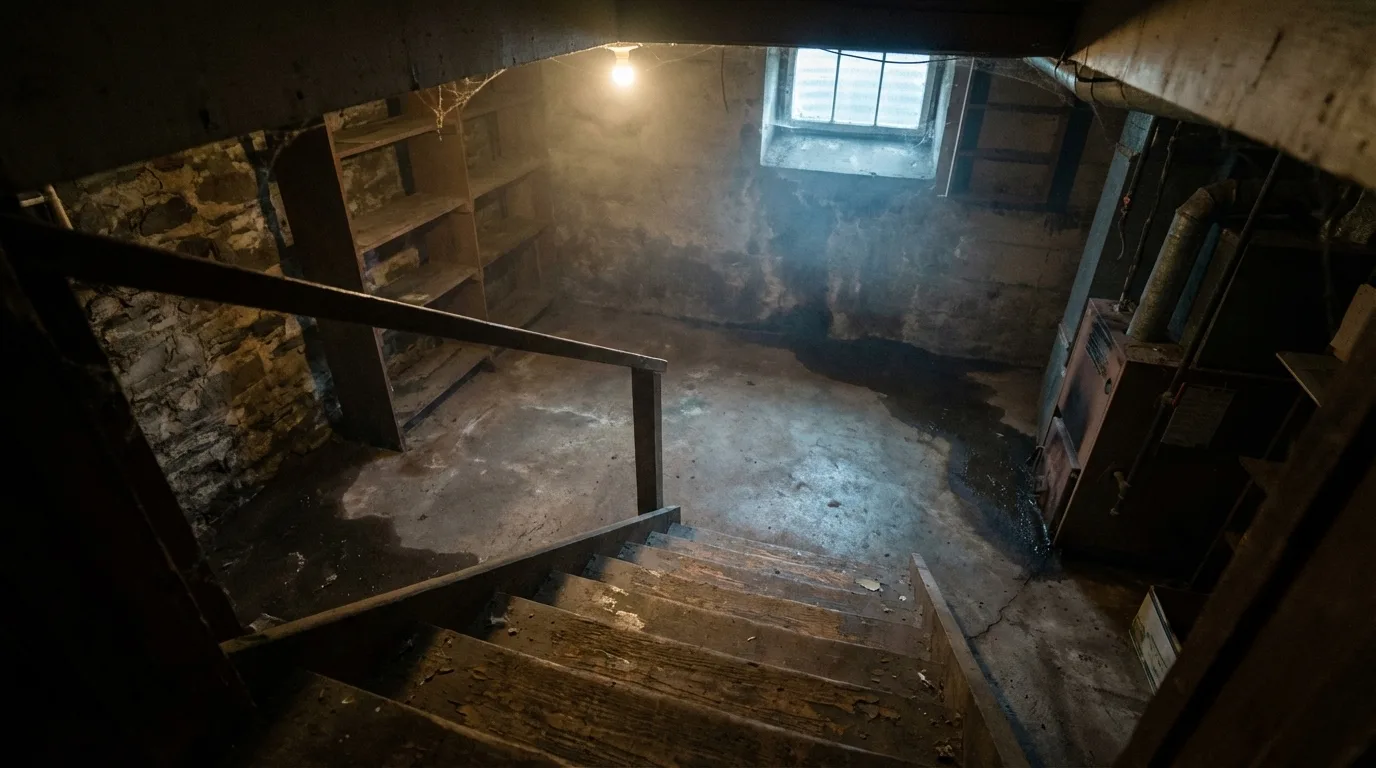
You know the smell. That damp, earthy, vaguely unpleasant odor that hits you halfway down the basement stairs. Maybe you have gotten so used to it you barely notice. Maybe your guests notice for you.
That musty smell is not just an aesthetic problem. It is your basement telling you something about moisture — and moisture in a basement is never just about the smell. It is about what the moisture is doing to your foundation, your air quality, and your home’s value.
Let’s figure out where it is coming from and what to do about it.
Why Does My Basement Smell Musty?
Musty smells come from one thing: moisture. Specifically, moisture feeding biological growth — mold, mildew, bacteria, and fungi that thrive in damp, poorly ventilated spaces.
The question is not “why does my basement smell musty?” The question is “where is the moisture coming from?” Answer that, and you solve the smell.
The Five Most Common Causes
1. Water Intrusion Through Foundation Cracks
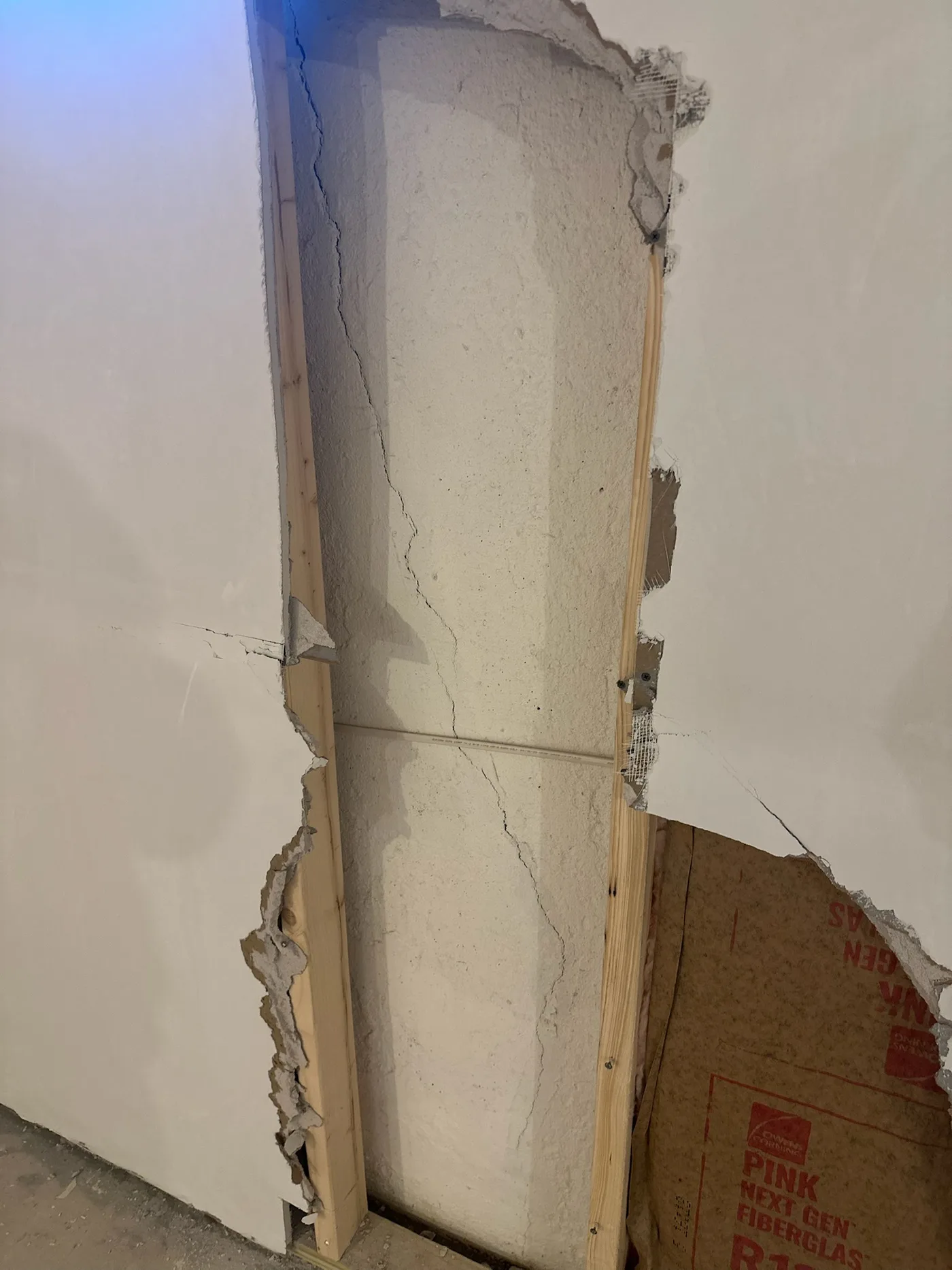
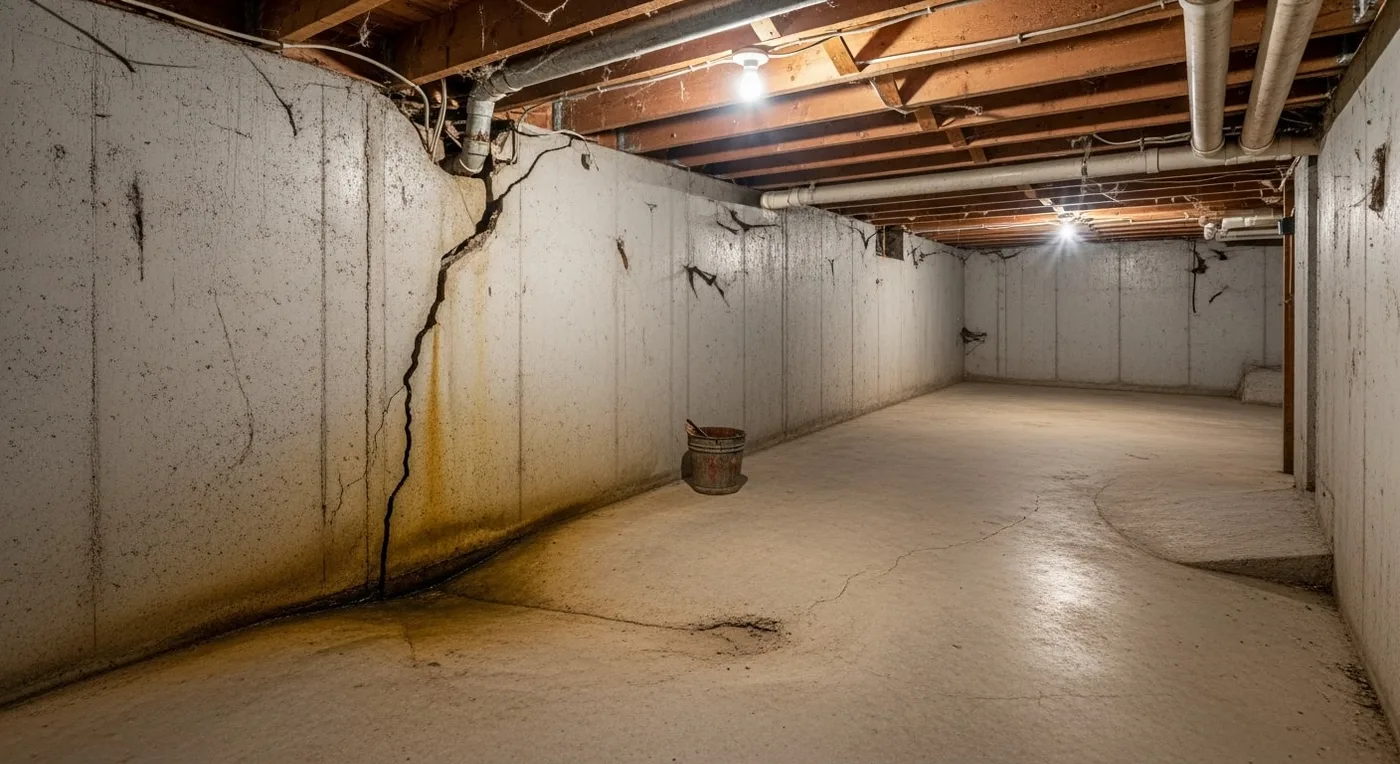
The clue: The smell is strongest near walls, particularly after rain — you might notice water in basement after rain or white powder on basement walls (efflorescence). You may see staining, crystalline deposits, or actual dampness on the wall surface.
What is happening: Water from saturated soil — often clay-heavy glacial till that holds moisture against the foundation — is entering through cracks in your foundation walls. Even hairline cracks can admit enough moisture to feed mold growth. The water does not have to be pooling on the floor — moisture wicking through a crack and evaporating on the interior surface is enough.
The fix: Foundation crack injection at $800-$1,300 per crack seals the crack from inside to outside at approximately 100 PSI, filling the full 8-10 inches of wall thickness. No water entry, no moisture, no mold food, no smell.
This is the cause we see most often in New England basements. Our freeze-thaw cycles crack foundations, and cracked foundations let in water. It is a predictable cycle. For more on identifying crack-related problems, see signs of foundation problems.
2. High Humidity and Condensation
The clue: The smell is diffuse — not concentrated in one area. Walls feel clammy to the touch. You may see condensation on cold water pipes, particularly in summer.
What is happening: Warm, humid air enters the basement (through windows, doors, or the bulkhead) and condenses on cool concrete surfaces. This persistent dampness feeds mold growth across broad areas of the walls and floor.
The fix:
- Dehumidifier: A properly sized dehumidifier (50-70 pint capacity for most basements) running during humid months makes an enormous difference. Set it to maintain 50% relative humidity or lower.
- Ventilation: Ensure air circulates. A stagnant basement traps moisture.
- Insulate cold water pipes: Pipe insulation prevents condensation from dripping onto walls and floors.
3. Poor Drainage and Grading
The clue: The smell worsens significantly during and after rain. The exterior ground around your foundation slopes toward the house rather than away from it.
What is happening: Surface water runs toward your foundation instead of away from it, saturating the soil against your walls. That water finds its way in through cracks, the cove joint (where the wall meets the floor), or by raising the water table under your slab.
The fix: This one is sometimes free. Check your grading — the ground should slope away from your foundation at least 6 inches over the first 10 feet. Clean gutters and extend downspouts at least 4 feet from the house. These simple fixes eliminate a surprising amount of basement moisture.
4. Leaking Bulkhead
The clue: The smell is strongest near the bulkhead entrance. You may see water staining on the bulkhead stairs or on the floor near the base of the stairs.
What is happening: New England bulkheads are notorious for leaking. The joint where the bulkhead meets the foundation, the seam between the bulkhead doors, and rust-through holes in older metal bulkheads all let water pour in during rain.
The fix: Leaky bulkhead repair at $1,800-$2,500 addresses the joints and connections that admit water, including proper bulkhead sealant application at all critical junctions. For more on costs, our bulkhead repair cost guide has the details.
5. Drain and Plumbing Issues
The clue: The smell has a sewage component — not just earthy, but sharp or sulfurous. It may come and go, or be concentrated near a floor drain or bathroom.
What is happening: Dry P-traps in floor drains allow sewer gas to back up into the basement. A cracked or failing sewer line under the slab can leak. Old drain connections can deteriorate.
The fix: Pour a gallon of water down every basement floor drain to refill the P-trap. If the smell persists, have a plumber inspect the sewer line. This cause is unrelated to your foundation, but people often assume it is the same problem.
When a Musty Smell Means Foundation Trouble
Not every musty basement indicates a foundation problem. But several patterns should prompt a closer look:
Call a professional if:
- The smell appeared recently and is getting worse
- You see new cracks in foundation walls, even hairline ones
- There are white crystalline deposits (efflorescence) on walls
- You find actual water or damp spots on walls after rain
- The smell persists despite running a dehumidifier
- Multiple areas of the basement are affected
Our guide on how to check your foundation walks you through a self-inspection you can do in about 20 minutes.
Health Concerns: Take the Smell Seriously
A musty basement is not just about comfort or property value. The biological growth causing that smell can affect your health.
Mold and mildew release spores that travel through your entire home via the “stack effect” — warm air rising through the house pulls basement air upward. By some estimates, up to 50% of the air you breathe on the first floor originated in the basement.
Health effects can include:
- Allergic reactions (sneezing, runny nose, itchy eyes)
- Asthma aggravation
- Respiratory irritation
- Headaches
- Fatigue
People with asthma, allergies, or compromised immune systems are most affected, but prolonged exposure affects anyone. If household members have unexplained respiratory symptoms that improve when they leave the house, basement moisture should be investigated.
The Step-by-Step Fix
Here is the systematic approach we recommend:
Step 1: Identify water entry points. Walk your basement during or right after heavy rain. Look for active leaks, damp spots, and staining patterns. Bring a flashlight and check every wall surface.
Step 2: Fix exterior drainage. Correct grading, clean gutters, extend downspouts. This is free or nearly free and eliminates a huge percentage of moisture sources.
Step 3: Seal cracks and entry points. Any crack admitting water should be professionally injected. Any leaking bulkhead should be sealed. These are targeted fixes with immediate impact.
Step 4: Control humidity. Install or upgrade a dehumidifier. Improve ventilation if possible. Insulate cold water pipes.
Step 5: Address mold. Once the moisture source is eliminated, existing mold can be cleaned. Small areas (less than 10 square feet) can be handled with appropriate cleaning solutions. Larger areas may warrant professional remediation.
Step 6: Monitor. After fixes, monitor humidity levels with a hygrometer (a $15 investment that pays for itself). Basement humidity should stay below 60%, ideally below 50%.
When NOT to Worry About Basement Smells
A faint, occasional mineral smell in a basement with no visible moisture, no staining, and no efflorescence is probably just concrete being concrete. New England’s humidity means some basement dampness during July and August is normal and manageable with a dehumidifier.
However: A persistent musty smell in the basement that never fully goes away — especially one that worsens after rain — is always worth investigating. A dry, well-maintained basement should smell like nothing.
Get to the Source
The smell is the symptom. Moisture is the disease. And in New England, foundation cracks are the most common way moisture gets in.
If your basement smells musty and you suspect water intrusion, text us a photo for a quick assessment. Our free consultations include a thorough inspection of your foundation for cracks, moisture intrusion points, and structural concerns. After 50+ combined years of New England foundation work, we will tell you exactly what is causing the problem — and whether the solution is a $1,000 crack repair or a trip to the hardware store for a better dehumidifier. 860-573-8760 (CT) | 617-668-1677 (MA)If your basement smells musty and you suspect water intrusion, text us a photo for a quick assessment. Our free consultations include a thorough inspection of your foundation for cracks, moisture intrusion points, and structural concerns. After 50+ combined years of New England foundation work, we will tell you exactly what is causing the problem — and whether the solution is a $1,000 crack repair or a trip to the hardware store for a better dehumidifier. 860-573-8760 (CT)If your basement smells musty and you suspect water intrusion, text us a photo for a quick assessment. Our free consultations include a thorough inspection of your foundation for cracks, moisture intrusion points, and structural concerns. After 50+ combined years of New England foundation work, we will tell you exactly what is causing the problem — and whether the solution is a $1,000 crack repair or a trip to the hardware store for a better dehumidifier. 617-668-1677 (MA)