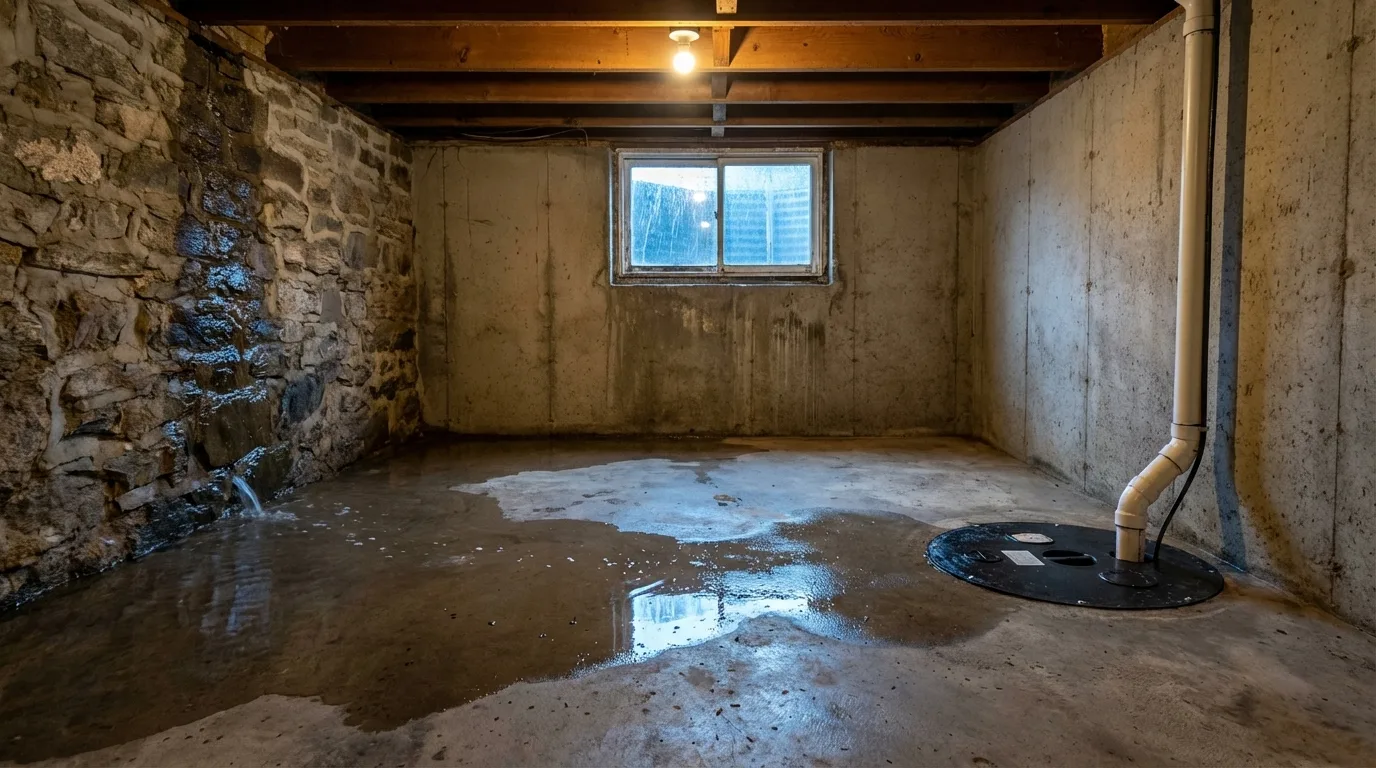
New England gives your basement every reason to flood. We have spring snowmelt, summer thunderstorms, fall hurricanes, and winter ice dams. The ground freezes, thaws, and saturates on a cycle designed to test every weakness in your foundation.
But here is the thing — most basement flooding is preventable. Not with a $20,000 waterproofing system, but with a systematic approach to the actual causes of water entry. After decades of fixing flooded basements across Connecticut, Massachusetts, Rhode Island, New Hampshire, and Maine, we can tell you that the majority of flooding we see could have been prevented with maintenance that costs little or nothing.
Let’s go through it season by season.
The Year-Round Fundamentals
Before we get seasonal, three things should be right at all times.
Grading
The ground around your foundation should slope away from the house. The standard is 6 inches of drop over the first 10 feet. Grab a level and check — you might be surprised.
Over time, soil settles near foundations, mulch beds build up, and the grade reverses. When rain falls, instead of flowing away from your house, it pools against the walls. Every drop that pools there is looking for a way into your basement.
The fix: Add soil or adjust grading so water flows away. This is a Saturday afternoon project with a wheelbarrow and a rake, and it prevents more flooding than any product you can buy.
Gutters and Downspouts
Functioning gutters that direct water away from the foundation are not optional in New England. A typical roof collects roughly 600 gallons of water per inch of rainfall. If your gutters are clogged or your downspouts dump water right at the foundation, that is 600 gallons being delivered directly to your basement walls.
Downspout rule: Extend them at least 4 feet from the foundation. Six feet is better. Splash blocks alone are not enough — water fans out and still saturates the soil near the wall.
Foundation Crack Sealing
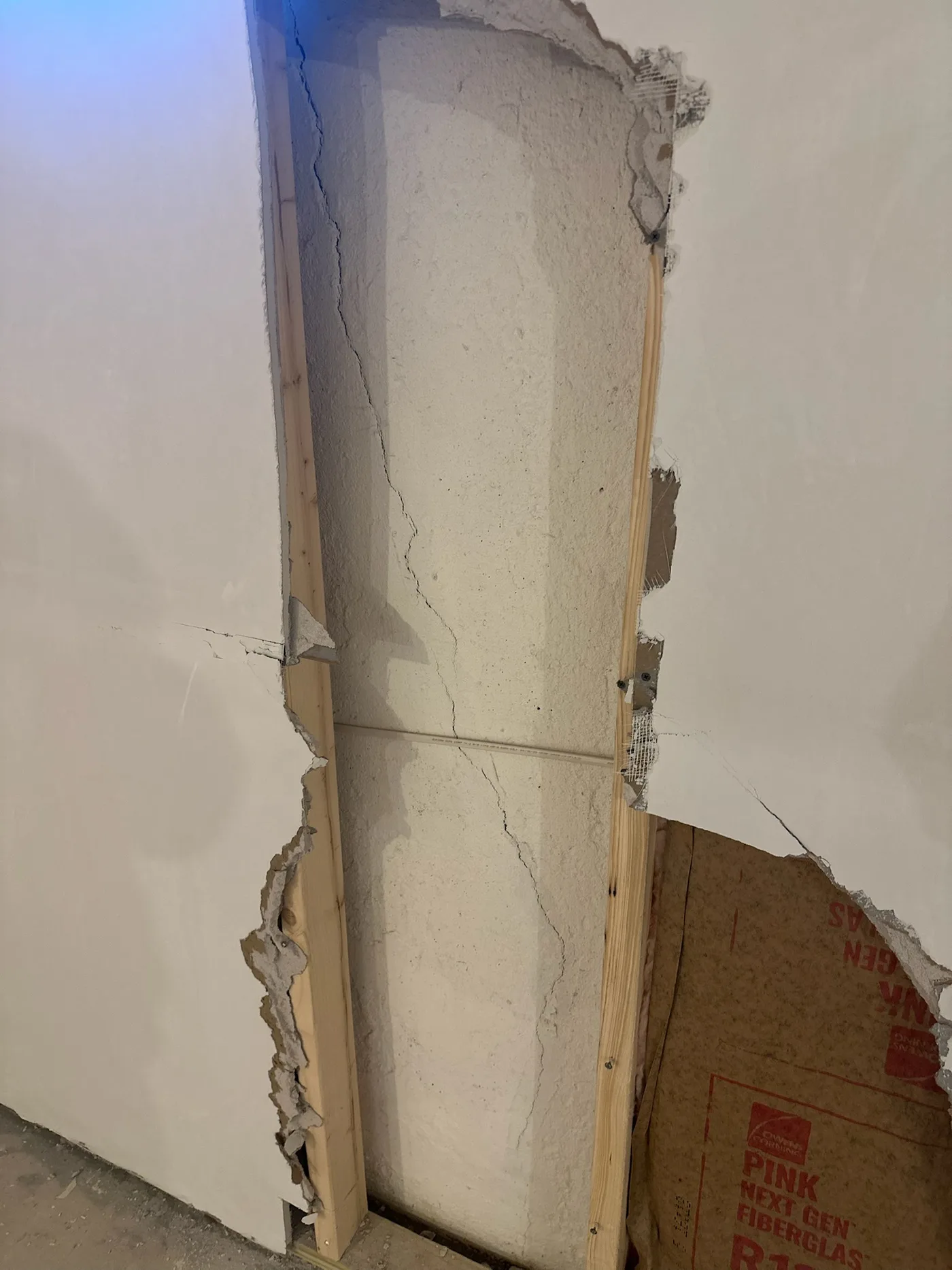
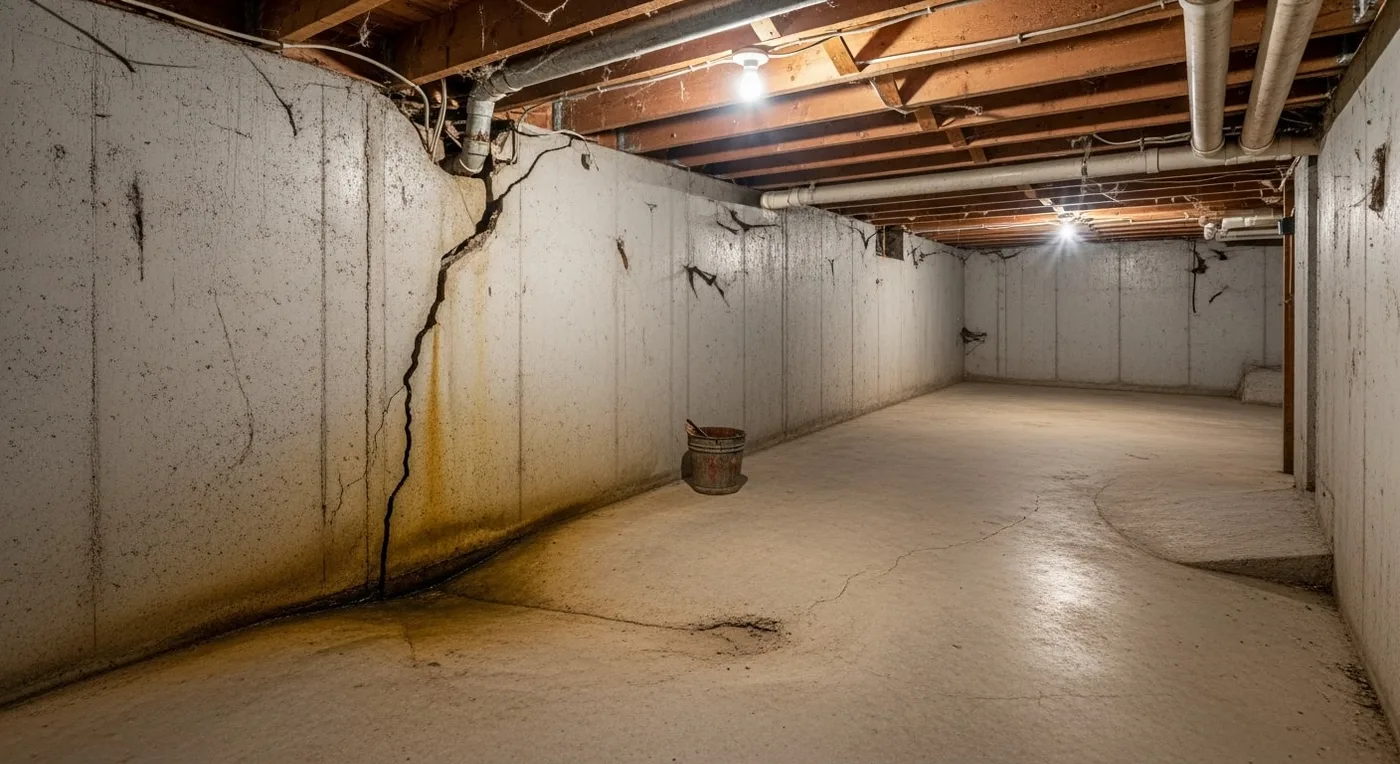
Cracks are how most water enters New England basements. Even hairline cracks admit water under the hydrostatic pressure created by saturated soil. And once water gets in, the freeze-thaw cycle widens the crack for next time.
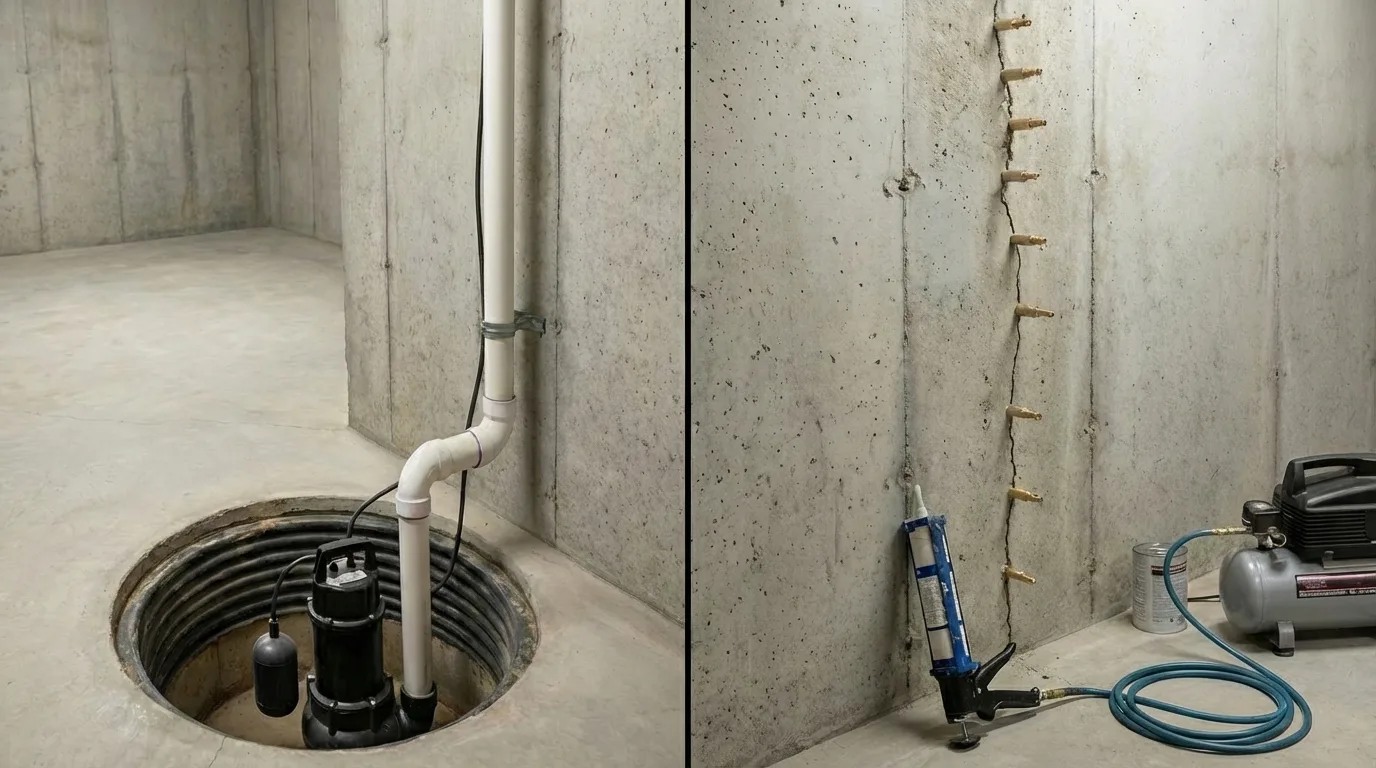
Seal cracks before they become water entry points. Foundation crack injection fills the crack from inside the wall to outside, creating a permanent seal. See our guide on basement waterproofing vs. foundation repair for when this approach is all you need.
Spring: The Critical Season
Spring is when most New England basement flooding occurs. The combination of snowmelt, rain, and still-frozen ground creates a perfect storm.
March - April Checklist
Inspect the foundation from outside. Walk the perimeter of your house. Look for new cracks, settling near the foundation, areas where grading has reversed, and any damage from winter.
Clear window wells. Debris accumulates in window wells over winter. Blocked wells trap water against your basement windows. Clean them out and verify the drains (if present) are clear.
Inspect the bulkhead. Check seals, look for new rust or cracks, and verify the drain at the base of the bulkhead stairs is not clogged. Our guide on leaky bulkhead repair covers what to look for.
Test your sump pump (if you have one). Pour a bucket of water into the sump pit and verify the pump activates, moves the water, and the discharge line is clear. Test the battery backup too. Do this before you need it, not during the first storm.
Check the discharge line. If you have a sump pump, the discharge line that exits the house can freeze over winter. A frozen discharge line means a pump that runs but cannot actually remove water. Make sure the line is clear and flowing freely.
The Spring Thaw Problem
Here is why spring is uniquely dangerous: when snow melts, the top layer of soil thaws while the deeper layer remains frozen. The meltwater cannot drain downward through the frozen layer, so it flows laterally — right toward your foundation. Meanwhile, the ground is so saturated that it exerts maximum hydrostatic pressure against your basement walls.
Mitigation: Keep snow piled away from the foundation. When shoveling winter paths, do not create snow mountains against the house. That convenient spot next to the bulkhead? That is a future flood.
Summer: Thunderstorm Season
Summer thunderstorms deliver large volumes of water in short periods. Your drainage system — gutters, downspouts, grading, swales — needs to handle these intense bursts.
June - August Checklist
Clean gutters after pollen season. The spring pollen dump clogs gutters something fierce in New England. A second cleaning in early June catches this.
Run the dehumidifier. Summer humidity drives condensation in basements, creating dampness that mimics water intrusion. A properly sized dehumidifier (50-70 pint capacity) set to maintain 50% relative humidity keeps your basement dry between storms.
Check window well covers. If you have installed covers, verify they are secure and not cracked. Summer storms can overwhelm uncovered window wells.
Landscape smart. Summer planting season is the time to correct drainage problems. Create swales (shallow channels) to direct water away from the foundation. Avoid dense plantings right against the house that trap moisture.
Fall: Preparation Season
Fall is when you prepare for the two worst seasons — the late fall nor’easters and the winter freeze.
September - November Checklist
Major gutter cleaning. After the leaves fall is the single most important gutter cleaning of the year. Clogged gutters in November mean ice dams in January and flooding in March. Do not skip this.
Final foundation inspection. Walk the perimeter again. Any cracks that appeared or widened over summer need attention before winter. Cracks that are merely annoying in October become water highways in March. Call for a free consultation if you find anything concerning.
Winterize the sump pump discharge. If your discharge line runs above ground, insulate it or install a freeze guard (a port that allows water to exit even if the end of the line freezes).
Service the sump pump. Clean the pit, check the float switch for debris, verify the backup battery is charged. Professional service is available but a DIY check takes 15 minutes.
Store items off the floor. Even with every precaution, New England basements can surprise you. Keep irreplaceable items in watertight containers or on shelves above floor level.
Winter: Maintenance and Monitoring
Winter is mostly about monitoring and catching problems early before they become spring floods.
December - February Checklist
Monitor for ice dams. Ice dams on the roof can force water under shingles and into walls, eventually reaching the basement through interior pathways. Proper attic insulation and ventilation prevent ice dams. Addressing them is a roofing topic, but the water ends up in your basement.
Keep snow away from the foundation. Repeat it until it sticks: do not pile snow against your house.
Check the basement after every significant weather event. A quick walk-through looking for new dampness, staining, or active leaks takes two minutes and catches problems before they escalate.
Test the sump pump monthly. Yes, even in winter. Especially in winter if you are in an area with a high water table.
When Prevention Is Not Enough
Sometimes you do everything right and still get water. That usually points to one of two issues:
Foundation cracks you have not found. Our guide on how to check your foundation helps you do a thorough self-inspection, and our signs of foundation problems article covers the less obvious indicators.
Structural issues. If your basement walls are bowing inward, cracking horizontally, or showing signs of movement, the water problem is a symptom of a structural problem. Addressing only the water without fixing the structure is treating the symptom while ignoring the disease.
The Cost of Prevention vs. Cleanup
A flooded basement costs $5,000 to $25,000 in cleanup and restoration. Mold remediation alone can run $10,000 or more. Damaged belongings are irreplaceable regardless of insurance.
Compare that to prevention costs:
- Grading correction: $0 - $500
- Gutter cleaning (twice yearly): $200 - $400
- Downspout extensions: $50 - $150
- Crack injection: $800 - $1,300 per crack
- Sump pump maintenance: $150 - $300 per year
Prevention is cheaper by an order of magnitude. Every time.
Take Action Before the Next Storm
If your basement has flooded before, or if you have noticed warning signs — dampness, musty smells, efflorescence, visible cracks — do not wait for the next storm to confirm the problem. Our free consultations identify the specific vulnerabilities in your foundation so you can address them on your schedule, not during an emergency. 860-573-8760 (CT) | 617-668-1677 (MA)If your basement has flooded before, or if you have noticed warning signs — dampness, musty smells, efflorescence, visible cracks — do not wait for the next storm to confirm the problem. Our free consultations identify the specific vulnerabilities in your foundation so you can address them on your schedule, not during an emergency. 860-573-8760 (CT)If your basement has flooded before, or if you have noticed warning signs — dampness, musty smells, efflorescence, visible cracks — do not wait for the next storm to confirm the problem. Our free consultations identify the specific vulnerabilities in your foundation so you can address them on your schedule, not during an emergency. 617-668-1677 (MA)
A dry basement is not luck. It is maintenance, preparation, and timely repairs. New England will keep testing your foundation — make sure your foundation is ready.