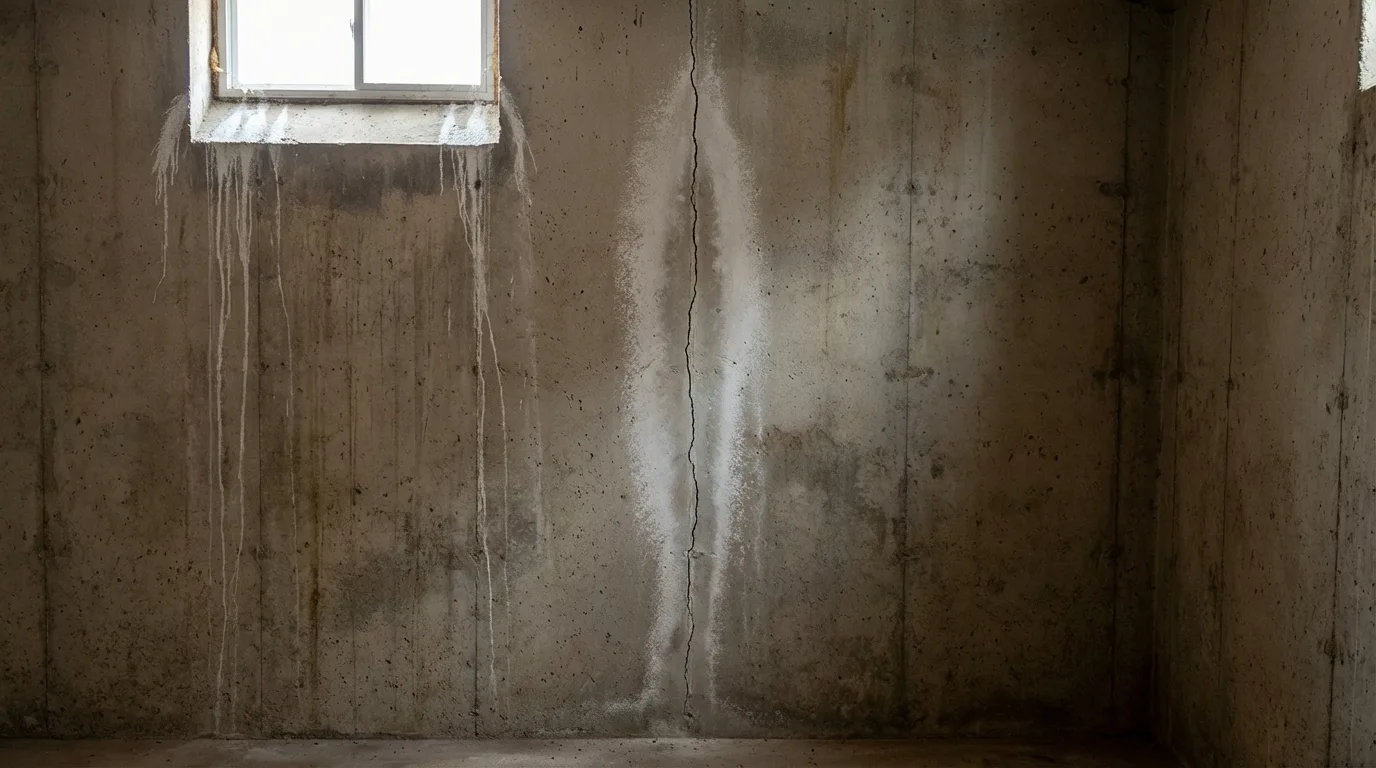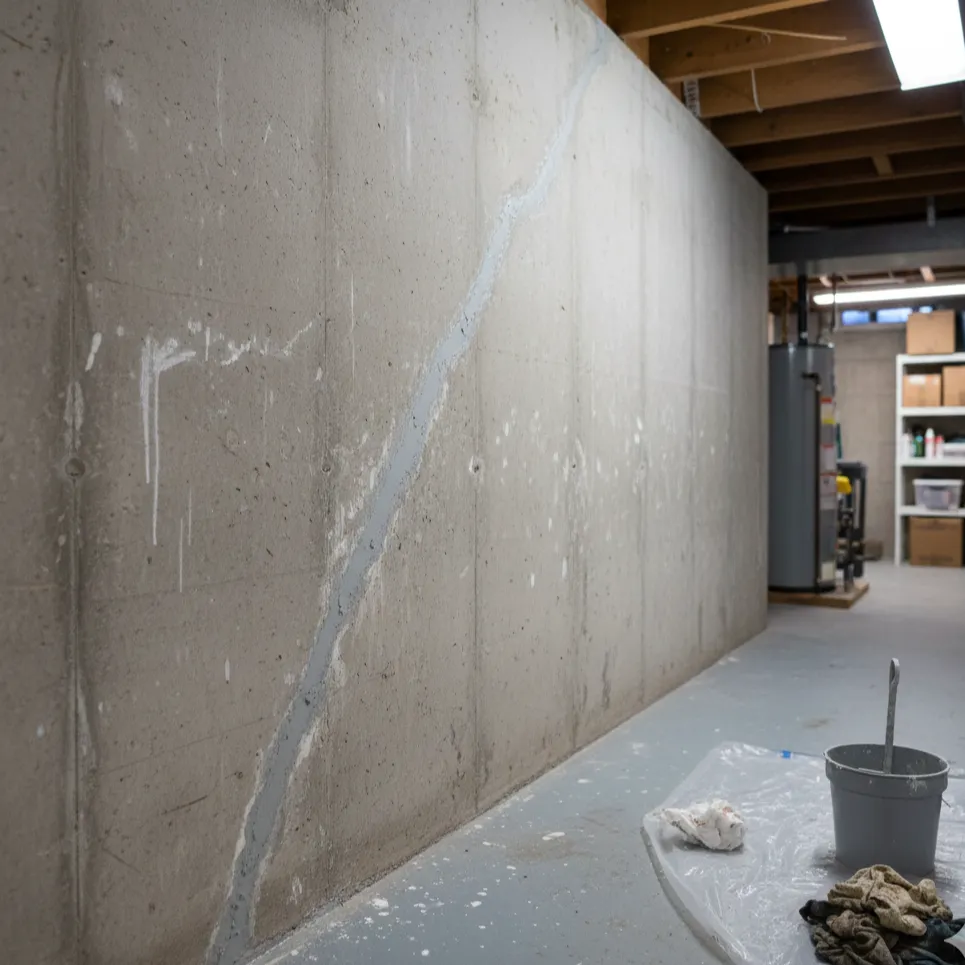
You’re three weeks from closing. The inspection report lands in your inbox, and there it is on page four: “Foundation cracks observed. Recommend further evaluation by a qualified specialist.” Your buyer’s eyes go wide. The deal starts wobbling.
We’ve been on the other end of that phone call thousands of times over the past two decades. And here’s what we want every real estate professional in New England to know: most foundation findings are fixable, affordable, and absolutely not deal-breakers. The key is understanding what you’re looking at, communicating it calmly, and getting the right expert involved quickly.
This guide is for you — the listing agent, the buyer’s agent, the broker who needs to translate inspector-speak into actionable information that keeps transactions on track.
What Inspectors Flag (And What It Actually Means)
Home inspectors are generalists by design. They identify conditions and recommend further evaluation — it’s not their job to diagnose or estimate repair costs. The problem is that their language can sound alarming to buyers who don’t know the difference between a routine shrinkage crack and a failing foundation.
Here’s a translation guide for the most common findings:
“Hairline Cracks Observed”
What it means: Cracks thinner than 1/16 inch, typically vertical, with no displacement or water staining.
Severity: Minimal. These are normal shrinkage cracks present in virtually every poured concrete foundation in New England. They’re cosmetic and don’t require repair unless water intrusion develops. Many inspectors note them simply because they’re visible, not because they’re concerning.
Your talking point: “Shrinkage cracks are normal in concrete foundations and present in the vast majority of homes in our area. They’re cosmetic and don’t affect structural integrity."
"Foundation Cracks With Evidence of Water Intrusion”
What it means: Cracks with water stains, mineral deposits (efflorescence), or active moisture.
Severity: Moderate — but very fixable. Water is entering through the crack, which is a legitimate maintenance item. However, foundation crack injection is a routine repair that typically costs $800-$1,300 per crack and comes with a lifetime warranty.
Your talking point: “Water intrusion through foundation cracks is one of the most common and most routinely repaired issues in New England homes. A single crack injection is typically under $1,200 and carries a lifetime transferable warranty.”
For more on what efflorescence means, you can share our article on white powder on basement walls with curious clients.
”Horizontal Cracking / Bowing Walls”
What it means: The foundation wall is experiencing lateral soil pressure that’s causing it to crack horizontally and potentially push inward.
Severity: Significant — but still repairable. This is the finding that legitimately concerns structural engineers, and it should be taken seriously. However, “significant” doesn’t mean “catastrophic.” Bowing walls are repaired routinely with carbon fiber reinforcement, steel I-beams, or wall anchor systems.
Your talking point: “This is a structural finding that needs professional assessment and repair. The good news is that established repair methods exist, costs are quantifiable, and warranties are available. Let’s get a specialist out here this week to give us a clear picture."
"Evidence of Previous Foundation Repair”
What it means: The inspector sees injection ports, patches, carbon fiber straps, or other signs of past work.
Severity: Context-dependent. This actually can be a positive finding if the repair was done professionally and carries a warranty. A repaired crack with a lifetime warranty is arguably better than an unrepaired crack — the homeowner addressed the issue proactively.
Your talking point: “Previous repair by a qualified contractor, especially with a transferable warranty, is actually a selling point. It shows the issue was identified and properly addressed.”
The Deal-Breaker Myths
In our experience, foundation anxiety kills more deals unnecessarily than actual foundation problems. Here are the myths we encounter most often:
Myth: “Any Foundation Crack Means the House Is Settling”
Reality: The vast majority of foundation cracks are shrinkage cracks from concrete curing — a normal physical process that has nothing to do with soil settlement. For a detailed breakdown, see our guide on vertical vs. horizontal foundation cracks.
Myth: “Foundation Repair Costs Tens of Thousands”
Reality: Most residential foundation repairs in New England cost between $800 and $3,000. Full wall stabilization can reach $6,000-$15,000 in severe cases, but these are uncommon. Our foundation repair cost guide has detailed pricing for every repair type.
Myth: “A Repaired Foundation Reduces Home Value”
Reality: A professionally repaired foundation with a lifetime transferable warranty is a neutral to positive factor. What reduces home value is an unaddressed foundation problem that a buyer’s inspector will flag. The repair is the solution, not the problem.
Myth: “The Buyer Should Walk Away”
Reality: If buyers walked away from every New England home with a foundation crack, they’d never buy a house. The question isn’t whether the foundation has cracks — it’s whether the cracks indicate an affordable, fixable issue or a genuine structural concern. And that’s what a specialist assessment determines.
How We Work With Realtors
We understand that when a transaction is on the line, you need speed, clarity, and documentation. Here’s what you can expect from Attack A Crack:
Fast Response
When a deal is in play, timing matters. We prioritize realtor referrals because we understand the urgency. In most cases, we can schedule an assessment within a few business days — and during peak transaction season, often sooner.
Clear, Written Assessments
We provide a written assessment that includes:
- What we found. Plain-language description of the condition.
- What it means. Honest evaluation of severity — is it cosmetic, maintenance, or structural?
- What it needs. Specific repair recommendations with methods explained.
- What it costs. Written estimate with line items. No surprises.
- Timeline. How long the repair takes (most are completed in a single day).
This document is designed to be shared with buyers, sellers, attorneys, and lenders. It’s clear enough for a layperson to understand and detailed enough to satisfy a structural engineer.
Honest Diagnosis
This is the part that matters most, and it’s worth stating plainly: we don’t manufacture problems to sell repairs. If a crack is cosmetic and doesn’t need repair, we say so. If a $1,000 injection fixes the issue, we’re not going to recommend $10,000 in unnecessary work.
Our business runs on referrals from real estate professionals and satisfied homeowners. That only works if our assessments are honest and our recommendations are proportional. We’ve been at this for decades precisely because agents trust us not to torpedo their deals with inflated diagnoses.
The Transferable Warranty Advantage
Every repair we perform comes with a lifetime transferable warranty. This is a significant asset in a real estate transaction, and here’s why:
For sellers: A repaired crack with a transferable warranty transforms a potential deal-killer into a non-issue. “Yes, there was a crack. It was professionally repaired with a lifetime warranty that transfers to you.” That’s a strong position.
For buyers: You’re getting a repair that’s been done right, backed by a company that’s been in business for more than 20 years, with a warranty that covers you for as long as you own the home. That’s better than buying a home with an unaddressed crack and hoping it doesn’t get worse.
For agents on both sides: The warranty provides documentation that satisfies lenders, insurers, and attorneys. It removes the foundation from the negotiation table and lets everyone focus on closing.
How the Transfer Works
The warranty is attached to the property address, not to the owner. Nothing needs to happen at the sale — no fees, no paperwork, no transfer process. If the new homeowner ever has a warranty issue down the line, they just call us and we look up the warranty by the address of the home.
Scenarios You’ll Encounter
Here are common transaction scenarios and how to navigate them:
Seller’s Side: Pre-Listing Inspection Finds Cracks
Best approach: Get the repair done before listing. A completed repair with warranty is far less disruptive than a mid-transaction finding. The cost of repair is almost always less than the price reduction a buyer would negotiate.
Buyer’s Side: Inspection Finds Foundation Issues
Best approach: Don’t panic. Get a specialist assessment before making any decisions. In most cases, the repair cost is quantifiable, the timeline is short, and the issue can be addressed as a closing condition or credit.
Both Sides: Negotiating Repair Costs
Common approaches:
- Seller completes repair before closing (our preferred approach — buyer sees the finished work)
- Seller provides a credit equal to the repair estimate
- Buyer accepts the condition with a price adjustment
We’re happy to work with any of these approaches and can coordinate directly with either party.
The “Should I Get a Structural Engineer?” Question
For routine cracks (vertical, hairline to moderate, no displacement), a specialist like us can assess and repair directly. For significant structural findings (horizontal cracking, visible bowing, multiple areas of concern), a structural engineer’s report provides an additional layer of documentation that satisfies cautious buyers and lenders. We work alongside structural engineers regularly and can recommend trusted professionals.
Building a Referral Relationship
We work with hundreds of real estate professionals across Connecticut, Massachusetts, Rhode Island, New Hampshire, and Maine. Our approach is simple:
- Be a resource, not a sales pitch. Call us anytime with questions about a foundation finding, even if it doesn’t turn into a repair. We’d rather help you keep a deal together than chase a commission.
- Respond quickly. Real estate runs on timelines. We respect them.
- Be honest. Every time. About severity, about costs, about timelines. If we tell your client something needs repair, it needs repair. If we say it’s fine, it’s fine.
For more on how we work specifically with real estate professionals — priority scheduling, vendor-list onboarding, and what to expect when you send a client our way — see our realtor partner page.
If you’d like to discuss how we can support your transactions, or if you have a deal right now with a foundation question, give us a call. You can also schedule through our free consultation page — just mention you’re a real estate professional and we’ll prioritize accordingly. 860-573-8760 (CT) | 617-668-1677 (MA)If you’d like to discuss how we can support your transactions, or if you have a deal right now with a foundation question, give us a call. You can also schedule through our free consultation page — just mention you’re a real estate professional and we’ll prioritize accordingly. 860-573-8760 (CT)If you’d like to discuss how we can support your transactions, or if you have a deal right now with a foundation question, give us a call. You can also schedule through our free consultation page — just mention you’re a real estate professional and we’ll prioritize accordingly. 617-668-1677 (MA)
We’ve been helping agents keep deals on track for more than 20 years. Your clients’ foundations are in good hands.