If you’ve ever called a crack in your basement wall a “cement crack,” you’re in good company. Almost everyone uses “cement” and “concrete” interchangeably. But they’re actually different things — and understanding the difference helps you make sense of your home’s foundation, driveway, sidewalks, and any repairs they might need.
I’m Luc Richard, and after decades of repairing foundations across New England, I’ve had this conversation thousands of times. Here’s the plain-English version.
The Simple Difference
Cement is an ingredient. Concrete is the finished product.
Think of it like flour and bread. Flour is a key ingredient in bread, but nobody calls a loaf of bread “flour.” Similarly, cement is a key ingredient in concrete, but your foundation, driveway, and sidewalks are made of concrete — not cement.
What Is Cement?
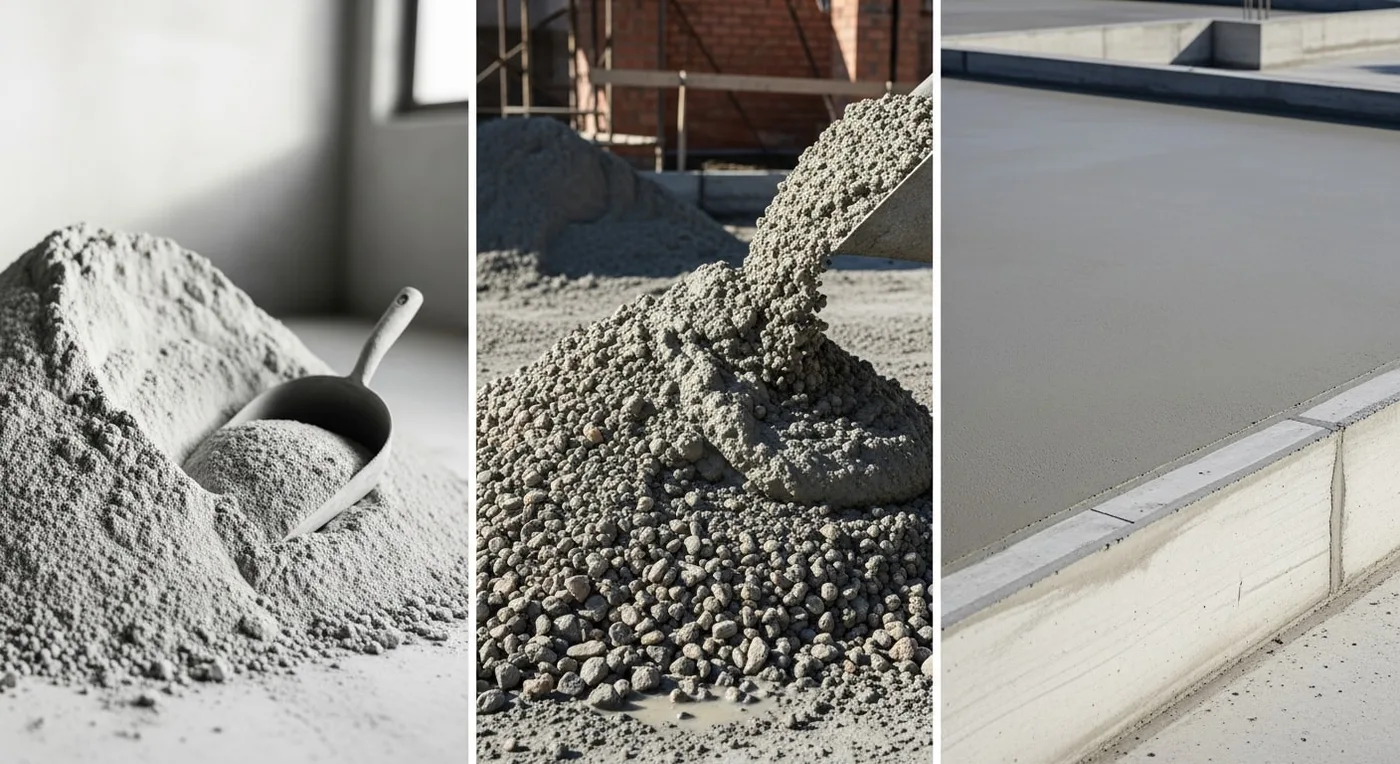
Cement is a fine gray powder made by heating limestone and clay in a kiln at about 2,700°F, then grinding the result into powder. The most common type is Portland cement, which was patented in 1824 and named after the limestone quarries on the Isle of Portland in England.
By itself, cement doesn’t do much. It needs water and aggregates (sand, gravel, crushed stone) to become useful.
What Is Concrete?
Concrete is a mixture of three things:
- Cement (10-15% of the mix) — the binding agent
- Water (15-20%) — activates the cement
- Aggregates (65-75%) — sand, gravel, and crushed stone that provide bulk and strength
When water hits cement, a chemical reaction called hydration begins. The cement forms crystals that bind the aggregates together into a hard, rock-like mass. This process continues for weeks — concrete reaches about 70% of its final strength after 7 days and doesn’t fully cure for 28 days.
Why This Matters for Your Home
Understanding what concrete actually is helps you understand why it cracks, how it fails, and what repair options make sense.
Your Foundation Is Concrete
Whether your home has a poured foundation or concrete block walls, the structural material is concrete. In New England, most homes built after the 1940s have poured concrete foundations. Older homes may have stone, brick, or concrete block.
The concrete in your foundation is strong in compression (it can bear enormous weight pushing down on it) but relatively weak in tension (it doesn’t handle pulling or bending forces well). That’s why lateral soil pressure causes horizontal cracks — the wall is being bent inward, and concrete can’t flex.
Why Concrete Cracks
Every concrete foundation will develop some cracks. It’s not a question of if, but when:
- Shrinkage: Concrete shrinks about 1/16 inch per 10 feet as it cures. This alone guarantees hairline cracks.
- Thermal movement: Concrete expands and contracts with temperature changes. New England’s temperature swings (from -10°F to 95°F) create constant stress.
- Loading: As soil conditions change — freeze-thaw, drainage, root growth — the forces on your foundation change too.
- Age: After 30, 50, 80 years of these forces, cracks are inevitable.
Most shrinkage and thermal cracks are cosmetic. They become a problem when water finds them — and in New England, water always finds them eventually.
What “Cement Repair” Actually Means
When homeowners search for “cement crack repair” or “cement foundation repair,” they’re looking for concrete repair. The repair methods are the same regardless of what you call the material:
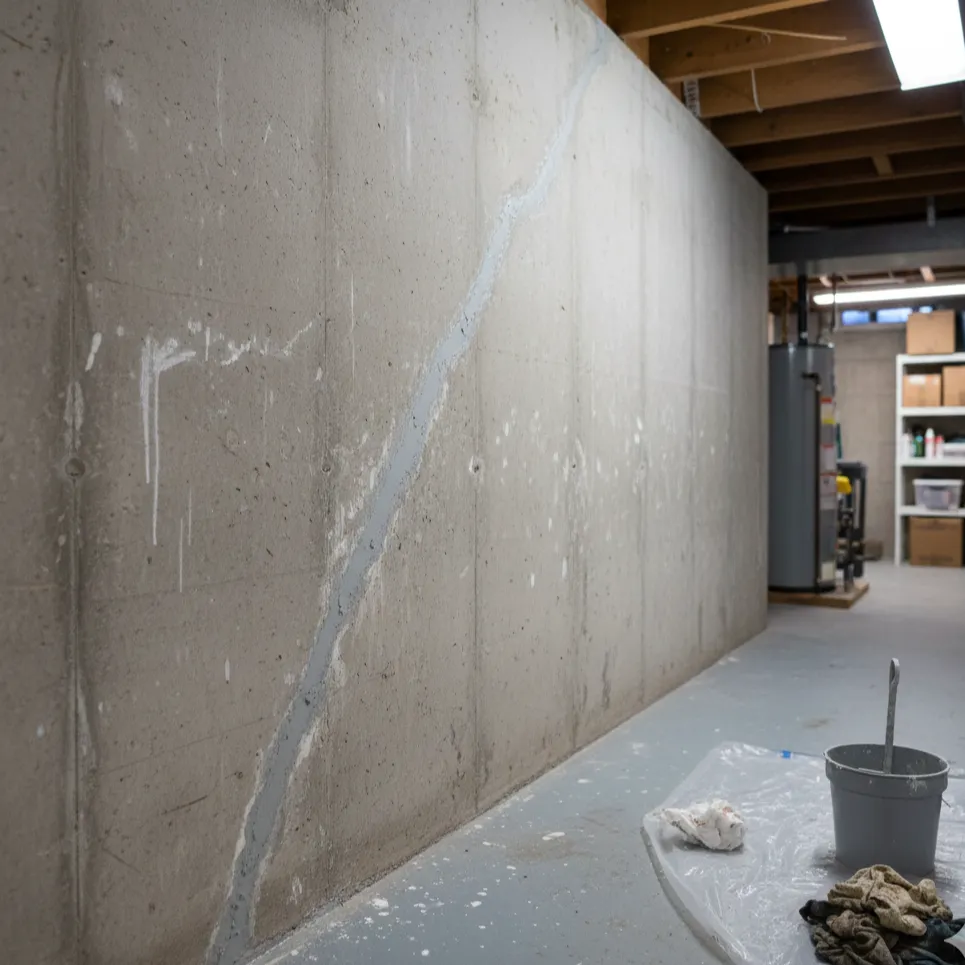
- Crack injection: Polyurethane or epoxy resin is injected into the crack at high pressure (we use 100 PSI — far above industry standard) to fill the entire void from the interior surface through to the exterior soil.
- Carbon fiber staples (reinforcement): Kevlar-grid carbon fiber straps bonded across cracks to prevent further movement. With 800,000 PSI tensile strength, they’re 4 to 10 times stronger than steel.
- Wall crack repair: For cracks showing displacement or structural concern, a combination of injection and stabilization.
Common Concrete Problems Around Your Home
Your foundation isn’t the only concrete on your property. Here’s how concrete issues show up in different locations.
Foundation Walls
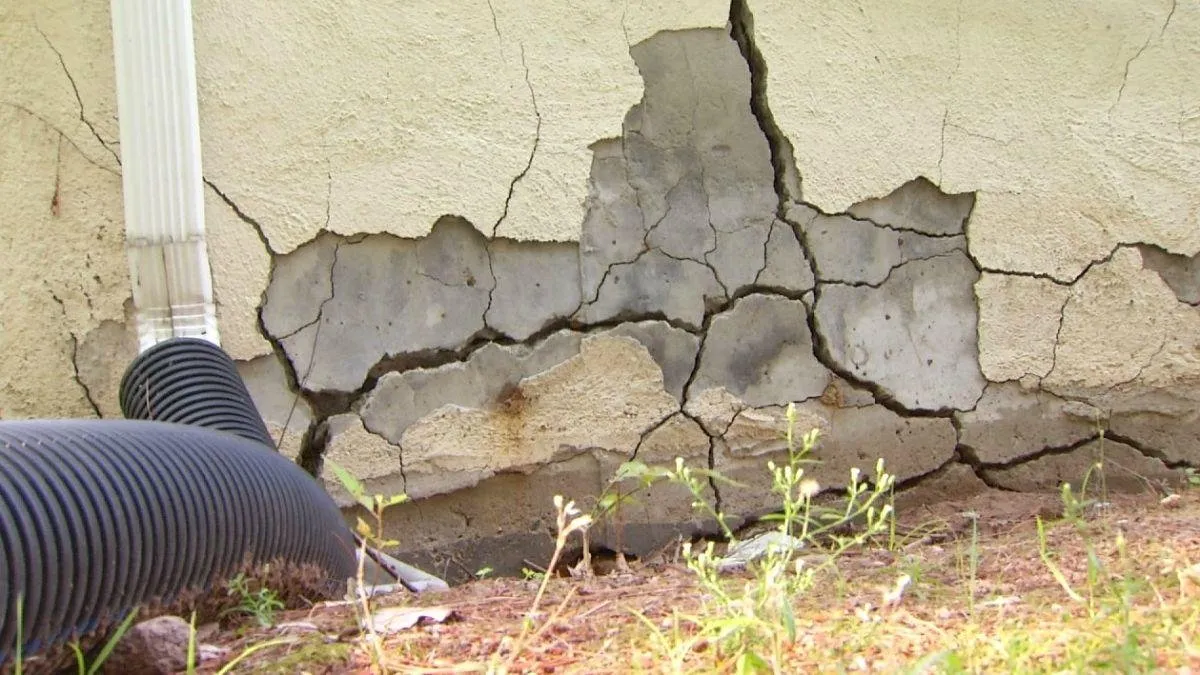
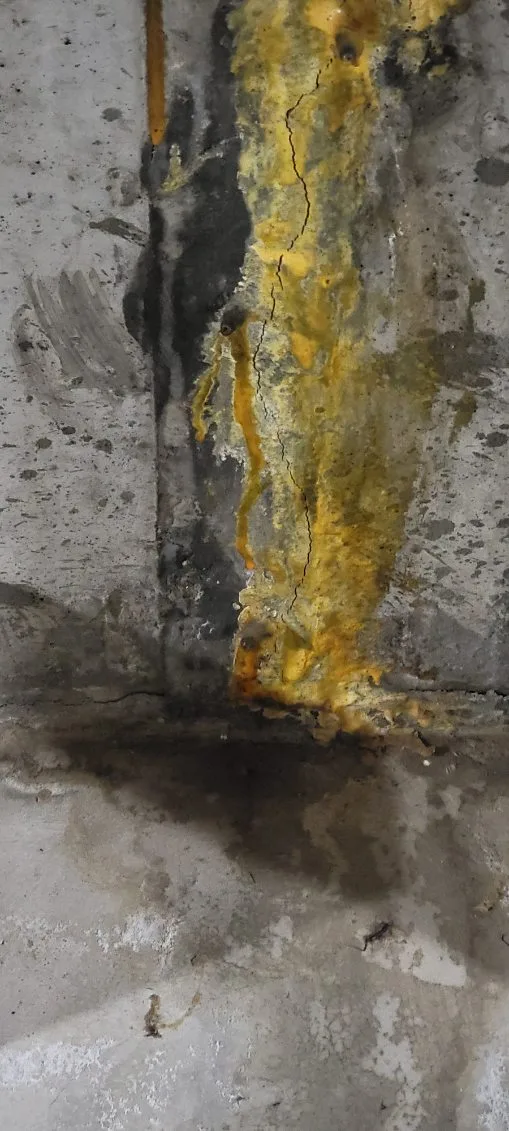
Vertical cracks are usually shrinkage — normal and easily repaired. Horizontal cracks indicate lateral pressure and are more serious. Stair-step cracks in block walls follow the mortar joints and signal differential settlement. Any crack that’s leaking water needs professional attention.
Basement Floors
Basement slabs are typically only 3-4 inches thick and aren’t structural. Cracks are common and usually harmless unless water is seeping through. Floor crack leaks are driven by hydrostatic pressure from below — a different problem than wall cracks.
Driveways and Sidewalks
Exterior concrete takes the worst beating from New England weather. Freeze-thaw cycles in the region’s glacial till and clay-heavy soil, road salt exposure, and UV degradation cause surface scaling, spalling, and cracking. Driveway concrete repair can restore surfaces without full replacement. See our driveway crack repair guide for detailed DIY and professional options.
Pool Decks and Patios
Settling, cracking, and surface deterioration are common on flat concrete surfaces. Uneven sections create trip hazards. Pool deck repair and patio repair options range from crack sealing to full resurfacing depending on severity.
Steps and Stoops
Concrete steps crack and spall from salt exposure and impact. Pulling away from the house is common as the soil beneath settles. Walkway and stairway repair can fix both structural and cosmetic issues.
Mortar vs. Concrete vs. Cement: The Full Picture
While we’re clearing up terminology, there’s a third material that gets confused with the other two.
Mortar is cement mixed with water and fine sand (no gravel). It’s the material between bricks, stones, or concrete blocks. Mortar is designed to be slightly weaker than the units it bonds — so if movement occurs, the mortar cracks instead of the bricks.
In older New England homes with stone or brick foundations, deteriorating mortar is a common issue. Repointing (replacing old mortar) is a different skill set than concrete repair.
| Material | Ingredients | Used For |
|---|---|---|
| Cement | Limestone + clay powder | Ingredient in concrete and mortar |
| Concrete | Cement + water + sand + gravel | Foundations, slabs, driveways, walls |
| Mortar | Cement + water + fine sand | Bonding bricks, stones, blocks |
What to Look For in Your Home
Here’s a quick guide to assessing concrete and masonry issues around your property:
Minor (Monitor)
- Hairline cracks (less than 1/16 inch) with no water
- Surface scaling on exterior concrete
- Minor mortar deterioration in above-grade masonry
Moderate (Schedule a Repair)
- Cracks wider than 1/8 inch
- Any crack with active water leakage
- Spalling or flaking in foundation walls
- Uneven or sunken concrete slabs
Serious (Call Now)
- Horizontal cracks in foundation walls
- Cracks wider than 1/4 inch
- Visible wall displacement (one side of the crack is further forward than the other)
- Stair-step cracking in block walls
- Multiple cracks appearing rapidly
If you’re unsure about any concrete issue in your home, we offer free foundation consultations across New England. Text us a few photos and we will tell you whether a crack needs repair, monitoring, or nothing at all.
Frequently Asked Questions
Is cement the same as concrete?
No. Cement is one ingredient in concrete — it’s the powdered binding agent that, when mixed with water, sand, and gravel, creates concrete. Your foundation, driveway, and sidewalks are made of concrete, not cement. The terms are used interchangeably in everyday language, but understanding the difference helps when discussing repairs with contractors.
Can I use cement to fill a foundation crack myself?
Surface-applied cement or hydraulic cement will temporarily seal the visible face of a crack, but it won’t stop water from penetrating. Foundation cracks extend through the full wall thickness (8-12 inches), and a surface patch only covers the first fraction of an inch. Professional crack injection fills the entire void from interior to exterior using high-pressure resin.
How long does concrete last before it needs repair?
Concrete foundations are designed to last 100+ years, but cracking typically begins within the first decade from curing shrinkage. In New England, most homes need their first foundation repair between 15 and 40 years of age, depending on soil conditions (glacial till, clay-heavy soil), drainage, and construction quality. Regular maintenance — keeping gutters clean, maintaining drainage, and addressing small cracks early — extends the life of any concrete structure.