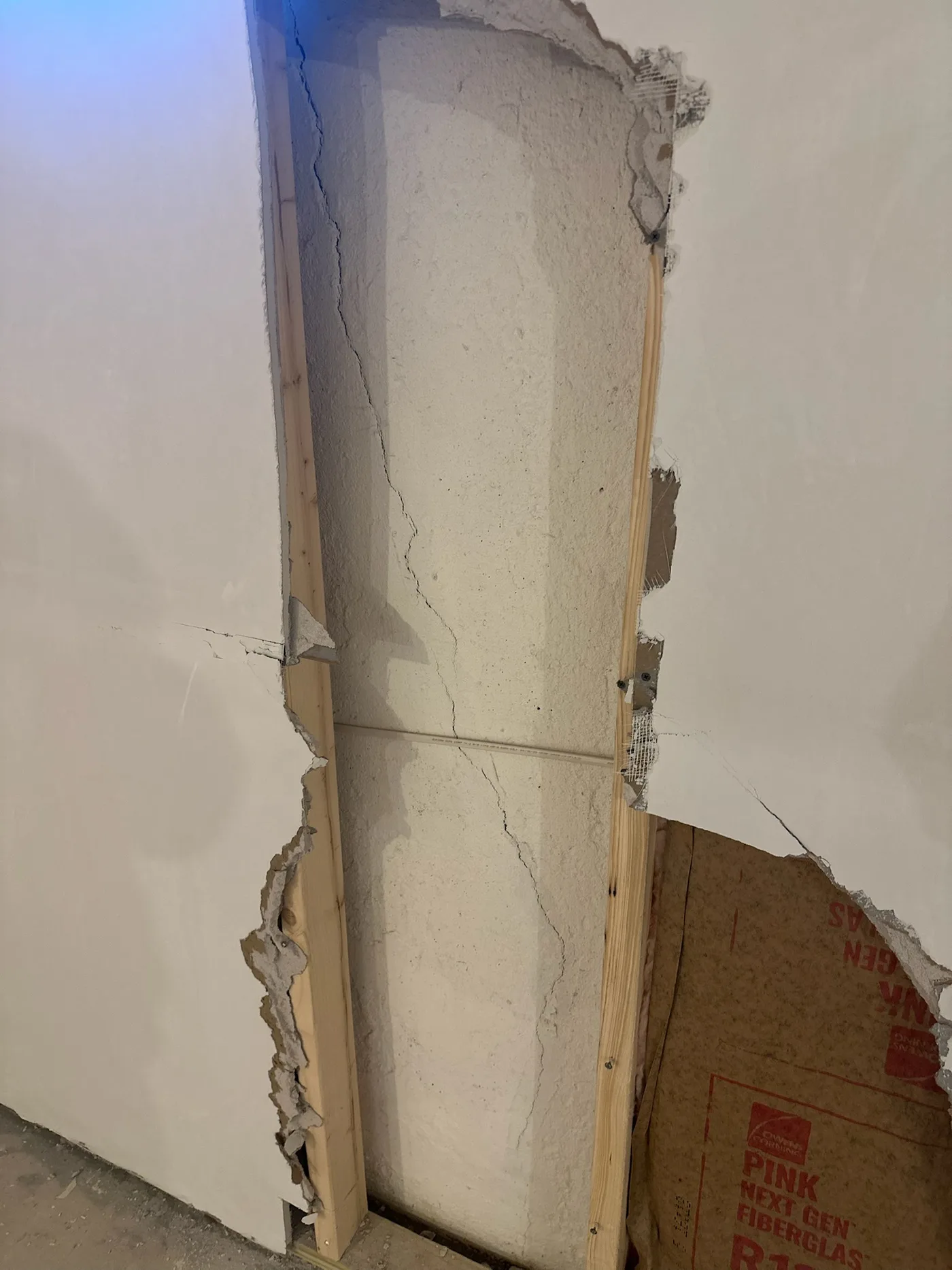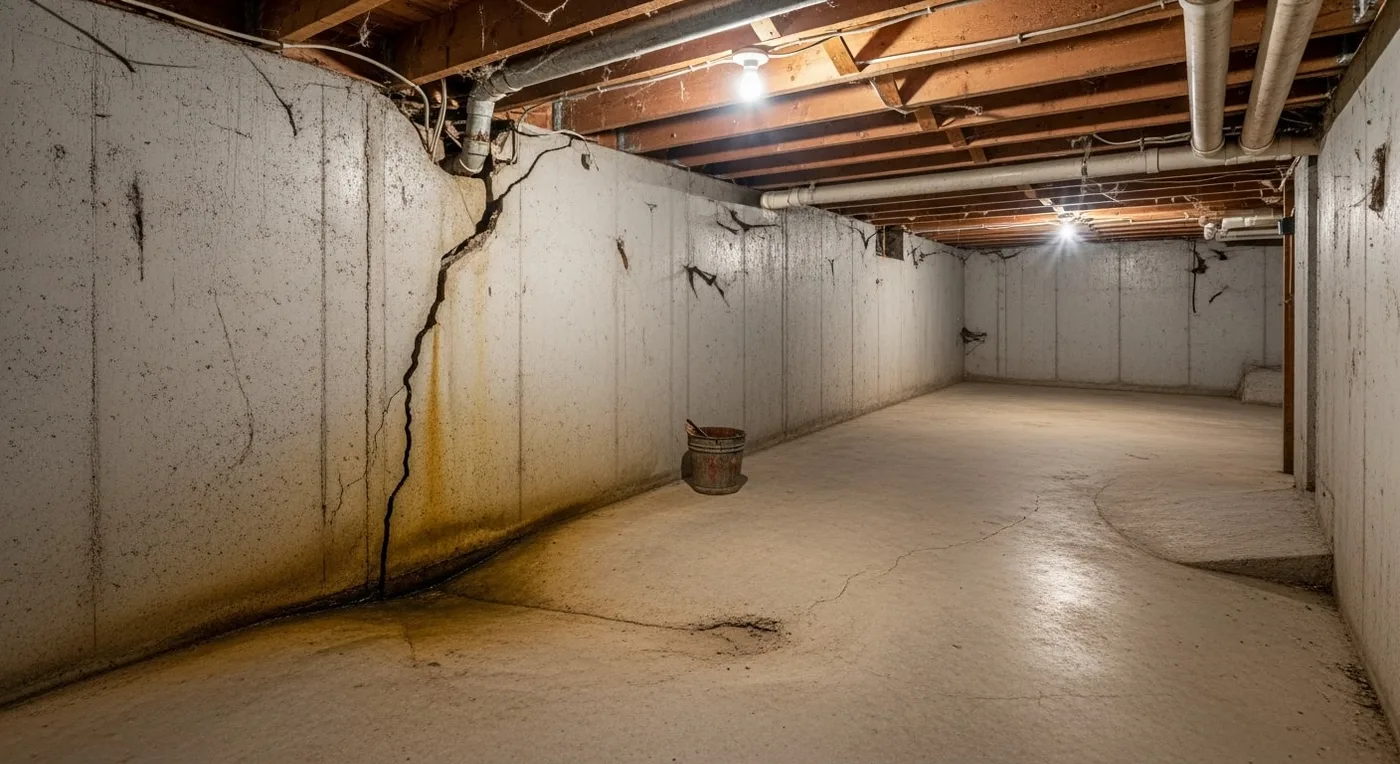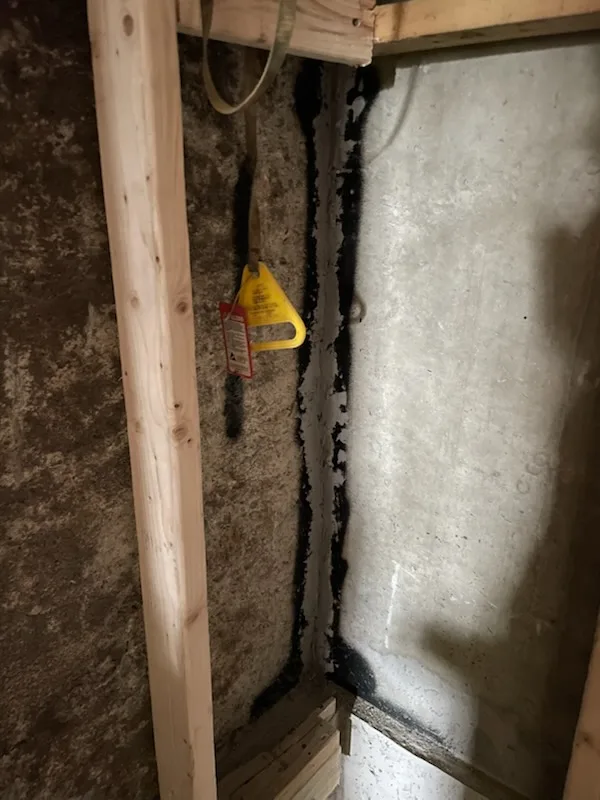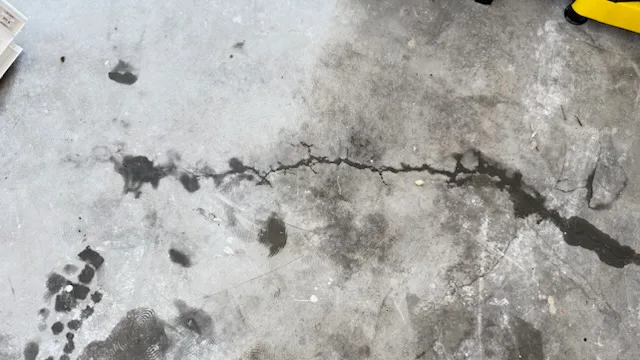
You walk downstairs and there it is: water seeping through a crack in your basement floor. It might be a thin trickle or a slow, persistent weep. Either way, you need to understand what’s happening before you fix it.
Most basement floor cracks are not structural emergencies. But they do need attention, because water in your basement never fixes itself.
Why Basement Floors Crack
Your basement floor (the slab) is typically four inches of concrete poured over compacted gravel and soil. Unlike your foundation walls, the slab is not structural. It sits on the footing, which is a separate pour.
Because the slab isn’t structural, builders pour it thinner with less reinforcement. Cracks are almost inevitable:
- Shrinkage cracks: Concrete shrinks as it cures. Virtually every slab develops hairline cracks within the first few years.
- Settlement cracks: As the soil beneath compacts over time, the slab cracks at stress points.
- Control joints: Many slabs have intentional grooves designed to direct cracking along predictable lines.
These cracks are normal. They become a problem when water starts coming through them.
What Causes Water to Leak Through Floor Cracks
A crack alone doesn’t guarantee water. You need both a crack (the pathway) and water pressure (the force).
Hydrostatic Pressure
This is the number one cause. When soil around and beneath your foundation becomes saturated, it creates pressure that pushes water upward through any available path, including floor cracks. Your basement slab is essentially sitting in a bathtub of wet soil, and when saturation reaches a tipping point, water forces its way up.
Rising Water Table
In parts of Connecticut and Massachusetts — where glacial till and clay-heavy soil dominate — seasonal water table fluctuations are significant. During spring snowmelt or extended rainy periods, the water table can rise to slab level, dramatically increasing pressure.
Poor Exterior Drainage
If grading directs water toward your foundation instead of away from it, or gutters dump water next to the house, you’re concentrating moisture exactly where you don’t want it.
Floor Cracks vs. Wall Cracks: A Key Difference
This distinction matters for choosing the right fix.
Wall cracks can be injected from the interior because we can access the full path water takes through the wall. Foundation crack injection seals wall cracks permanently with a lifetime guarantee.
Floor cracks behave differently. Water comes up from beneath the slab driven by hydrostatic pressure. The crack is the path of least resistance. Seal one floor crack and water under pressure may find another route, through another crack, along the cove joint, or through the porous concrete itself.
When NOT to Patch Leaking Floor Cracks
Surface patches with hydraulic cement or hardware store epoxy are one of the most common (and most futile) DIY attempts we see. When water is being pushed upward at pressure from a high water table or saturated glacial till below your slab, a surface patch is fighting a losing battle. It may hold for a few months, then fail — and the homeowner has wasted time and money while conditions worsen. The right approach depends on whether the problem is the floor or the walls.
How to Fix Leaking Floor Cracks
For Minor, Occasional Seepage
If you see moisture only during heavy rain or spring thaw, start here:
- Fix exterior grading: Ensure ground slopes away from your foundation at least 6 inches over the first 10 feet
- Extend downspouts: Discharge gutter water at least 4-6 feet from the foundation
- Clear window wells: Make sure window well drains aren’t clogged
These exterior improvements reduce water load on your foundation and may eliminate minor seepage entirely.
For Persistent or Heavy Leaking
Consistent floor crack leaking usually means a hydrostatic pressure problem requiring a drainage solution:
- Interior perimeter drain: A channel along the base of the foundation wall, routed to a sump pump, intercepting water before it reaches the floor surface
- Sump pump: Collects water from the drain system and pumps it away from the house
This is one situation where a waterproofing system is genuinely appropriate, unlike wall cracks where injection repair is the right answer.
What About Patching?
Surface patches with hydraulic cement or epoxy rarely last. When water is being pushed up from below, a surface patch is fighting hydraulic force. It may hold for a few months, then fail. We’re honest about this: patching a leaking floor crack is a temporary measure, not a repair.
When to Actually Worry
Most leaking floor cracks are a nuisance, not a structural emergency. But watch for these signs:
- Floor is heaving or lifting: Sections of slab pushing upward signal serious pressure or soil expansion
- Large cracks with vertical offset: One side higher than the other means the slab has shifted
- Cracks in walls AND floor: Multiple locations suggest broader foundation movement
- Standing water that won’t recede: Persistent pooling indicates a continuous water source
The Wall Crack Connection
Here’s something we see regularly: homeowners assume water on the basement floor comes up through floor cracks when it’s actually entering through wall cracks and running down to the floor.
Before assuming you have a floor crack problem, check your walls carefully during the next rain. Look for wet streaks, water stains at specific points, or dampness along the cove joint where wall meets floor.
If the water enters through wall cracks, that’s a much simpler fix. Wall crack injection typically costs $800-$1,200 per crack and carries a lifetime guarantee. That’s a far better outcome than installing a drainage system.
Get an Honest Assessment
Not sure whether your water is coming through the floor or walls? That’s exactly what our free consultations are for. With 50+ years of combined experience and thousands of projects across New England, we’ll trace the water source and tell you honestly what you’re dealing with, even if the answer is “this isn’t something we repair.” Our foundation repair cost guide has complete pricing details.
Connecticut: 860-573-8760 Massachusetts: 617-668-1677
Text us a photo of your leaking floor cracks for a quick preliminary assessment.