No, Flex Seal does not work on basement cracks. Flex Seal is a rubberized surface coating that cannot resist the hydrostatic pressure pushing water through a foundation wall. It may slow a drip for a few weeks, but the water finds its way behind or through the seal every time. Professional crack injection — which fills the entire crack through the full wall thickness under pressure — is the permanent fix.
You have a crack in your basement wall. Water seeps through when it rains. You search online for a quick fix and every other result mentions Flex Seal — the rubberized spray sealant you have seen advertised on TV sealing buckets, gutters, and even boats.
So you buy a can, spray it on the crack, and wait for the next rain. For a week or two, it might seem to work. Then the water comes back — sometimes worse than before.
Here is what is actually happening, and why Flex Seal is the wrong tool for basement cracks.
What Flex Seal Is (and Is Not)
Flex Seal is a family of rubberized sealant products — Flex Seal Spray, Flex Seal Liquid, Flex Shot (caulk-style), Flex Tape, and Flex Paste. They all work on the same principle: a rubberized coating that dries into a flexible membrane. The products have strong reviews (72% five-star ratings from thousands of users) and they genuinely work well for what they are designed to do: sealing surface gaps on materials like metal, wood, and PVC where water runs across a surface.
What none of them are designed for:
- Structural cracks under hydrostatic pressure — water being pushed through a wall by soil pressure
- Concrete-to-concrete bonds — rubber does not chemically bond to concrete the way epoxy or polyurethane does
- Subsurface voids — a spray coating only covers the visible surface, leaving the rest of the crack open
A basement foundation wall is typically 8 to 10 inches of poured concrete with thousands of pounds of wet soil pressing against the exterior. A surface coating of rubber has no chance against that kind of pressure.
Why Flex Seal Fails on Basement Cracks
1. It Cannot Penetrate the Crack
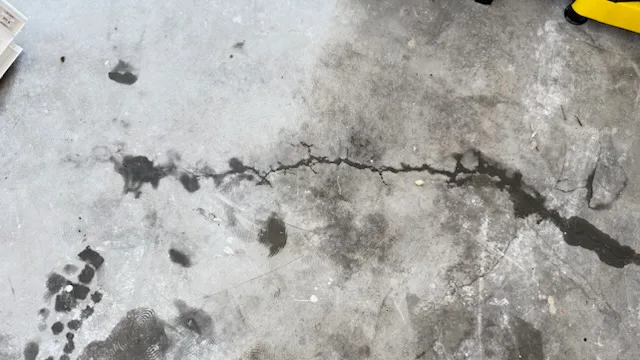
A foundation crack extends through the entire wall thickness. Flex Seal sits on the surface — it cannot reach the interior of the crack where water is actually traveling. You are putting a band-aid on the entry point while the water finds another path through the same crack, often appearing lower on the wall or at the floor joint.
2. Hydrostatic Pressure Defeats Surface Seals
Water in saturated soil exerts pressure against your foundation wall. During heavy rain or spring snowmelt, this pressure can be substantial. A thin rubber membrane bonded to the surface has no structural strength to resist this pressure. The water pushes through or behind the seal.
3. Rubber Does Not Bond to Damp Concrete
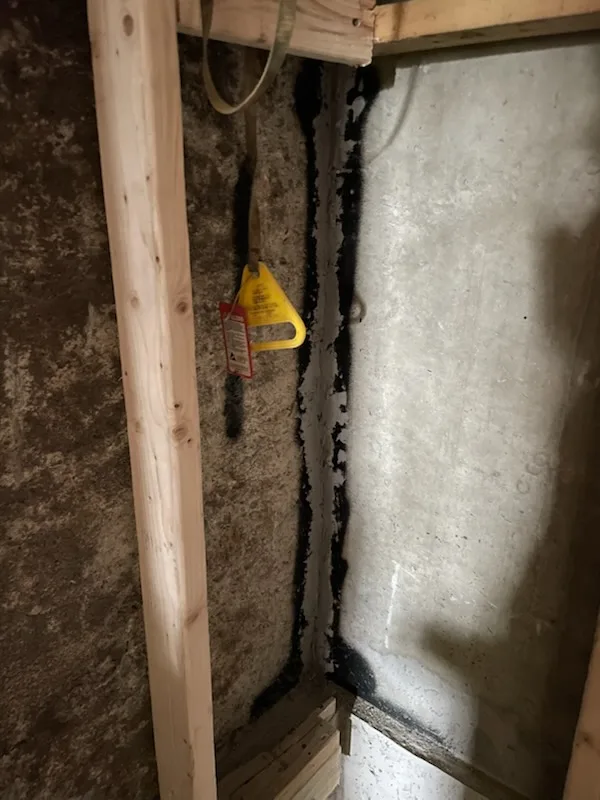
For any sealant to work on concrete, it needs a dry, clean surface for adhesion. Basement cracks that leak are, by definition, wet — at least intermittently. Flex Seal applied to damp concrete will not form a durable bond. It peels, bubbles, or lifts within weeks to months.
4. It Traps Moisture Inside the Wall
When you seal only the interior surface of a crack, water that enters from the exterior has nowhere to go. It accumulates inside the wall, potentially causing:
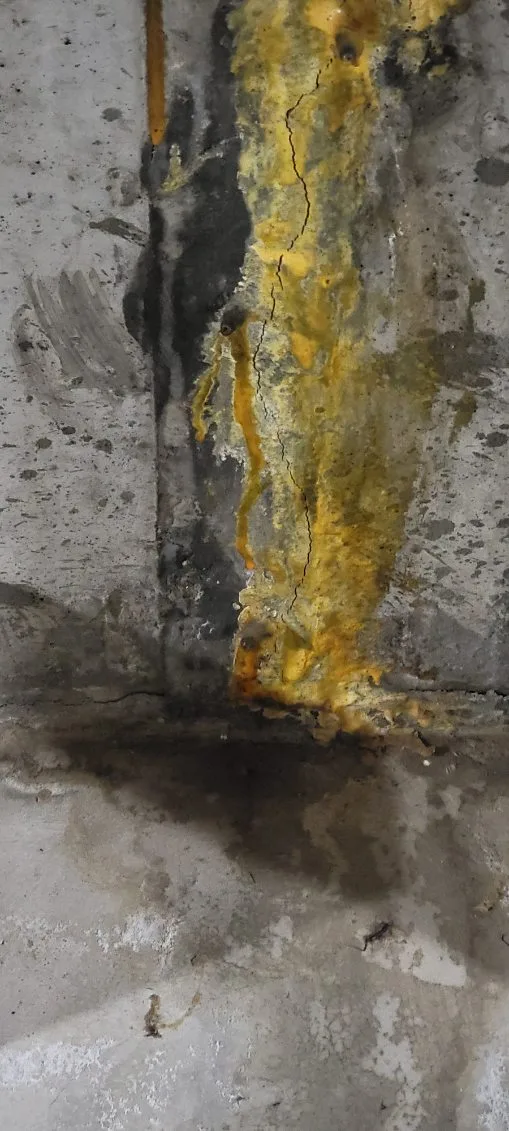
- Efflorescence — white mineral deposits that push the sealant off the wall
- Freeze-thaw damage — trapped water freezes in winter, expanding the crack
- Mold growth — moisture trapped in a dark void is an ideal mold environment
- Wider cracks — the original crack deteriorates faster because water cannot escape
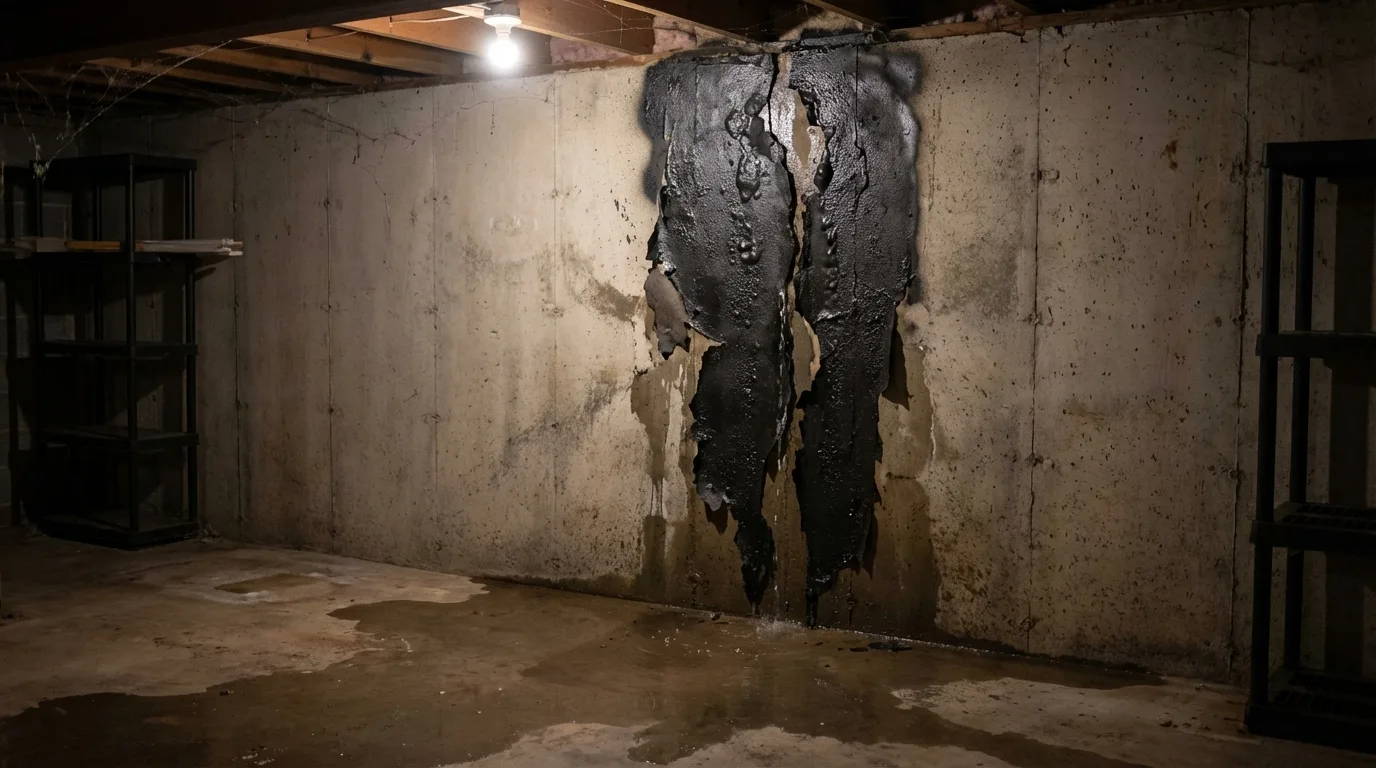
This is why some homeowners report their crack getting worse after applying Flex Seal. The water did not stop — it just found a new path.
5. Tie Rod Holes Are a Common Failure Point
Many homeowners apply Flex Seal around tie rod holes — the small circular penetrations left from the concrete form ties when the foundation was originally poured. These holes go straight through the wall and leak frequently. Flex Seal covers the interior opening, but the hole is a cylinder through 8-10 inches of concrete. Water pushes right through behind the seal within a few rain cycles.
Why Hydraulic Cement Fails Too
Flex Seal is not the only surface product homeowners try. Hydraulic cement is another common DIY attempt — it expands slightly as it cures and seems like a logical fix. But hydraulic cement is rigid, not flexible. When your foundation shifts even slightly with seasonal temperature changes, the cement cracks and the leak returns. Like Flex Seal, it only addresses the visible surface and cannot fill the full depth of the crack.
The Home Inspection Problem
Here is something homeowners rarely consider: Flex Seal on a basement crack is a red flag for home inspectors. A visible Flex Seal patch tells the inspector that water was actively entering — and that it was “fixed” with a product that does not work on foundation cracks. We have seen cases where a DIY Flex Seal repair nearly killed a real estate deal because the buyer’s inspector flagged it as an unresolved water infiltration issue that required professional repair before closing.
If you are planning to sell your home, a Flex Seal patch on a foundation crack can cost you far more in negotiation than a professional injection would have cost to do it right.
When Surface Sealants Are Actually Fine
Not every crack needs professional repair. Surface sealants — including Flex Seal, hydraulic cement, and masonry caulk — are acceptable for:
- Cosmetic hairline cracks that have never leaked and show no signs of moisture
- Above-grade cracks on exposed foundation walls where water runs down the surface (not through the wall)
- Non-structural garage or shed walls where minor moisture is not a concern
The key distinction: if water has ever come through the crack, a surface sealant will not fix it. The crack is a pathway through the wall, and you need to seal the entire pathway — not just the opening.
What Actually Fixes a Leaking Basement Crack
Professional crack injection fills the entire crack from the interior surface through to the exterior soil. Here is why it works where Flex Seal does not:
- Full-depth penetration — resin is injected under pressure through ports spaced every 8 to 10 inches, filling the complete crack void through all 8 to 10 inches of concrete
- Chemical bond to concrete — polyurethane and epoxy resins bond directly to the concrete matrix, not just the surface
- Works on wet cracks — polyurethane actually reacts with water, expanding to fill voids and accelerating its cure
- Resists hydrostatic pressure — the cured resin fills the entire void, leaving no pathway for water regardless of soil pressure
- One-time repair — a properly injected crack does not reopen. We back every repair with a lifetime guarantee.
The cost difference is real — a can of Flex Seal is $15, while professional crack injection runs $800 to $1,300 per crack. But the Flex Seal approach means buying multiple cans, reapplying every few months, and watching the crack get worse. The injection is a one-time permanent repair.
The Honest Bottom Line
We are not against Flex Seal — it is a good product for what it is designed for. Patching a gutter seam, sealing around a pipe penetration on a shed, coating a metal roof joint — it works great for surface applications.
But a leaking foundation crack is not a surface problem. It is a through-wall pathway that needs to be sealed from the inside out, under pressure, with a material that bonds to concrete and resists hydrostatic force.
If you have tried Flex Seal, hydraulic cement, or any other surface patch on a basement crack and the water keeps coming back, that is completely normal — those products were never going to work for this application.
Text us a photo of your crack for a free assessment. We will tell you honestly whether it needs professional repair or if a surface sealant is genuinely sufficient. Most of the time, crack injection solves the problem permanently in a single visit.