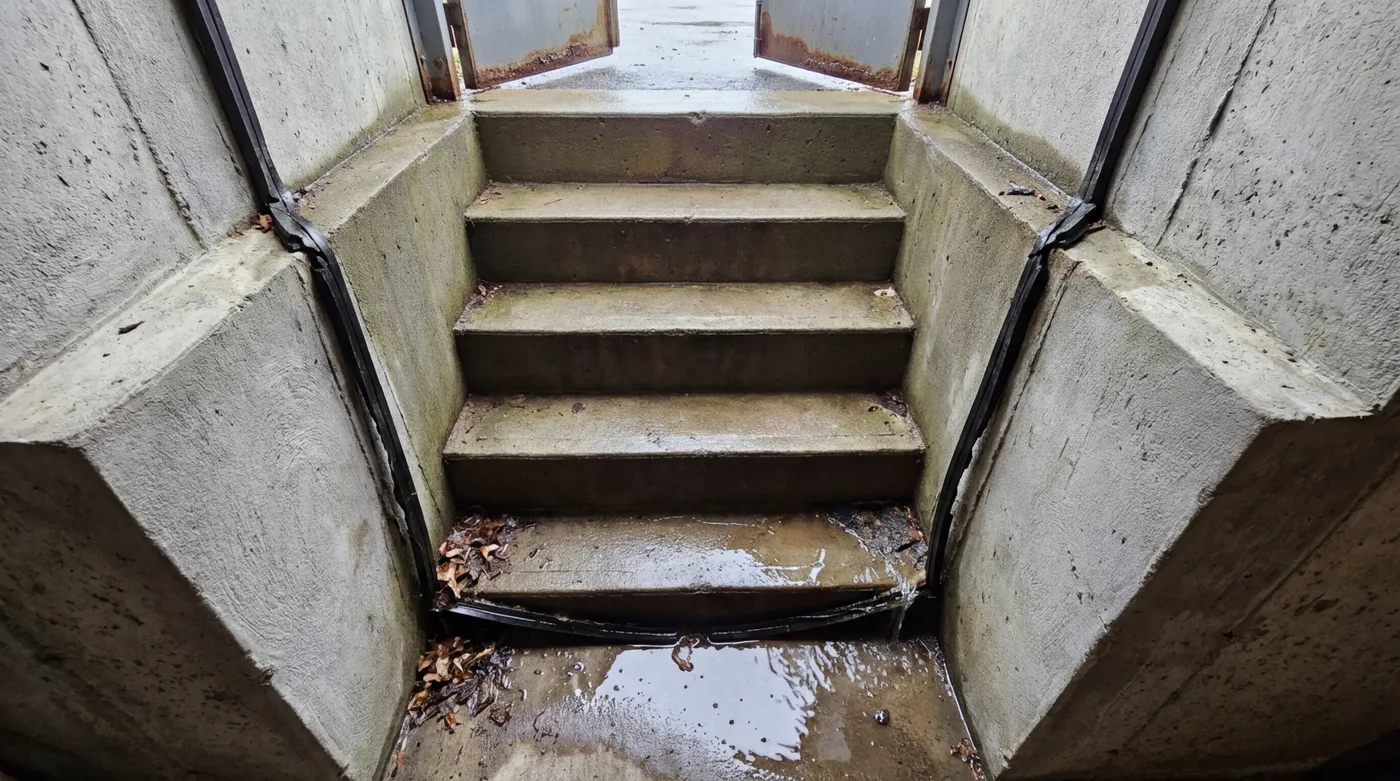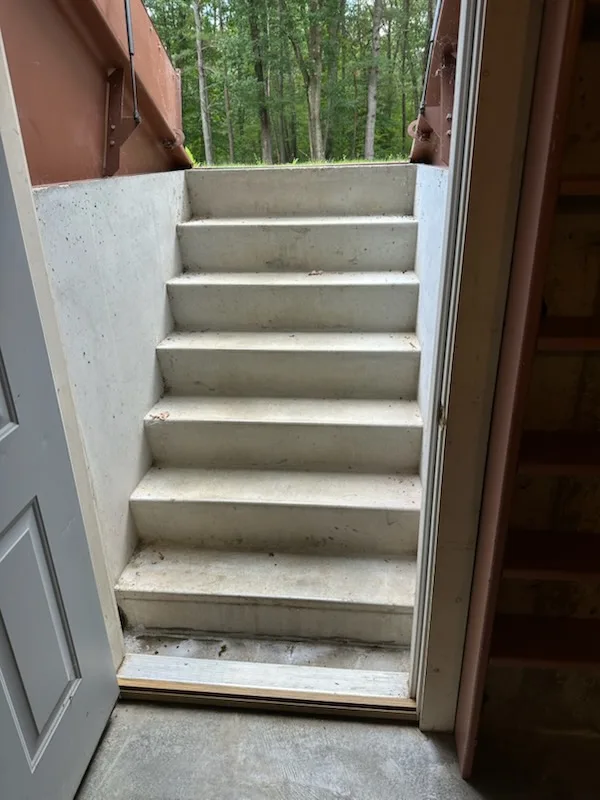
If you have ever walked down into your basement after a heavy New England rain only to find a puddle at the base of your bulkhead stairs, you are not alone. Leaky bulkheads are one of the most common sources of water intrusion in Massachusetts and Connecticut homes.
Most homeowners try to fix this by replacing the rubber gaskets or applying a bead of hardware-store caulk around the frame. A few months later, the water is back.
The reason is simple: standard gaskets are not designed for the structural realities of a New England foundation. For a broader look at why bulkheads leak, see our complete guide to bulkhead leaks.
The Gasket Problem: Why Temporary Fixes Fail
When you buy a Bilco door or a similar bulkhead system, it often comes with a foam or rubber gasket. These gaskets are designed to provide a compression seal between the metal frame and the concrete foundation.
However, several factors work against a gasket from day one:
Frost heaving. This is the number one reason gaskets fail in New England. When the soil underneath the bulkhead stairs freezes, it expands and pushes upward on the stairway unit. This movement breaks the gasket seal between the bulkhead and foundation — and it happens every single winter.
Thermal expansion and freeze-thaw cycles. Metal and concrete expand and contract at different rates. In the summer heat, your bulkhead frame grows. In the winter freeze, it shrinks. New England’s relentless freeze-thaw cycles — 50 to 80 per winter — create micro-gaps in whatever seal remains after frost heaving has done its damage.
Surface irregularities. Concrete is rarely perfectly flat. A pre-formed gasket cannot account for the pits, bumps, and dips in your foundation surface.
Dry rot. Over time, rubber and foam gaskets become brittle. Once they lose their elasticity, they lose their ability to keep out water.
The Permanent Bulkhead Sealant Solution: Polyurethane Injection
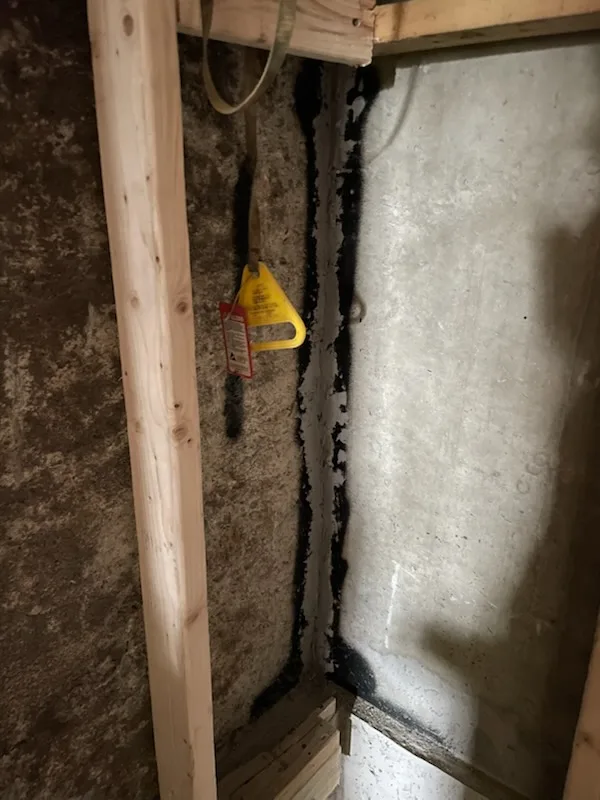
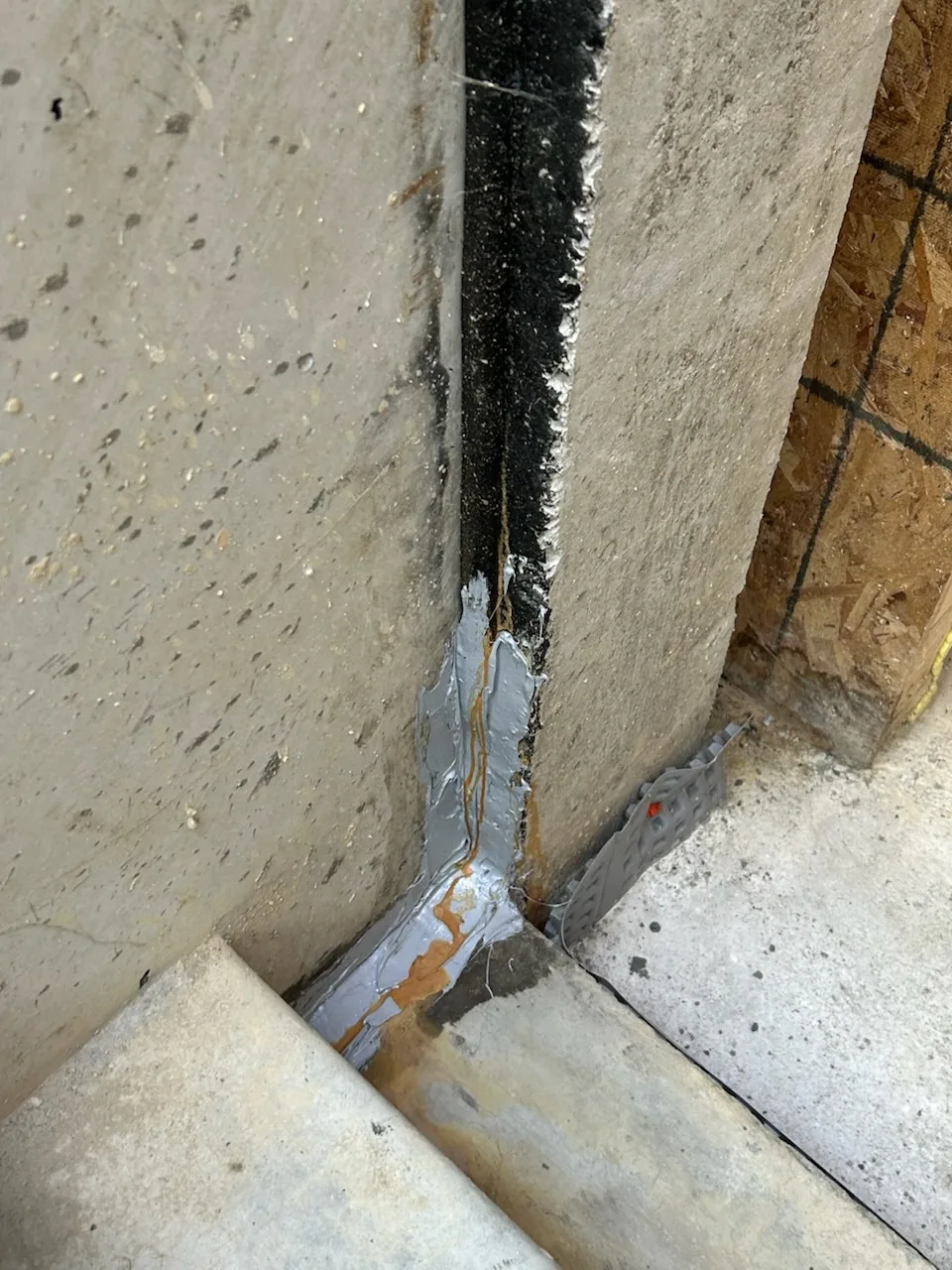
We do not use gaskets. We use a high-pressure polyurethane injection bulkhead sealant that is engineered specifically for the interface between metal and concrete. Most bulkhead repairs using this method cost $1,800-$2,500 with a lifetime warranty.
Why Polyurethane Sealant Works
Chemical bond. Unlike a gasket that just sits on the concrete, injection sealant forms a chemical bond with both the foundation and the bulkhead frame.
Flexibility. Polyurethane remains flexible permanently. It handles the expansion and contraction of your bulkhead without tearing or pulling away.
Complete void filling. Because we inject the sealant under pressure, it flows into every tiny pore and irregularity in the concrete, ensuring there are zero paths for water to follow.
Three Seal Points That Matter
If you are evaluating bulkhead sealing services, make sure the contractor is addressing the entire perimeter. A leak at the top of the stairs often starts at the base of the frame.
We look for three specific seal points:
The sill seal. Where the frame meets the vertical foundation wall.
The flange seal. Where the side rails meet the concrete.
The header seal. The most common point of failure where the top of the door meets the house siding.
Why Surface Patches Fail
Applying a surface patch of cement or silicone caulk is like putting a band-aid on a broken pipe. It might look dry for a week, but the first deep freeze will pop that patch right off.
The problem is that surface patches do not penetrate the gap between the bulkhead frame and the concrete. They sit on top, bridging the gap without filling it. As soon as the gap moves — and it will move — the patch cracks and water finds its way through again.
If you want to stop the water for good, you need a sealant that moves with your home and fills the void completely.
When NOT to Replace Your Bulkhead Door
Many homeowners assume a leaking bulkhead means they need a whole new Bilco door ($2,000-$4,000 installed). In most cases, the door itself is fine — it is the seal points that have failed. Before replacing the entire unit, have the three seal points assessed. Professional bulkhead sealant injection can permanently fix the leaks at a fraction of the replacement cost.
What to Do Next
If your bulkhead is leaking — especially if you notice water in your basement after rain pooling at the base of the bulkhead stairs — start with a visual inspection during the next heavy rain. Note where the water appears — at the top of the stairs, along the side rails, or at the base where the bulkhead meets the foundation. That tells us which seal points have failed.
For a detailed cost breakdown, see our bulkhead repair cost guide. Or text us a photo for assessment — we can often identify the failed seal point from a photo. You can also schedule a free consultation and we will assess all three seal points in person and tell you exactly what needs to be fixed. Learn more about our professional bulkhead repair service.
860-573-8760 (CT) | 617-668-1677 (MA)860-573-8760 (CT)617-668-1677 (MA)