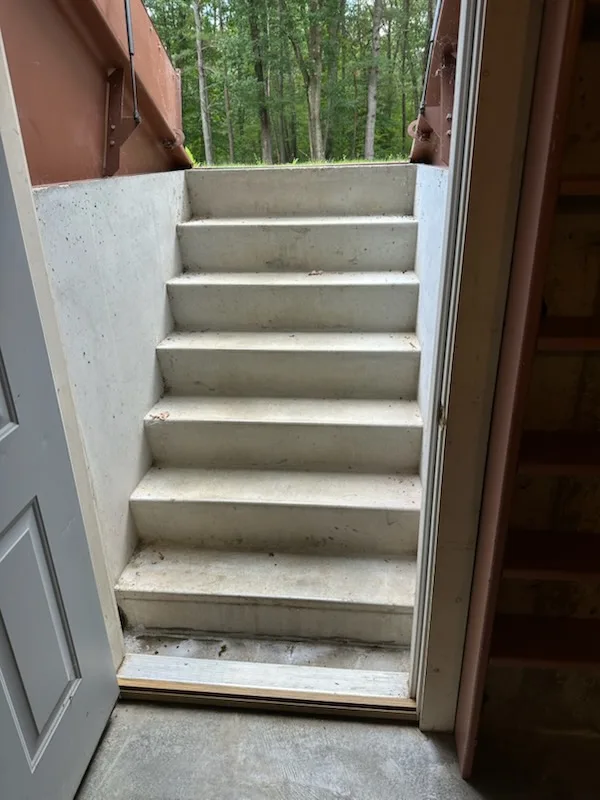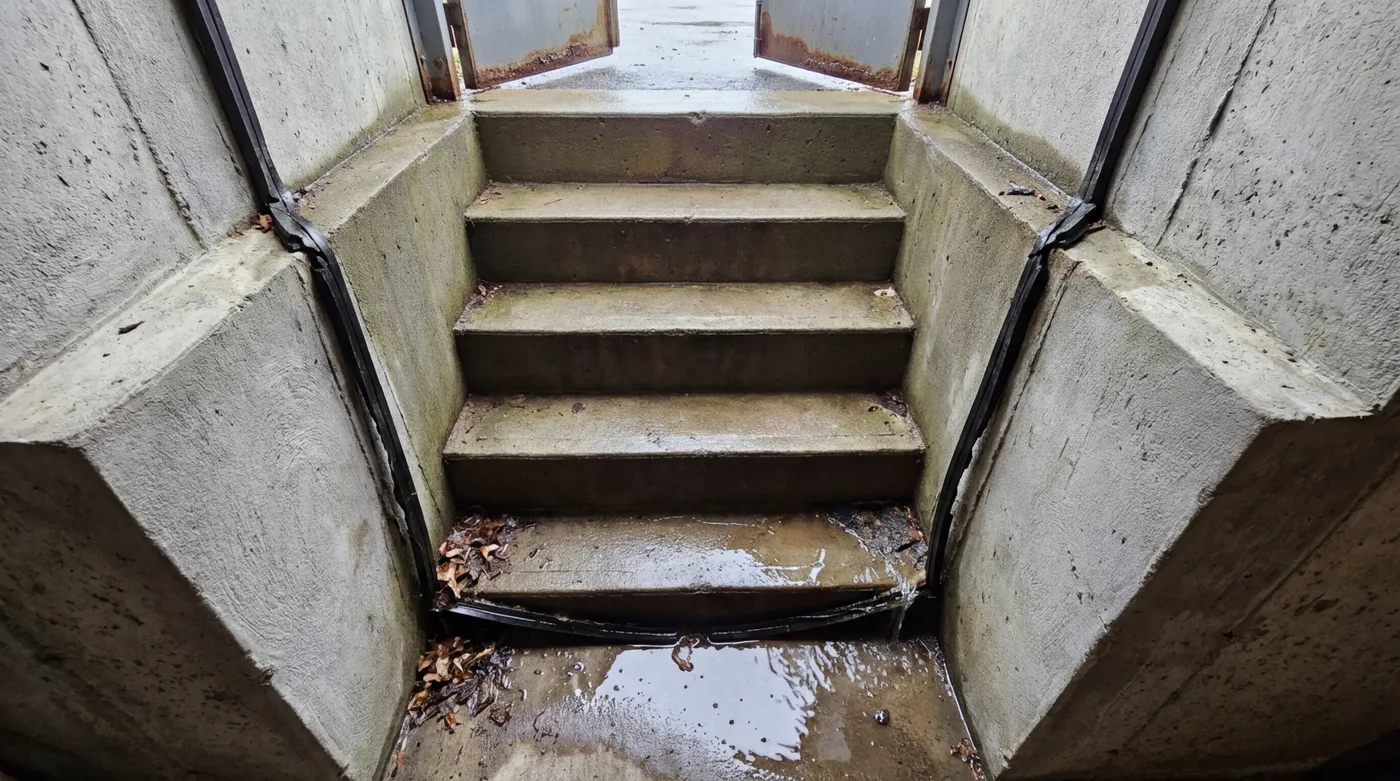
If you have a bulkhead door in New England — whether it’s a Bilco door or another brand — you’ve probably dealt with water infiltration. That concrete stairwell leading to your basement is a water magnet during rain and snowmelt. But here’s what most homeowners don’t realize: the bulkhead door itself usually isn’t the problem.
Where Bulkhead Leaks Actually Come From
When water appears in your bulkhead, most people assume the door seal is bad. They replace the weatherstripping, caulk around the frame, and wait for the next rain. Then it leaks again.
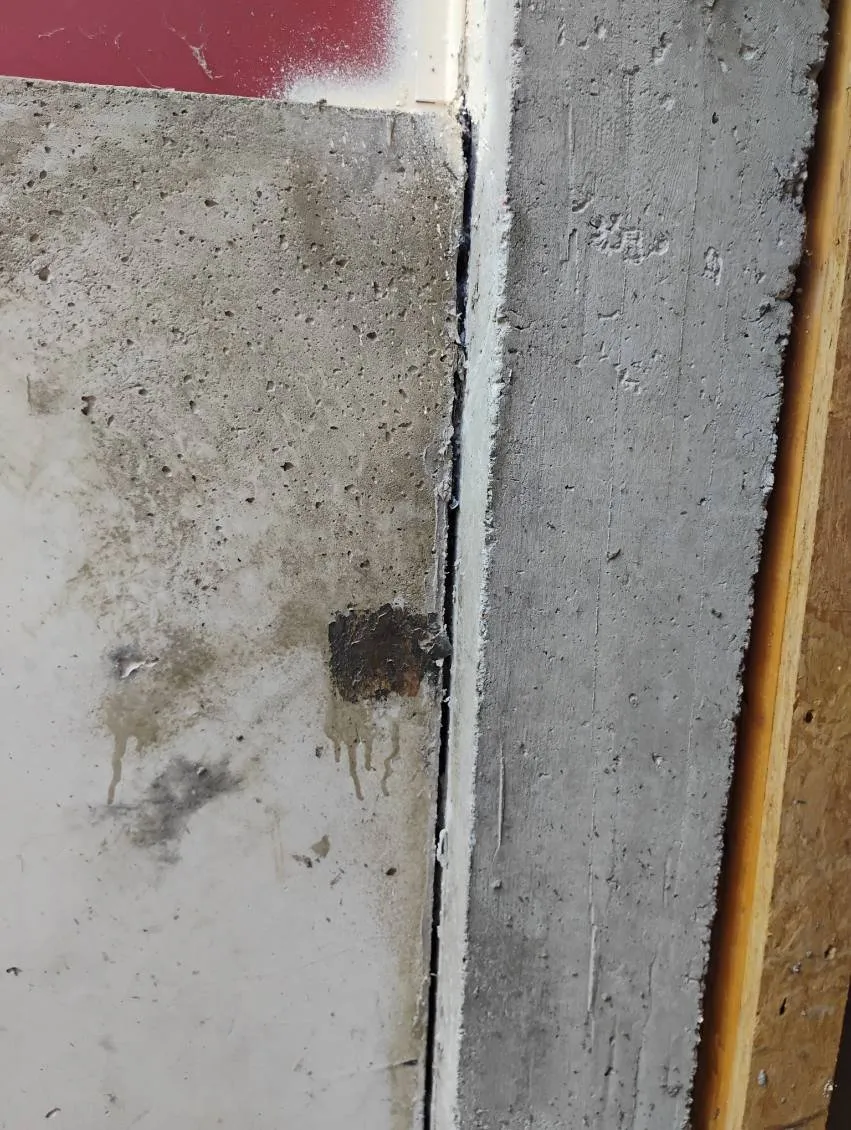
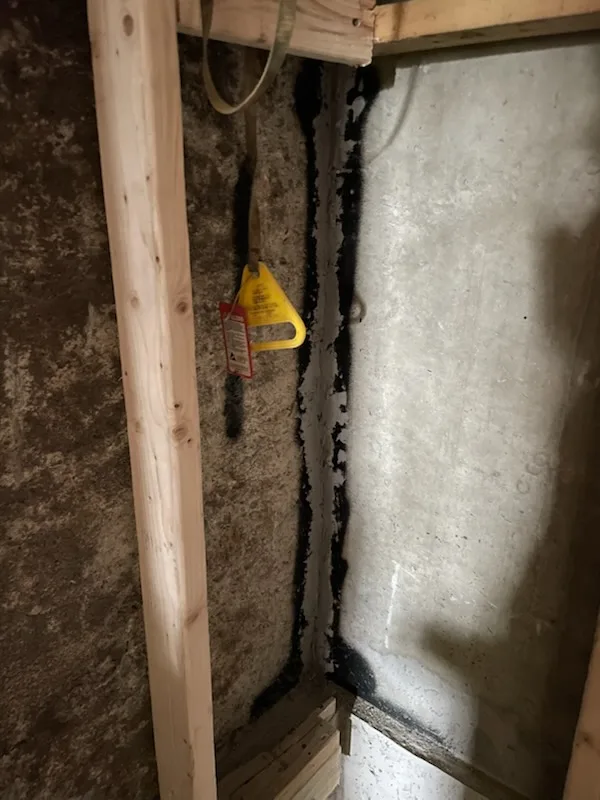
The real culprit? It’s almost always the cold joint — the seam between your precast concrete bulkhead unit and your poured foundation wall. This cold joint was filled with a rubber gasket or bulkhead sealant when your bulkhead was installed, and that material has failed.
Why Original Bulkhead Sealant and Gaskets Fail
- Frost heaving: The number one cause. When the soil underneath the bulkhead stairs freezes, it expands and pushes upward on the stairway unit. This movement breaks the seal between the bulkhead and foundation — and it happens every single winter
- Rubber gasket deterioration: The original rubber gasket installed between the bulkhead and foundation breaks down over time, especially with UV exposure and temperature extremes
- Settlement: As your home settles, the bulkhead can shift relative to the foundation, breaking the cold joint seal
- Freeze-thaw cycles: Beyond frost heaving, New England’s relentless freeze-thaw cycles are brutal on any sealant material — rubber gaskets crack and foam compresses
- Poor original installation: Many Bilco doors and other bulkhead brands were never properly sealed at the cold joint to begin with
- Hydrostatic pressure: Clay-heavy soil and glacial till hold water against the joint, pushing through even small gaps
Common DIY Fixes (And Why They Fail)
Caulking the Joint
The idea: Apply exterior caulk around the bulkhead-foundation seam.
Why it fails: Caulk only seals the surface. Water finds its way behind the caulk through cracks in the bulkhead concrete or through the soil itself. Plus, caulk cracks and separates within 1-2 years in our climate.
Hydraulic Cement
The idea: Pack hydraulic cement into the joint to fill gaps.
Why it fails: Hydraulic cement is rigid and shrinks as it cures. When the bulkhead and foundation move even slightly (and they will in the next freeze-thaw cycle, if not before), the cement cracks. It’s also only filling the accessible gap, not the hidden voids.
Tar or Asphalt Products
The idea: Coat the joint with waterproof tar or asphalt sealant.
Why it fails: These products become brittle in cold weather and crack. They’re messy, require frequent reapplication, and don’t penetrate into hidden voids.
Replacing the Door
The idea: The door must be the problem, so replace it with a new one.
Why it fails: If the leak is at the bulkhead-to-foundation joint, a new door won’t help. You’ll spend thousands on a new bulkhead and still have the same leak.
How to Fix a Leaky Bulkhead
Here is how to permanently fix a leaking bulkhead door in New England:
- Identify the leak source — Check the cold joint (where the bulkhead meets the foundation wall), not just the door. The cold joint is the source in the vast majority of cases.
- Skip the surface fixes — Caulk, hydraulic cement, and tar all fail within 1-2 years because they only seal the surface and cannot handle freeze-thaw movement.
- Remove the failed gasket or sealant — Clean out any deteriorated rubber gasket or old bulkhead sealant from the cold joint.
- Install injection ports — Place ports strategically along the cold joint between the bulkhead and foundation wall.
- Inject flexible urethane foam — The foam expands to fill every void in the cold joint, reaching from the interior to the soil side.
- Check the anchor bolts — The four bolts holding the bulkhead to the foundation are often overlooked leak sources. Seal these penetrations too.
- Improve exterior drainage — Ensure the ground slopes away from the bulkhead opening and the door drain is clear.
The professional version of this repair (steps 3-6) is our bulkhead leak repair service, which works for Bilco doors and all other bulkhead brands. Typical cost: $1,800-$2,500 with a lifetime guarantee.
Why Injection Works
It fills what you can’t see: Unlike surface treatments, injection material flows into hidden voids and cracks.
It remains flexible: Our urethane seal moves with your foundation and bulkhead without cracking.
It’s waterproof immediately: No curing time required—the seal works right away.
It’s permanent: Our bulkhead repairs carry a lifetime guarantee because they work.
Don’t Forget the Bolts
The four bolts that hold the precast bulkhead unit to the main foundation wall are often an overlooked source of leaks. These bolt penetrations can allow water through even when the cold joint seal is intact. You may be able to see these bolts from inside the basement — look for small wet spots or staining around the bolt locations on your foundation wall.
Signs You Need Bulkhead Repair
- Water in basement after rain appearing at the bulkhead stairs
- Puddles forming at the base of the stairs
- Water stains or white powder on basement walls near the bulkhead (efflorescence)
- Visible gap at the cold joint between bulkhead and foundation
- Wet spots around bolt penetrations on the foundation wall
- Musty smell in basement coming from the bulkhead area
- Previous caulk, hydraulic cement, or rubber gasket repairs that have failed
Preventing Future Problems
Even after repair, you can take steps to reduce water pressure on your bulkhead:
Improve Drainage Around the Bulkhead
- Ensure ground slopes away from the bulkhead opening
- Clear debris from the bulkhead door and frame
- Consider installing a drain at the bottom of the stairs
Maintain the Bulkhead Door
- Replace worn weatherstripping
- Lubricate hinges annually
- Check and repair any cracks in the door itself
Monitor After Heavy Rain
- Check for any signs of water infiltration
- Note any areas where water enters (for future reference)
The Cost of Ignoring Leaking Bulkheads
That puddle at the bottom of your bulkhead stairs might seem minor, but it can lead to:
- Mold growth: Damp conditions breed mold and mildew
- Foundation damage: Constant water exposure deteriorates concrete
- Structural issues: Water can undermine the bulkhead’s stability
- Increased heating costs: Damp basements are harder to heat
- Home value reduction: Water issues affect resale value
Get Your Bulkhead Fixed Right
Stop the cycle of temporary fixes that fail after every storm. Our bulkhead injection repair solves the problem permanently, backed by our lifetime guarantee.
Schedule a free assessment:
860-573-8760 (CT) | 617-668-1677 (MA)860-573-8760 (CT)617-668-1677 (MA)
With 50+ years of combined experience and thousands of projects across New England, we’ll examine your bulkhead, explain exactly what’s causing the leak, and provide a clear quote for permanent repair. See our bulkhead repair cost guide for detailed pricing, or read our Wilmington case study to see what a typical bulkhead sealant injection repair looks like.