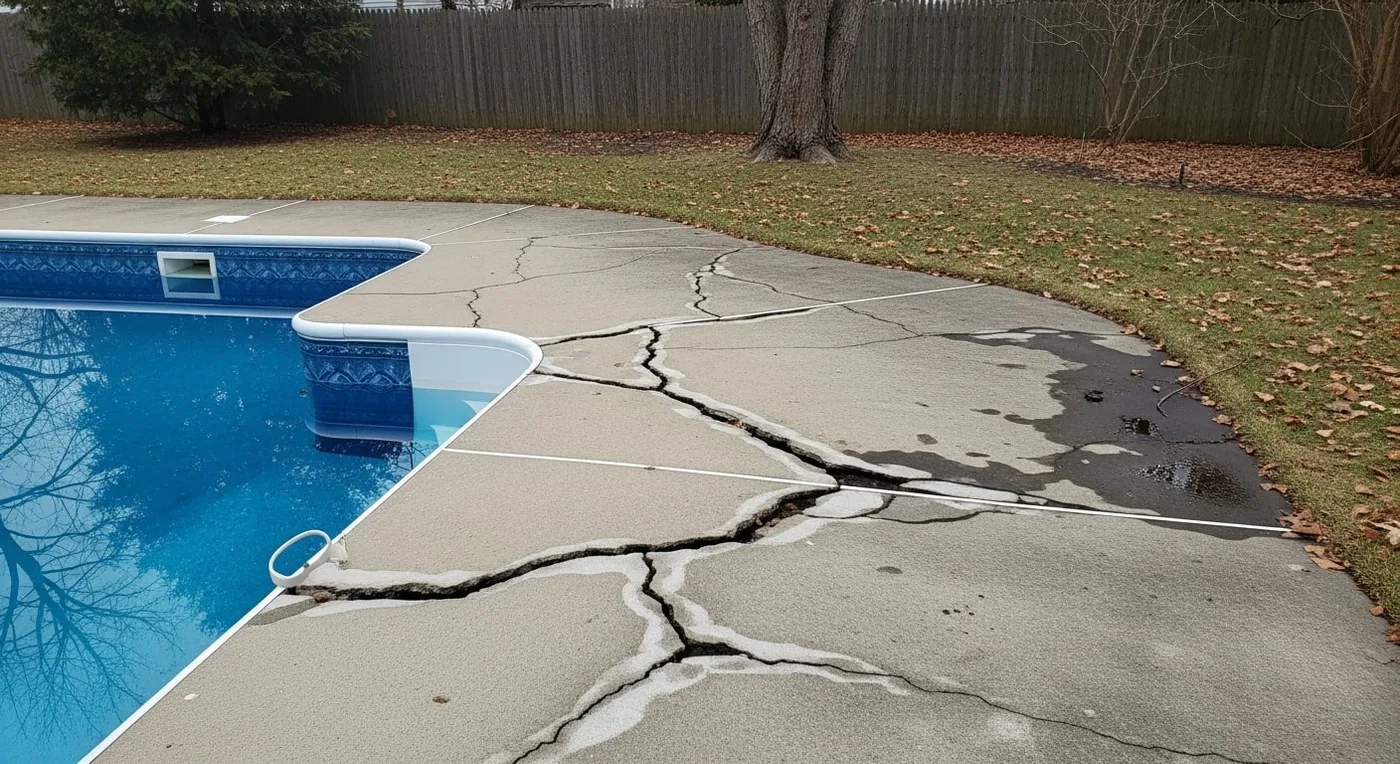
A cracked pool deck isn’t just cosmetic. Uneven sections create trip hazards around a wet surface — exactly where you don’t want anyone falling. And in New England, every winter makes the damage worse.
If your pool deck concrete is cracked, settled, or deteriorating, here’s everything you need to know about your repair options.
Why Pool Decks Crack in New England
Pool deck concrete takes more abuse than almost any other concrete surface on your property. Here’s why:
Freeze-Thaw Cycles
This is the number one enemy of pool deck concrete in our region. Water penetrates the concrete surface, freezes, expands by up to 9%, and cracks the concrete from within. Connecticut and Massachusetts see 80-100+ freeze-thaw cycles per year — each one doing incremental damage. The region’s clay-heavy soil and glacial till deposits make settlement beneath pool decks even more common.
Pool Chemistry Exposure
Chlorinated water splashes onto the deck surface constantly during the swimming season. Over years, pool chemicals can accelerate surface deterioration, especially if the concrete wasn’t properly sealed.
Soil Settlement
Pool decks are poured on backfill around the pool excavation. If not properly tamped down, this backfill can be looser than undisturbed soil and compact unevenly over time, causing sections of the deck to settle and crack. Settlement is especially common in the first 5-10 years after pool installation.
Tree Root Pressure
Roots from nearby trees can grow under the deck slab, lifting and cracking sections. Large trees within 20 feet of a pool deck are a common culprit.
Improper Installation
Thin concrete (less than 4 inches), insufficient reinforcement, no control joints, poor sub-base preparation, or a bad concrete mix all make cracking more likely and more severe.
Assessing Pool Deck Damage
Before deciding on a repair approach, assess what you’re dealing with.
Cosmetic Cracks (Repair)
- Hairline to 1/4 inch wide
- No significant height difference between sides
- Surface is stable when you step on it
- No undermining (soil washed out from beneath)
- Isolated to a few locations
Moderate Damage (Professional Repair)
- Cracks wider than 1/4 inch
- Multiple cracks in a pattern (map cracking, parallel lines)
- Slight settling — 1/4 to 1/2 inch difference between adjacent sections
- Surface spalling (top layer flaking off) over large areas
- Cracks that have been patched before and reopened
Severe Damage (Replacement Likely)
- Sections tilted or sunken more than 1 inch
- Large voids visible beneath slab edges
- Extensive map cracking covering most of the surface
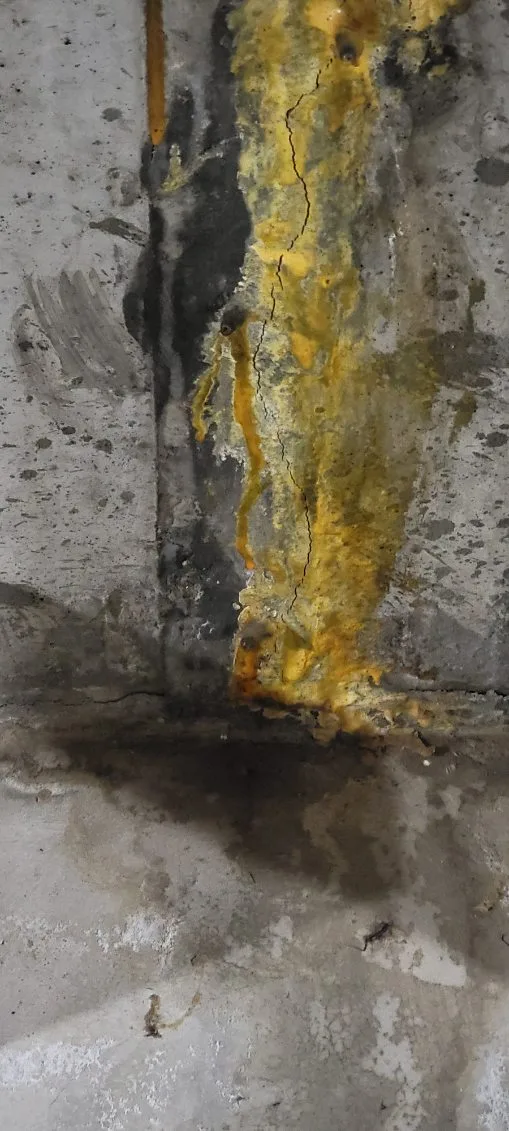
- Rebar exposed and rusting
- Concrete crumbles when probed
- Trip hazards that can’t be ground down safely
Repair Options: From Simple to Comprehensive
1. Crack Filling (DIY Possible)
Best for: Hairline to 1/4 inch cracks that are cosmetic only.
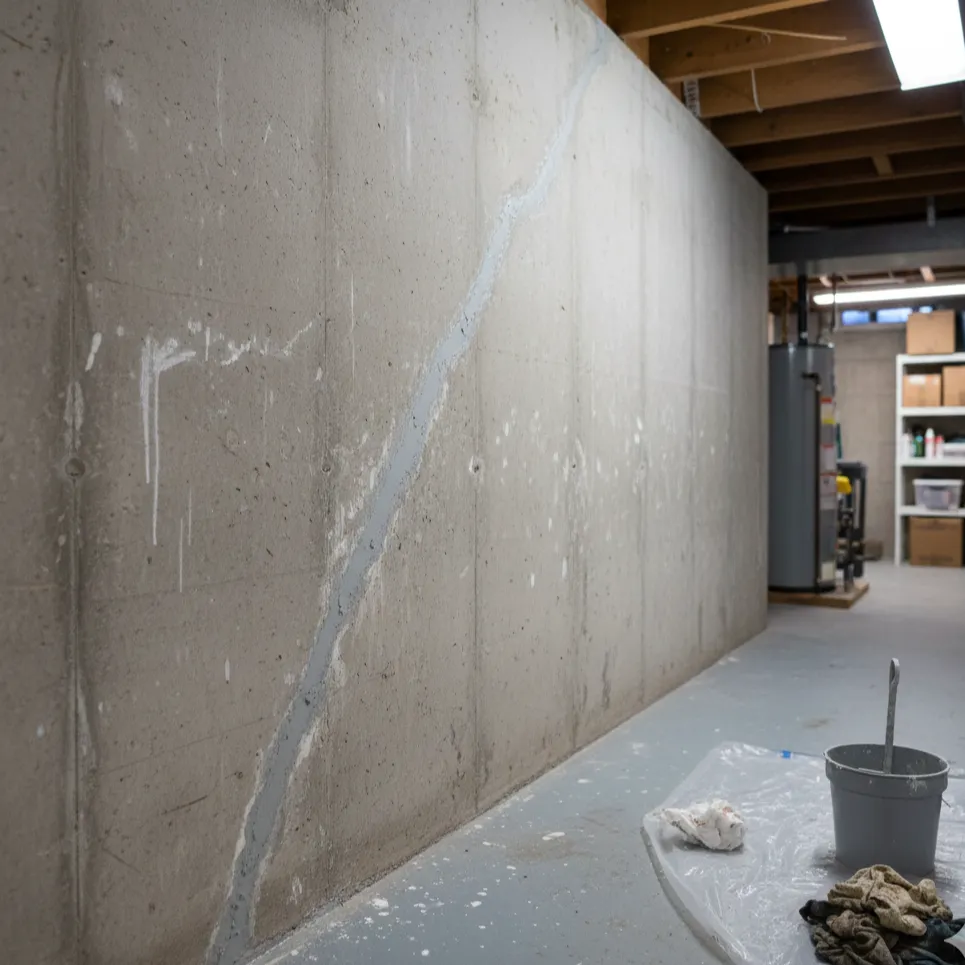
Flexible polyurethane or silicone caulk designed for concrete fills the crack and moves with thermal expansion. Not a structural repair, but prevents water from penetrating deeper and causing freeze-thaw damage.
How to do it:
- Clean the crack thoroughly — remove debris, old filler, and loose concrete
- For cracks deeper than 1/2 inch, fill the lower portion with backer rod
- Apply concrete crack filler, slightly overfilling
- Tool smooth with a putty knife before it skins over
- Allow 24 hours cure before foot traffic
Limitations: Cosmetic only. Won’t fix structural issues. Will need periodic reapplication. Color match is rarely perfect.
2. Concrete Repair Resurfacing
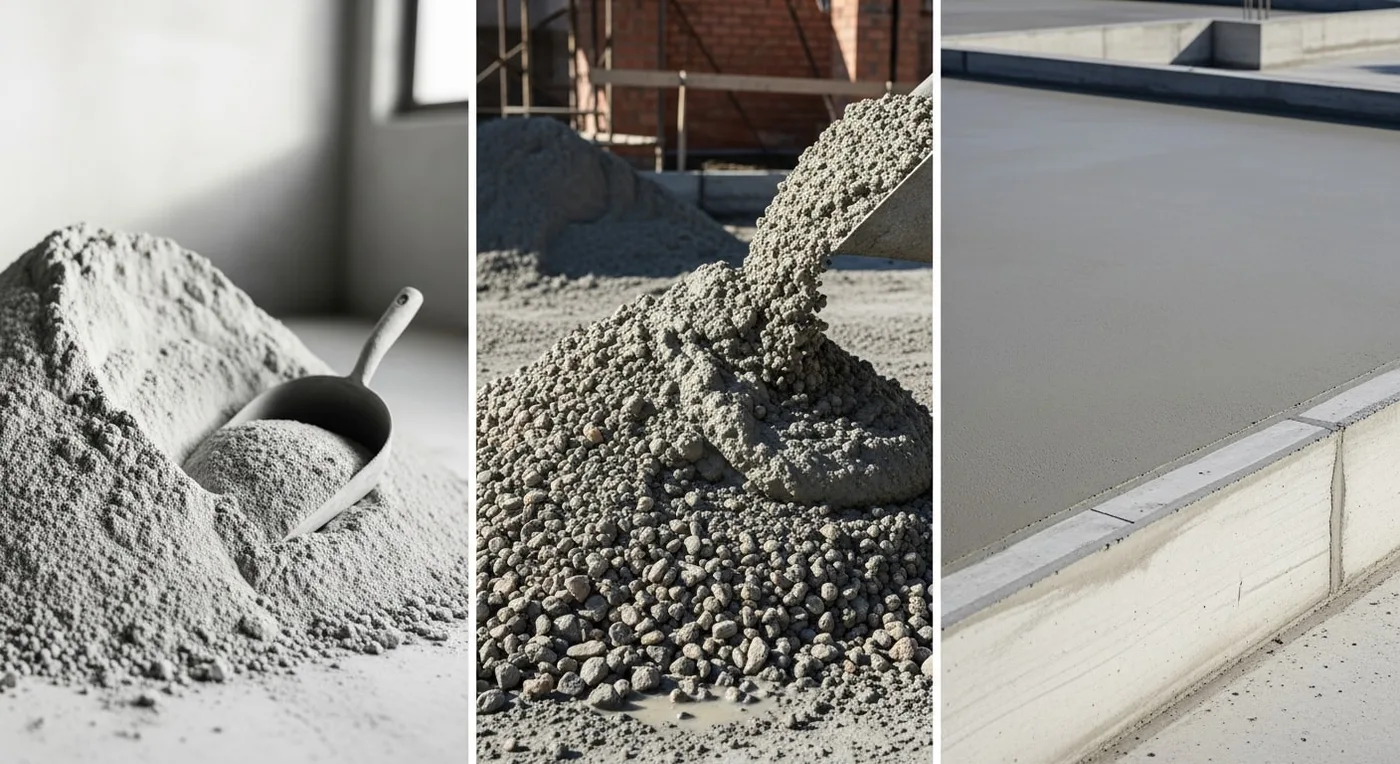
Best for: Widespread surface deterioration (spalling, scaling, roughness) with the underlying slab still structurally sound. Note the distinction between cement and concrete — resurfacing uses a polymer-modified concrete overlay, not plain cement.
Our Massachusetts branch offers concrete repair resurfacing — this is the one repair type on this page that we perform directly.
A thin overlay (1/4 to 1/2 inch) of polymer-modified cementitious material is applied over the existing deck. This gives you a new surface without demolishing the old one.
Advantages:
- Fraction of the cost of full replacement
- Covers minor imperfections and discoloration
- Typical lifespan: 8-15 years with proper maintenance
Limitations:
- Won’t fix settlement or major structural cracks
- Existing slab must be stable — overlay will crack if the base cracks
- Surface prep is critical — poor adhesion is the main failure mode
- Not suitable for slabs with active settling
3. Slab Jacking (Mudjacking or Foam Lifting)
Best for: Sections that have settled but the concrete itself is in good condition.
Material is pumped through small holes drilled in the settled slab, lifting it back to level. Traditional mudjacking uses a cement slurry; polyurethane foam jacking is lighter and less invasive.
Advantages:
- Restores level surface without replacement
- Same-day usability (foam jacking)
- Significantly cheaper than replacement
- Fills voids beneath the slab that caused the settlement
Limitations:
- Won’t fix cracked or deteriorated concrete — just lifts it
- Holes (typically 5/8” to 2”) remain visible
- Mudjacking can fail if the sub-base continues to compact
- Not suitable for severely cracked or crumbling slabs
Note: Slab jacking is not a service we perform. We can refer you to a trusted contractor if this is what your pool deck needs.
4. Section Replacement
Best for: One or two sections that are severely damaged while the rest of the deck is in good condition.
The damaged section is saw-cut, removed, sub-base is re-compacted, and new concrete is poured to match the existing deck as closely as possible.
Advantages:
- Addresses the worst areas without full replacement
- New concrete bonds to existing at the saw-cut joint
- Sub-base problems can be corrected during replacement
Limitations:
- Color match is nearly impossible — new concrete is always lighter
- The joint between old and new is a future crack point
- If multiple sections need replacement, full tear-out may be more cost-effective
Note: Section replacement is not a service we perform. We can refer you to a specialist.
5. Full Replacement
Best for: Extensive damage, severe settlement, or when the deck is past its useful life.
Complete demolition and repour. This is the most expensive option but gives you a completely new surface with modern concrete mix design, proper reinforcement, and control joints.
Considerations for New England:
- Concrete should be 4+ inches thick (8-10 inches of concrete for structural elements) on a compacted gravel base
- Air-entrained mix (6-7% air content) is essential for freeze-thaw resistance
- Control joints every 8-10 feet to direct cracking
- Proper slope away from the pool for drainage
- A good sealer applied after curing
Note: Full pool deck replacement is not a service we perform. We can connect you with a trusted contractor.
When to Hire a Professional
DIY crack filling is fine for minor cosmetic cracks. Everything else benefits from professional assessment:
- Multiple cracks or patterns: May indicate sub-base failure that filling alone won’t solve
- Settled sections: Leveling requires specialized equipment
- Structural cracks: Wider than 1/4 inch, with height differences between sides
- Surface delamination: Large areas where the top layer is separating
- Near the pool coping: Repairs at the pool edge need to maintain proper drainage and bonding
Our concrete repair services cover pool deck assessment and repair across Massachusetts. If you’re unsure about the extent of the damage, a professional evaluation saves you from choosing the wrong repair method.
Preventing Future Pool Deck Damage
Seal the Surface
Apply a penetrating concrete sealer every 2-3 years. This is the single most effective thing you can do to extend your pool deck’s life in New England. Sealers prevent water from penetrating the concrete, which is what drives freeze-thaw damage.
Manage Water
- Maintain the deck slope so water flows away from the pool and house
- Keep drains clear
- Address any areas where water pools or sits after rain
Control Joints
If your deck doesn’t have control joints (grooves cut or formed every 8-10 feet), cracking will be random and harder to repair. When doing any section replacement, add control joints.
Avoid Deicing Salts
Never use rock salt or calcium chloride on a pool deck. These chemicals accelerate concrete deterioration dramatically. For winter ice, use sand for traction or a non-chloride deicer.
Address Problems Early
A small crack filled today prevents a large crack next spring. Freeze-thaw cycles turn minor cracks into major ones over a single winter.
Frequently Asked Questions
How much does pool deck crack repair cost?
Costs vary widely by repair type. Simple crack filling is a DIY project under $50. Professional concrete resurfacing runs $6-$12 per square foot. Slab jacking is $500-$1,500 per section. Full replacement is $8-$15 per square foot including demolition. The right approach depends on the type and extent of damage — over-repairing wastes money, and under-repairing means you’ll be doing it again in a year.
Can you repair a pool deck in winter?
Exterior concrete work is limited in freezing temperatures — concrete needs above-freezing conditions to cure properly. The best time for pool deck repair in New England is late spring through early fall. That said, planning and assessment can happen any time, so you’re ready to go when conditions allow.
How long does a pool deck concrete repair last?
It depends on the repair method and New England’s freeze-thaw exposure. Crack filling lasts 1-3 years before needing reapplication. Resurfacing lasts 8-15 years. A properly done section replacement or full repour should last 20-30+ years with regular sealing. The key to longevity is applying a penetrating concrete sealer every 2-3 years.