
Vertical vs. Horizontal Cracks: When to Hit the Panic Button
A Technical Guide for Homeowners in Weymouth and Beyond
Not all foundation cracks are created equal.
Some are cosmetic. Some are structural. And one type, the horizontal crack deserves your full attention.
If you own a home in Weymouth, where groundwater pressure, coastal moisture, and freeze-thaw cycles work against concrete year after year, understanding the difference between vertical and horizontal cracking is not optional. It’s preventative maintenance for your largest investment.
This guide breaks down what each crack means, why horizontal cracks are more dangerous, and when it’s time to stop monitoring and start acting.
First: What Causes Foundation Cracks at All?
Concrete cracks for three main reasons:
Soil pressure (lateral load) – Expansive or saturated soil pushing inward
Hydrostatic pressure – Water building up outside the foundation wall
Concrete shrinkage & settlement – Normal curing and minor movement
Vertical and horizontal cracks come from different forces. The direction of the crack tells a story about what your foundation is experiencing structurally.
Vertical Cracks: Common, Often Benign
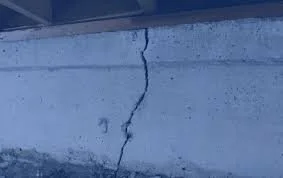
Vertical cracks usually run straight up and down or slightly diagonal.
They are typically caused by:
Concrete shrinkage during curing
Minor foundation settlement
Temperature changes
Technical characteristics:
Usually narrow (hairline to 1/8”)
Often uniform in width
Rarely associated with wall displacement
Frequently non-structural
Risk level:
Low to moderate — unless:
They widen over time
Allow water intrusion
Appear in clusters
Show offset (one side higher than the other)
Vertical cracks are often sealable with epoxy or polyurethane injection when no structural movement is present.
Horizontal Cracks: Structural Warning Sign
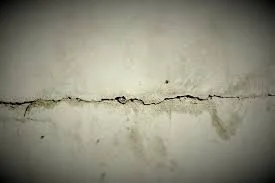
A horizontal crack is fundamentally different.
It forms when lateral pressure from soil and water pushes inward on the foundation wall, exceeding the wall’s tensile strength.
In Weymouth, this is commonly driven by:
High water table conditions
Clay-rich or poorly draining soils
Improper exterior drainage
Freeze/thaw soil expansion
Aging unreinforced concrete walls
Technical characteristics:
Runs parallel to the ground
Often located mid-wall
May widen toward the center
Frequently accompanied by bowing or bulging
Indicates active lateral stress
This is not a cosmetic issue.
This is structural loading exceeding design tolerance.
Why Horizontal Cracks Are More Dangerous Than Vertical Cracks
A horizontal crack means the wall is behaving like a flexing beam instead of a rigid support.
As pressure continues:
The wall can bow inward
The crack widens
Structural integrity declines
Load-bearing capacity is compromised
Left unaddressed, horizontal cracking can progress to:
Partial wall failure
Severe displacement
Full foundation replacement
This is why engineers and foundation specialists treat horizontal cracks as a priority condition, not a monitoring situation.
When to “Hit the Panic Button”
Not every horizontal crack means disaster, but some absolutely require immediate evaluation.
Red flags that require professional inspection:
Crack wider than 1/4”
Bowing or bulging of the wall
Multiple horizontal cracks
Water intrusion through the crack
Rust staining or concrete flaking
Doors/windows sticking near that wall
Crack length increasing over time
If your basement wall looks like it’s slowly trying to curve inward, it’s time to stop guessing.
Weymouth-Specific Risk Factors
Weymouth homes face unique foundation stressors:
Proximity to coastal moisture
Saturated soils after heavy rains
Older concrete mixes in mid-century homes
Seasonal freeze/thaw cycles
Poor surface drainage around older properties
Many Weymouth basements were built before modern reinforcement standards. A horizontal crack in these homes deserves faster action than in newer reinforced foundations.
Can Horizontal Cracks Be Repaired?
Yes, but the repair must address structural forces, not just seal the crack.
Common structural solutions include:
Carbon fiber wall reinforcement
Steel I-beam bracing
Wall anchors
Drainage correction systems
Partial wall reconstruction
Simply filling a horizontal crack with epoxy without relieving lateral pressure is cosmetic. The crack will reopen.
The correct repair depends on:
Degree of wall movement
Soil conditions
Crack location
Moisture presence
Overall foundation integrity
This is why inspection matters more than guessing the fix.
Final Word for Weymouth Homeowners
Cracks are communication from your foundation.
Vertical cracks usually whisper.
A horizontal crack is your foundation raising its voice.
If you see one, don’t panic, but don’t ignore it either. Early intervention can prevent major structural failure and dramatically reduce long-term repair costs.
In foundation repair, timing is everything.
