“How much does foundation repair cost?” It’s the first question every homeowner asks—and one of the hardest to answer without seeing your specific situation.
But we understand you need ballpark numbers to plan and budget. So here’s an honest breakdown of what foundation repair typically costs in Connecticut and Massachusetts in 2026.
Quick Cost Overview
| Repair Type | Typical Range | Average |
|---|---|---|
| Single crack injection | $800 - $1,300 | $1,000 |
| Multiple crack repair (2-3) | Significant multi-crack discounts | Custom quote |
| Bulkhead sealant/repair | $1,800 - $2,500 | $2,100 |
| Utility pipe sealing | $650 - $1,000 each | $775 |
| Carbon fiber reinforcement | $200 - $300 per stitch | $250 |
| Full wall stabilization | $6,000 - $15,000 | $9,000 |
Note: These are 2026 estimates for the CT/MA market. Your actual costs may vary based on factors we’ll discuss below.
Foundation Repair Methods Compared
| Method | Cost Range | Best For | Time to Complete | Warranty |
|---|---|---|---|---|
| Epoxy crack injection | $800 - $1,300/crack | Structural cracks in poured concrete — restores original strength | 2-4 hours | Lifetime |
| Urethane foam injection | $800 - $1,300/crack | Active water leaks — flexible seal expands with concrete movement | 2-4 hours | Lifetime |
| Carbon fiber stitches | $200 - $300/stitch | Cracks with structural movement — prevents further spreading | 3-5 hours | Lifetime |
| Bulkhead sealant injection | $1,800 - $2,500 | Leaking bulkhead-to-foundation joints — seals the cold joint | Half day | Lifetime |
| Hydraulic cement (DIY) | $10 - $30 | Temporary surface patching only — does not seal the full crack | 30 min | None |
| Exterior excavation | $5,000 - $15,000+ | Severe structural damage requiring access to the outside of the wall | 3-5 days | Varies |

What Affects Foundation Repair Costs
1. Type of Repair Needed
Not all foundation problems are equal:
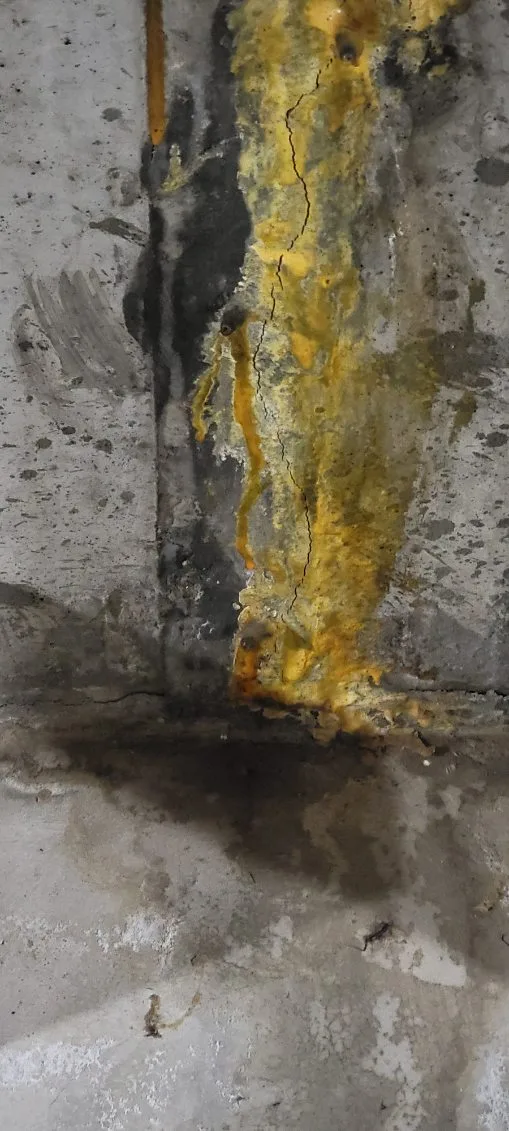
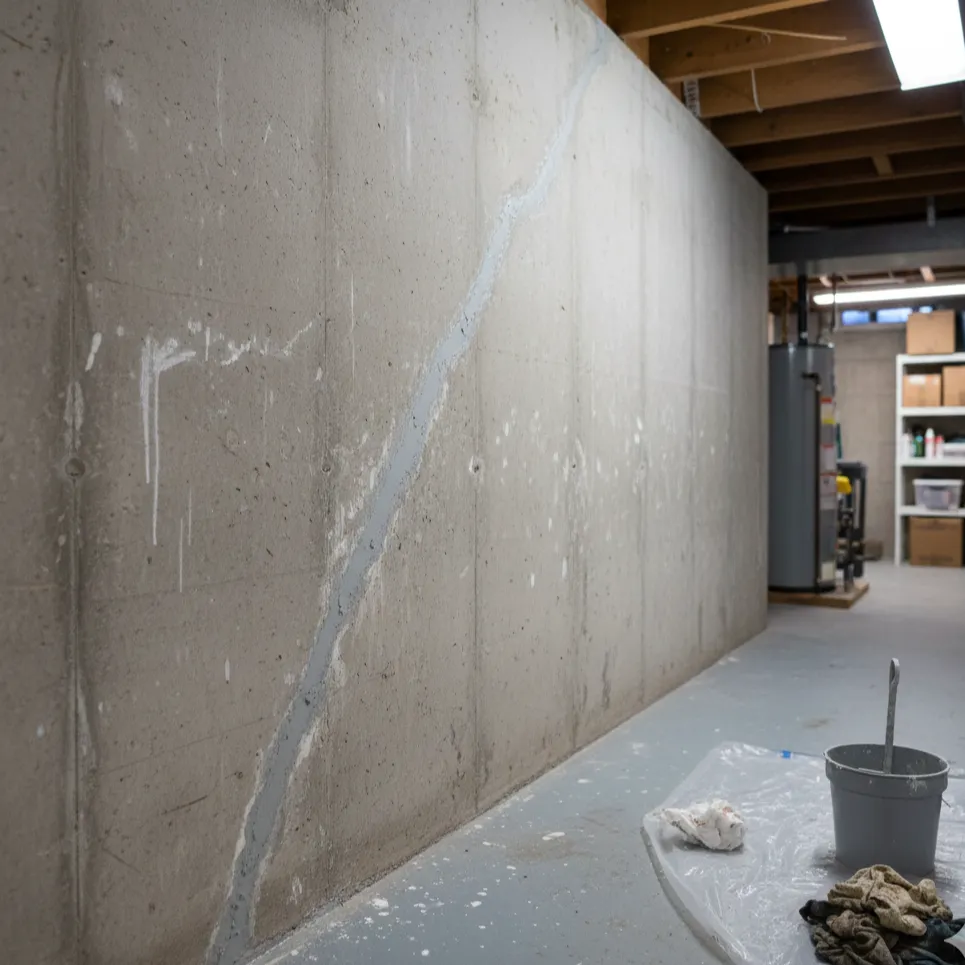
Simple Crack Injection The most affordable repair. We inject flexible urethane or structural epoxy at 100 PSI to fill and seal all 8-10 inches of concrete through our foundation crack injection process. Most homeowners pay $800-$1,300 per crack. For floor-specific issues, see our basement floor crack repair guide.
Structural Reinforcement with Carbon Fiber Staples If cracks indicate structural movement, carbon fiber stitches (also called carbon fiber staples) may be needed in addition to injection. This adds $200-$300 per stitch location.
Wall Stabilization Severely bowed or moving walls require more extensive solutions like wall anchors or steel beams. These projects typically range from $6,000-$15,000+.
2. Number of Cracks
Multiple cracks are common, and the per-crack cost often decreases when we’re repairing several in one visit:
- 1 crack: $800-$1,300
- 2-3 cracks: Significant multi-crack discounts available
- 4+ cracks: Custom quote — we work with you on pricing
3. Crack Characteristics
Several factors affect individual crack pricing:
- Length: Longer cracks require more material and time
- Width: Wider cracks may need more preparation
- Location: Difficult access areas take longer to repair
- Active water: Leaking cracks may require additional steps
- Previous repairs: Failed DIY or professional repairs often cost more to fix properly
4. Foundation Type
Different foundation types present different challenges:
Poured Concrete (Most Common) Standard repair techniques work well. Most repairs fall within typical price ranges.
Block/CMU Foundations May require different approaches. Hollow cores can make injections more complicated or impossible, which may require alternative approaches.
Fieldstone Foundations Older stone foundations require specialized techniques and typically cost more to repair.
5. Geographic Factors
While Attack A Crack serves all of New England, some geographic factors affect pricing:
- Travel distance: Very remote locations may have modest trip fees
- Urban access: Boston-area jobs with limited parking/access can take longer
- Soil conditions: Areas with clay-heavy soil or glacial till may need enhanced solutions due to increased hydrostatic pressure and freeze-thaw damage
The Hidden Cost: Waiting Too Long
One of the biggest cost factors is timing. Foundation problems that could be fixed for $1,000 today might cost $5,000+ next year if they worsen.
Why Problems Escalate:
- Water infiltration leads to mold and interior damage
- Small cracks can widen, requiring more material
- Single cracks can become multiple cracks
- Structural movement may require stabilization instead of simple repair
Our Advice: Address foundation issues when you first notice them. Even if we assess your situation and recommend monitoring rather than immediate repair, you’ll have professional documentation of the current condition.
How to Get Accurate Pricing
Step 1: Free Consultation
We offer completely free foundation consultations. Text us photos and we’ll:
- Examine all visible foundation issues
- Identify root causes
- Explain repair options
- Provide a detailed written quote
Step 2: Get Multiple Quotes
We encourage homeowners to get 2-3 quotes for any significant foundation work. Just be wary of:
- Quotes that are dramatically lower (often indicate cutting corners)
- High-pressure sales tactics
- Vague pricing without specifics
- Companies that won’t guarantee their work for life
Step 3: Understand What’s Included
Our quotes always specify:
- Exact scope of work
- Materials to be used
- Timeline for completion
- Lifetime warranty details
- Payment terms
When NOT to Choose the Cheapest Foundation Repair Quote
While we encourage getting multiple quotes, the cheapest bid is often the most expensive in the long run. Contractors who quote dramatically below market rates typically cut corners on materials (using hardware-store epoxy instead of professional-grade resin), skip proper surface preparation, or offer minimal warranties. A failed repair means paying twice. Our warranty guide explains why the guarantee behind the work matters as much as the price.
Red Flags: When You’re Being Overcharged
Watch out for these warning signs:
Dramatic Estimates If someone quotes $10,000+ for a few cracks with no structural issues, get a second opinion.
Scare Tactics “Your house could collapse!” — Unless you have severe horizontal cracking with significant bowing, this is almost certainly exaggeration.
Unnecessary Add-Ons Interior drainage systems, sump pumps, and full waterproofing systems aren’t always needed. In many cases, crack injection alone solves the problem — especially if water in your basement only appears after rain through identifiable cracks.
Financing Options
Foundation repairs are an investment in your home’s value and safety. We work with homeowners to make repairs accessible:
- Payment plans: Spread cost over multiple payments
- Insurance: Some policies cover foundation damage — see our insurance coverage guide
- Home equity: Foundation repairs often make sense as part of larger renovations
Questions to Ask Any Foundation Repair Company
- What’s included in this price? (Materials, labor, warranty)
- How long is your warranty? (We offer lifetime guarantee)
- Do you use subcontractors? (We don’t — our full-time salaried technicians do all work)
- What happens if the repair fails? (We fix it at no cost)
The Attack A Crack Difference
With 50+ years of foundation repair experience across New England, we’re not the cheapest, and we’re not the most expensive. We’re the most honest:
- Free consultations with real experts who give honest advice
- Transparent pricing with no hidden fees
- Lifetime guarantee on all repairs
- We’ll tell you if you don’t need repair
Payment Plans Available
Don’t let cost delay a repair that only gets more expensive with time. We offer flexible monthly payment plans through Affirm on every repair. When you receive your invoice, simply choose Affirm as your payment method and select a plan that fits your budget — 3 to 36 months, no hidden fees, no prepayment penalties.
Get Your Free Quote
Ready to find out exactly what your foundation repair will cost? Contact us for a free, no-pressure assessment:
860-573-8760 (CT) | 617-668-1677 (MA)860-573-8760 (CT)617-668-1677 (MA)
Or text us photos of your foundation concerns for a quick preliminary estimate.